US President Donald Trump on Thursday expressed strong optimism about securing a peace deal with Iran, even as the tentative ceasefire shows signs of strain on multiple fronts. However, Trump also warned of painful consequences.
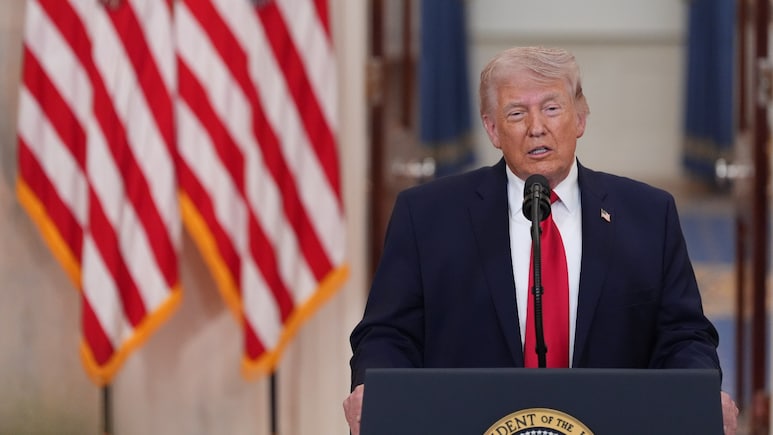
Speaking to NBC News,Trump said he was “very optimistic” that an agreement was within reach, as a delegation led by Vice President JD Vance prepares to travel to Pakistan for high-level talks aimed at ending the nearly six-week conflict.
“Iran's leaders talk much differently when you're at a meeting than they do to the press. They're much more reasonable,” Trump said, adding, “They're agreeing to all the things that they have to agree to. Remember, they've been conquered. They have no military.”
He further warned that failure to strike a deal would be “very painful.”
Also Read: 15 Vessels Daily! Iran Sets Cap On Passage Of Ships Through Strait of Hormuz: Reports
However, developments on the ground point to a fragile truce. Israeli forces have continued strikes across southern Lebanon, targeting positions linked to Hezbollah. Trump confirmed he had urged Israeli Prime Minister Benjamin Netanyahu to scale back operations.
“I spoke with Bibi and he's going to low-key it… we have to be sort of a little more low-key,” Trump said.
Vance echoed similar sentiments earlier, suggesting Israel may check themselves a little bit.
Following the deadliest attacks yesterday in Lebanon, Israeli Prime Minister Benjamin Netanyahu today said his government is preparing to begin ceasefire negotiations with Lebanon “as soon as possible,” adding that the talks will focus on “disarming Hezbollah and establishing peaceful relations between Israel and Lebanon,” The Times of Israel reported.
Also Read: Israel's Netanyahu Ready For Direct Talks With Lebanon 'Soon' As Iran Says Attacks Breach Ceasefire
Tensions also persist around the Strait of Hormuz, a critical global oil route. Despite Trump announcing a two-week pause in hostilities, maritime traffic remains subdued. Data from MarineTraffic showed only five vessels transiting the strait on the first day of the truce, none of them oil or gas tankers.
UAE industry minister Sultan Ahmed Al-Jaber underscored the uncertainty, stating, “Let's be clear: the Strait of Hormuz is not open. Access is being restricted, conditioned and controlled.”
The White House, however, maintains that traffic is picking up. Press secretary Karoline Leavitt called any continued disruption completely unacceptable, reiterating that Trump expects the waterway to reopen immediately, quickly and safely, even as conflicting signals persist.
Essential Business Intelligence, Continuous LIVE TV, Sharp Market Insights, Practical Personal Finance Advice and Latest Stories — On NDTV Profit.