- Anthropic vows to legally challenge Pentagon's supply-chain risk designation against it
- The designation risks Anthropic's $200 million Pentagon AI contract and defense partnerships
- Pentagon decision follows failed talks over AI safeguards and military use concerns
Anthropic PBC vowed to legally contest a Pentagon decision to declare the company a threat to the US supply chain under an authority normally reserved for foreign adversaries, escalating a showdown with the Trump administration over artificial intelligence safeguards.
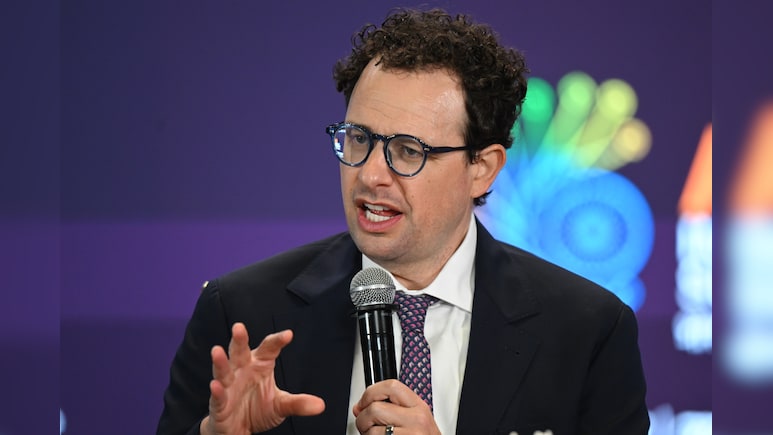
"We do not believe this action is legally sound, and we see no choice but to challenge it in court," Chief Executive Officer Dario Amodei said in a blog post Thursday, hours after Bloomberg News reported on the Pentagon finding.
Defense officials had notified the company on Wednesday of the supply-chain designation, Amodei said in his post. The move puts at risk the firm's $200 million contract to provide the Pentagon with classified AI tools, and could bar Anthropic from partnering with other companies on their defense work.
Also Read | Layoffs Are Rising In Tech, But These Skills Are Helping People Unlock Better Pay
The decision culminated weeks of increasingly tense negotiations between Amodei and government officials over the US military's access to Anthropic's technology. Talks broke down last week after the company demanded assurances that its AI wouldn't be used for mass surveillance of Americans or autonomous weapons deployment, prompting Defense Secretary Pete Hegseth to threaten the company with the supply-chain risk designation.
Though Anthropic still plans to challenge the move, Amodei said that the statute invoked - section 3252 of the US law governing the armed forces - is narrowly tailored enough to keep it from affecting other Anthropic business that's unrelated to specific Pentagon contracts.
That offers some reassurance for customers and investors who feared the company could lose the ability to do any business with companies that worked with the Pentagon. A Microsoft Corp. spokesperson said Thursday the company had concluded that it can continue to work with Anthropic on non-defense projects.
Even so, the designation means the company has to stop working with Palantir Technologies Inc., another military contractor. That includes Palantir's use of Anthropic's Claude in the digital mission control platform known as Maven Smart System, which has been deployed in the US military's Iran campaign.
The Pentagon's decision also threatens to slow broader efforts to accelerate adoption of AI across the US military. Until recently, Anthropic provided the only AI system that could operate in the Pentagon's classified cloud, and its Claude Gov tool has become a favored option among defense personnel for its ease of use.
"It's a good capability" and removing it is "going to be painful for all involved," said Lauren Kahn, a senior research analyst at Georgetown University's Center for Security and Emerging Technology.
While a defense official said earlier Thursday the determination would be "effective immediately," Anthropic's Claude AI tools are still being actively used by the US military in Iran operations, according to a person familiar with the matter. In his warning to the firm last Friday, Hegseth had outlined a six-month transition period to shift AI work to other providers.
Hegseth has informed Congress of his decision in letters to top Republicans and Democrats on the House and Senate committees for armed services, appropriations and intelligence, according to correspondence seen by Bloomberg.
"This determination is based in part on a risk analysis by the DoW and input from senior DoW personnel that the Covered Entity's restrictions on the use of its products and services introduces national security risks to the DoW's supply chain," Hegseth wrote, referring to Anthropic and using an acronym for the Department of War, the name he now favors for the Department of Defense.
Anthropic also is bracing for the loss of work at civilian agencies, following President Donald Trump's demand last week that the federal government drop the firm as a contractor. Already, the Treasury Department and General Services Administration have announced their intentions to halt business with the company.
In his post Thursday, Amodei said he had been having continued discussions with the Pentagon over the last several days that he saw as "productive" about how to address the company's concerns on AI safeguards. He said that Anthropic planned to keep providing its products to the military for as long as it's permitted.
Emil Michael, the under secretary of defense for research and engineering who had been negotiating over the past several weeks with Amodei, said in an X post late Thursday that there were no further discussions. "I want to end all speculation: there is there is no active @DeptofWar negotiation with @AnthropicAI," he wrote.
Now valued at $380 billion, Anthropic is on track to generate annual revenue of almost $20 billion, more than doubling its run rate from late last year. The Pentagon dispute, however, has muddied the outlook for the company.
Applying a supply-chain risk label to an American company would be unprecedented and go beyond the scope of the law, according to Charlie Bullock, a senior research fellow at the Institute for Law & AI.
"This is not an authority that's meant for destroying large American companies that have a contractual disagreement with the United States government," he said. "It's an authority that's meant for addressing spying by Chinese companies and stuff like that."
Acknowledging the bitter nature of the talks, Amodei apologized for comments in an internal memo that surfaced Wednesday. In the memo, reported by The Information, Amodei accused arch-rival OpenAI of acting opportunistically and sacrificing safeguards in a Pentagon deal that CEO Sam Altman announced hours after Trump and Hegseth ordered an end to US government ties to Anthropic.
In the memo, Amodei also wrote that he believes the real reason the administration dislikes Anthropic is because the company hasn't donated to Trump, backed his AI policies or given him "dictator-style praise." On Thursday, Amodei said that "Anthropic did not leak this post nor direct anyone else to do so."
"It is not in our interest to escalate," he said, adding that it was written hours after posts from Trump and Hegseth, as well as OpenAI's announcement. "It was a difficult day for the company, and I apologize for the tone of the post."
(This story has not been edited by NDTV staff and is auto-generated from a syndicated feed.)
Essential Business Intelligence, Sharp Market Insights, Practical Personal Finance Advice, Daily Fuel, Gold and Silver Prices and Latest Stories — On NDTV Profit.