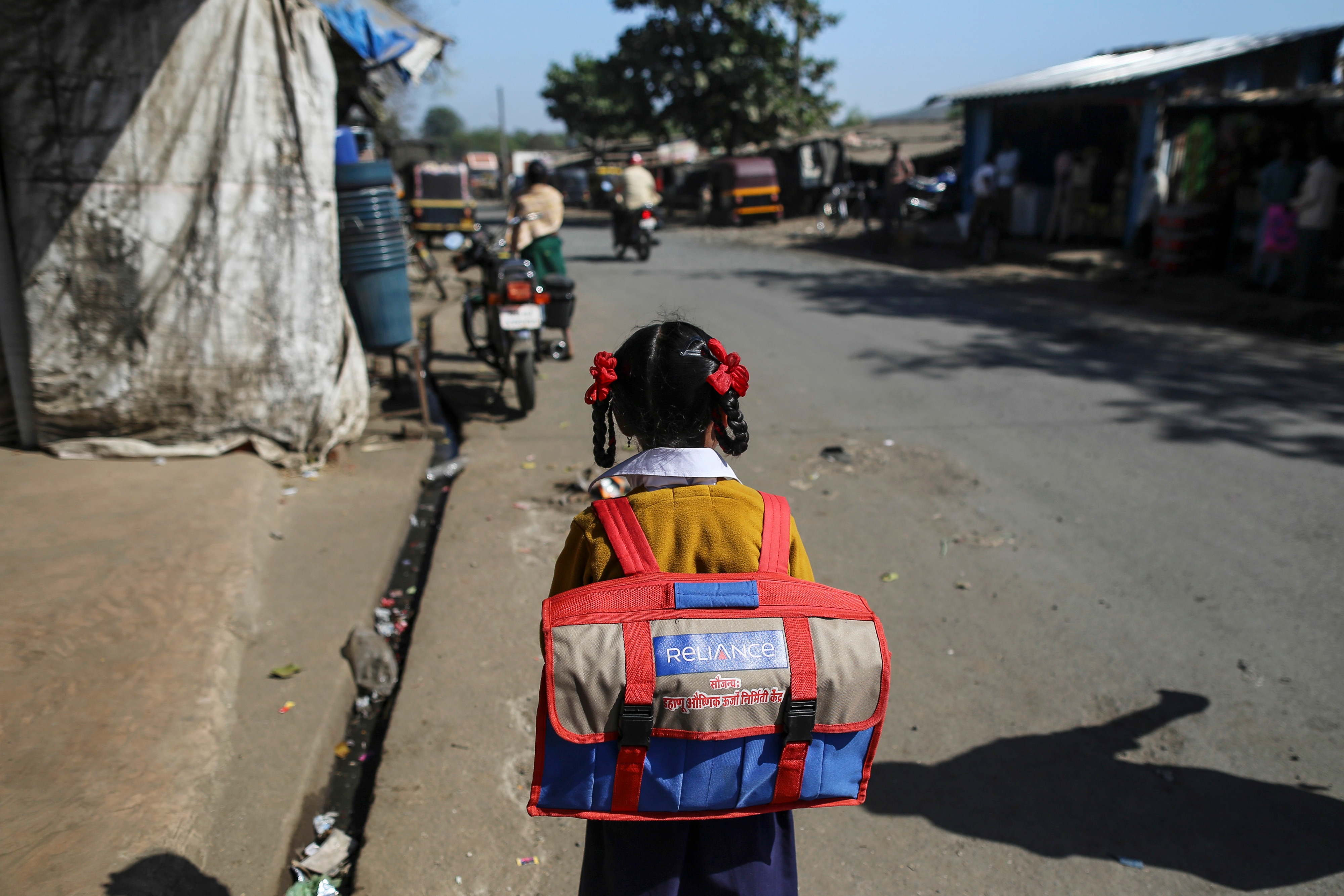
While higher education funding has seen a 28 percent increase in real terms, school education has witnessed a 3 percent decline during the last six years to Rs 39,000 crore, according to government's budget data.
The expenditure as a percentage of gross domestic product has also shown steady decline, from 0.53 percent to 0.45 percent.
Funds for the teacher training component declined by 87 percent over six years, from Rs 1,158 crore in 2014-15 to Rs 150 crore in 2019-20, indicating the low priority accorded.
Education holds the key to skilling, employability, and, in turn, contribution to realisation of faster growth of GDP. Education is in the concurrent list, indicating a role for both union and state governments. The education department is one of the largest in terms of revenue expenditure at the state level, and its budget includes payment of salaries of the elementary and secondary education teachers.
The central government revamped the Sarva Shiksha Abhiyaan (education for all), which aims to provide universal education to all children between six and 14 years, the Rashtriya Madhyamik Shiksha Abhiyan or national middle education mission, which combined secondary education and teacher training into a new scheme, Samagra Shiksha (holistic education) in April 2018.
Considering that the demand for both secondary and higher education remains largely unaddressed through publicly funds and therefore affordable means, this also leads to exclusion of girls and others who cannot afford private education.
Education Funded Through Cess Instead Of Funding Through The Budget
The funding of education through a cess instead of conventional budget funding is apparent in our analysis. A cess is a tax on a tax (calculated as a percentage of tax) and is collected and usually meant for a specific purpose, as the cess' name would indicate.
These cesses are collected as a part of direct taxes (corporation tax, income tax etc) and indirect taxes (with goods & services tax, only a GST-compensation cess is administered and earlier cesses of service tax have been abolished).
An education cess was first imposed in 2004-05 by the central government; currently, education cesses on corporation tax, income tax and customs are collected. The education cess and higher-education cess was revamped into a health-and-education cess from 2018-19 at 4 percent.
The central government has also introduced a social welfare surcharge of 10 percent on aggregate import duties from 2018-19.
Education expenditure has been declining since 2015-16, falling below anticipated collections for 2018-19 (revised estimates) and 2019-20 (budget estimates), indicating that the proposed budget is lower than even the anticipated cess collections.
This means that there is no other revenue being directed towards creating and strengthening public education. It also implies that revenue collected through cess, over which the states have no control, is perhaps being readied to be diverted elsewhere.
The most lucrative taxes accrue to the union government, and education is on the concurrent list, which emphasises a greater role for the central government in framing policies and backing them with funding to improve education across the country.
The introduction of GST has disturbed the flow of finances to the state governments and increased the dependency on the central government. The issues of input tax credit and delays in getting the compensation cess impacts expenditures at the state level.
(Madhusudhan Rao B.V & Jyotsna Jha are research advisor and director respectively, at Centre for Budget and Policy Studies, Bengaluru.)
This copy was published in a special arrangement with IndiaSpend.
Essential Business Intelligence, Continuous LIVE TV, Sharp Market Insights, Practical Personal Finance Advice and Latest Stories — On NDTV Profit.