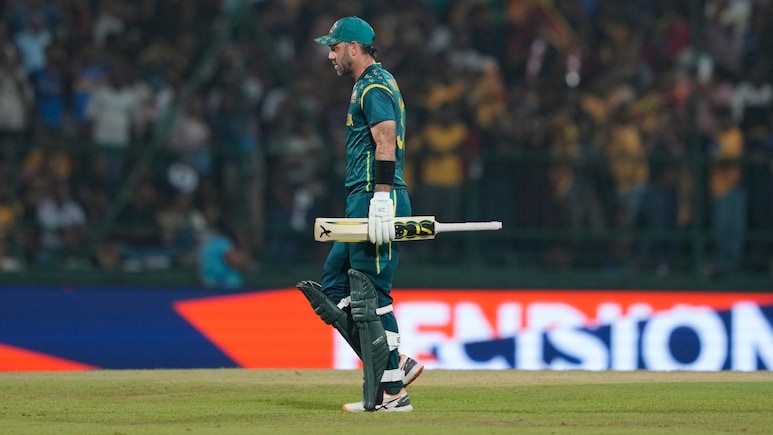
As the rain lashed down in the Pallekele International Cricket Stadium on Feb. 17, it washed away more than just the match between Zimbabwe and Ireland. It also took with it Australia's slim hopes of qualifying past the group stage at the ICC Men's T20 World Cup 2026.
For only the second time in T20 World Cup history, and the fourth time in the 51-year history of ICC global tournaments, the "Mighty Aussies" have been sent home before the tournament has even truly begun.
For a nation with a record six ODI World Cups to their name and one T20 World Cup crown, a first-round exit isn't a phenomenon that fans are used to witnessing. Here is a breakdown of the few, infamous times the Australian machine broke down in the opening group stage.
Also Read | Layoffs Are Rising In Tech, But These Skills Are Helping People Unlock Better Pay
1. The 2026 T20 Disaster: India and Sri Lanka, 2026
A shock 23-run defeat to Zimbabwe followed by a clinical beating by Sri Lanka in their subsequent outing saw the Aussies book an early ticket back home at the 2026 T20 World Cup.
The decision to leave out veteran anchor Steve Smith will be viewed as a major contributing factor along with an injury crisis that saw Australia enter the T20 World Cup 2026 without any one of their famous ‘Big Three' fast bowlers of Pat Cummins, Josh Hazlewood and Mitchell Starc (who retired from T20Is last year) for the first time since 2011.
The exit was confirmed on Feb. 17, without them even taking the field, as the Zimbabwe-Ireland washout left the Aussies mathematically stranded.
ALSO READ | Cricket Australia Interested In Holding Big Bash League Opener In India
2. The First T20 Humiliation: England, 2009
The previous humiliation of an early exit from a T20 World Cup for Australia came on the soil of their arch-rivals England in the second edition of the tournament back in 2009.
That was the first time the T20 format truly humbled Australia. Led by Ricky Ponting, the team was first blown away by Chris Gayle's 88 off 50 balls in the opener as they lost by seven wickets. Just 48 hours later, Kumar Sangakkara's Sri Lanka chased down a 160-run target with ease at Nottingham, ending Australia's tournament in a record-breaking four days.
While 2009 and 2026 are the only instances where Australia failed to survive the opening Group Stage, they are no strangers to premature flights home. In 2014, a dismal run in Bangladesh saw them lose to Pakistan, the West Indies and India in their opening three games, which resulted in them finishing a lowly fourth in their group and not making the semi-finals.
Two years later, in 2016, a Virat Kohli masterclass in Mohali dumped them out of the tournament in their final group game. Most recently, as hosts and defending champions in 2022, Australia's campaign was derailed on opening night by a crushing 89-run defeat to New Zealand.
That massive blow to their net run rate, coupled with a rain-affected washout against England at the MCG, ultimately left them stranded in third place. Despite finishing level on points with the eventual champions, England, the Aussies were eliminated before the semi-finals.
3. The Defending Champions Fall: Australia-New Zealand, 1992 (ODI World Cup)
Fresh from winning their maiden ODI World Cup in 1987, the defending champions Australia were humbled by an early exit in the very next edition of the tournament after failing to recover from early losses to New Zealand and South Africa.
Hosting the World Cup as defending champions, Allan Border's men were the favorites. However, they were stunned by Martin Crowe's innovative captaincy in the opener and never recovered. Crowe scored an unbeaten 100* off 134 balls to help the Kiwis post 248/6 and then asked spinner Dipak Patel to open the bowling in a rare move back then which paid dividends as they stifled the Aussie openers and bowled them out for 211.
Australia would go on to suffer a heavy nine-wicket defeat to Kepler Wessels' South Africa in their next game as Allan Donald (3/34) helped restrict them to just 170.
The tournament format was a single nine-team round-robin (the equivalent of one giant group), and further losses to England and Pakistan meant Australia finished fifth, failing to make it out of the group stage as defending champions on home soil.
4. The Original Shock: England, 1983 (ODI World Cup)
Before they would go on to become the powerhouse of the 90s, Australia suffered an embarrassing group-stage World Cup exit in 1983. Once again the catalyst there was an opening game defeat at the hands of a then-unranked Zimbabwe.
Duncan Fletcher's all-round brilliance (69* and 4/42) led Zimbabwe to a 13-run victory at Nottingham. Australia failed to recover from that, losing to the defending two-time champions West Indies in the next game. However, they managed to beat India by 162 runs in their third outing and then went on to exact revenge on Zimbabwe with a win in their fourth game and give them some hope of a comeback.
But another crushing defeat at the hands of West Indies put them on the brink of an early exit, which was then sealed by India who beat the Kim Hughes-led side, thanks to an inspired performance by Roger Binny, who scored 21 and took 4/29 to bowl out the Aussies for just 129 and seal a dominant 118-run victory.
Australia finished behind India and the West Indies in their group, watching from the sidelines as Kapil Dev's India went on to lift the trophy.
5. The Post-Packer Void: England, 1979 (ODI World Cup)
Australia's first taste of World Cup humiliation was in the second edition of the 50-over tournament. This campaign was doomed before a ball was bowled, due to the infamous World Series Cricket that had caused a rift within the sport's ecosystem.
Media tycoon Kerry Packer had essentially signed away Australia's greatest stars, including Greg Chappell, Dennis Lillee, and Rod Marsh, to his rebel league, leaving the official Australian Cricket Board to field a "B-team" of youngsters and veterans.
A depleted Australian side, led by 25-year-old Kim Hughes, were comfortably beaten by hosts England in the opener at Lord's, but the knockout blow came in Nottingham against Pakistan. Chasing 287, the Aussies were bundled out for 197, confirming a group-stage exit with their only victory of the tournament coming against minnows Canada. It remains a stark reminder of an era when Australian cricket was at its most fractured.
Essential Business Intelligence, Sharp Market Insights, Practical Personal Finance Advice, Daily Fuel, Gold and Silver Prices and Latest Stories — On NDTV Profit.