Sini K., an accredited social health activist in Kerala's Pathanamthitta district, has managed to mobilise 198 of the 214 senior citizens (60 years and above) in her ward for the Covid-19 vaccination since March. "It was difficult in the beginning because they were apprehensive, but the fear brought on by increasing cases has made my work easier," she said.
Vaccine hesitancy of the kind Sini reported is among the primary reasons for the wastage of Covid-19 vaccines, we learned from interviewing health workers, officials, community medicine experts and virologists across four states. These were Kerala, Rajasthan, Andhra Pradesh and Tamil Nadu, and the interviews referred to both Covishield and Covaxin.
Up to 6.5% of Covid-19 vaccines have been wasted in India until March 17, according to health ministry data. Over 4.4 million doses--more than the population of Tripura--were wasted until April 11, as per a recent NDTV report based on Right to Information queries. By April 11, states and Union territories had used 100 million doses, the report said, leading to a wastage rate of 4.4%.
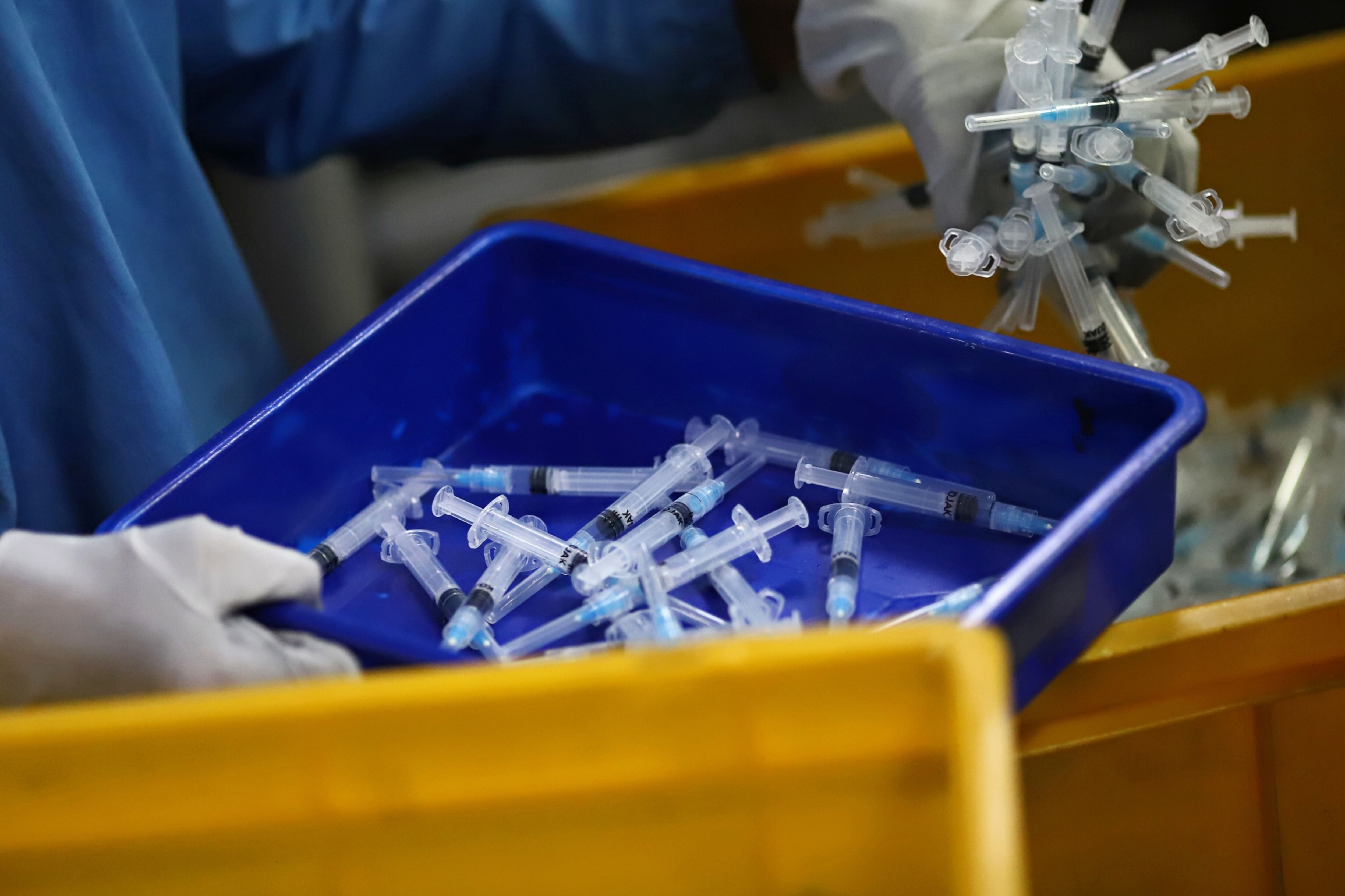
Vaccination centres must ideally have 10 recipients to make optimal use of a single 10-dose vial but this becomes difficult when people do not come forward for the jab. The only way to avoid vaccine wastage is to mobilise beneficiaries by instilling confidence in them, said the health experts we interviewed.
In the initial phase of the vaccination drive, the news of serious adverse events had worried people. With beneficiaries registering and then not landing up for the vaccine, vials were being discarded to avoid transporting them back to the cold chain, said P.J. Srinivas, joint secretary (south zone) of Indian Public Health Association, a public health policy organisation, who is based in Andhra Pradesh. There were also cases of inexperienced vaccinators drawing more than required from vials, leading to wastage, he added.
On March 17, government data showed that Telangana reported the highest vaccine wastage rate (17.6%), followed by Andhra Pradesh (11.6%) and Uttar Pradesh (9.4%). A month later, the NDTV report said Tamil Nadu reported the highest wastage (12%), followed by Haryana (9.7%), Punjab (8.1%), Manipur (7.8%) and Telangana (7.6%).
The states that reported "zero wastage" were Kerala, West Bengal, Himachal Pradesh, Mizoram, Goa, Daman and Diu, Andaman and Nicobar Islands and Lakshadweep, as per the NDTV report. However, the government's vaccine operational guidelines have factored in an allowable wastage of 10%.
Wastage will be a criterion when the Centre starts allocating vaccines as per its new, liberalised Covid-19 immunisation strategy starting May 1. "[The] Government of India, from its share, will allocate vaccines to states/UTs based on the criteria of extent of infection (number of active Covid cases) & performance (speed of administration)," said an April 20 press release. "Wastage of vaccine will also be considered in this criteria and will affect the criteria negatively."
Existing Robust System And Planning
India has administered 130 million Covid-19 vaccination doses as of April 20. With all adults eligible for vaccination from May 1, the vaccination system will be stressed, and preventing wastage crucial. The Centre has urged states to limit vaccine wastage to less than 1% in April and also appealed for more inoculations by reducing wastage.
Kerala's experience is instructive here--it has achieved zero wastage through a robust vaccination legacy, trained health staff including ASHAs who are frontline social workers, and efficient inventory management, said Abey Sushan, district programme manager with the National Health Mission in Pathanamthitta district. "The instruction to the field staff is that the vaccine is a scarce product and we need to ensure that everyone receives it," he said.
Better Mobilisation In Kerala
"At the primary health centre level, ASHAs are able to mobilise [vaccine beneficiaries] which provides a predictable number of people and better planning," said Sushan, NHM's district programme manager in Pathanamthitta. In March 2020, the district had 30% of the 27 positive cases in the state, which itself had 16% of all cases in India, the second highest tally in the country, IndiaSpend reported on March 19, 2020.
The district administration records data based on an annual family health survey under the reproductive and child health programme conducted by healthcare staff such as junior public health nurses and auxiliary nurse-midwives. This provides a good estimate of the number of households in each ward and ensures that vials are fully used in every session. This is done across districts.
Once a vial is punctured, it must be utilised within four to six hours or must be discarded. In January, the size of the Covaxin vial was reduced to contain 10 doses instead of 20.
"The rule is (for abundant caution) that if a needle punctures the vial for drawing even one dose, the remaining doses must be used up the same day," said T. Jacob John, virologist and professor emeritus of Christian Medical College, Vellore. "The remaining doses are to be discarded at the end of the clinic day."
The number of people seeking vaccinations has doubled in the last few weeks, although finding 10 people for vaccination was never a big problem, said Geetha Kumari T., a public health inspector at the district general hospital. "There is more public awareness despite initial apprehensions," she said. "The health staff has been spending nearly 10 hours to vaccinate more than 600 people daily these days. We only open a vial if there are at least 10 people, to minimise wastage."
Good planning and training often allow the staff to administer the optimal 10 doses per vial a day, said Kerala officials. "We conduct training and supportive supervision [to staff] if required," said Sushan, adding that on-site registration is also encouraged for disadvantaged beneficiaries who cannot register online.
Yet, the state is currently facing a vaccine shortage. In response to the liberalised vaccination strategy, the state government, on April 20, wrote to the Centre saying that they have received only 550,000 doses against the demand for 5 million, leading to a stoppage of on-the-spot registration of vaccine beneficiaries.
The Chief Minister has written to the Honourable @PMOIndia to reconsider the new policy on distribution of vaccine so that States can perform their constitutional obligation in the health sector. #COVID19 pic.twitter.com/aVw9uUwgJf
April 20, 2021Mobilisation Issues
The experience has been different for states such as Rajasthan, Tamil Nadu and Andhra Pradesh.
Rajasthan had reported vaccine wastage of 5.6% by March 17, which was marginally better than the national average of 6.5%. Chief Minister Ashok Gehlot had claimed that the wastage was only 7%.
"We [now] have a wastage of around 4-6%, which is much better than when we started," said Raghuraj Singh, the state's project director for immunisation. "With an expanded coverage, we expect more people to arrive for vaccination, which will reduce wastage due lack of beneficiaries at vaccination centres." The primary issues, he added, were inadequate uptake of the vaccine and difficulties with online registration.
Andhra Pradesh and Tamil Nadu are facing vaccine hesitancy, too, we found.
A Tamil Nadu health official in Tenkasi district, who did not wish to be named, told IndiaSpend that although facilities under his jurisdiction were administering vaccinations only if 10 people are available per vial, this is not the case in other districts. "Misinformation" about the vaccines had scared people and is leading to wastage of vials in the state, he added.
In Tamil Nadu and Kerala, public health staff are encouraging beneficiaries to mobilise their neighbours and arrive together in required numbers at vaccine centres to reduce vial wastage and waiting time. Health staff too are delivering vaccines at locations if neighbourhoods are able to mobilise enough numbers, said the Tenkasi district official.
"People who are over 45 years, particularly men, seem to be more reluctant than senior citizens," said Sini, the ASHA worker from Pathanamthitta. "But we insisted that they get vaccinated before cases go up and they get infected," she added.
Vaccine hesitancy has declined over the last few months due to the increase in the number of Covid-19 cases and positive feedback about vaccination experiences, but wastage still needs to be minimised, officials concurred. The percentage of citizens willing to take the Covid-19 vaccine increased from 38% to 77% over 73 days to April 1, according to an April 3 survey by LocalCircles.
As more people approach vaccination centres, new centres with more capacity are being opened to plan, manage and avoid crowding at hospitals, said Pattanamthitta public health inspector Geetha Kumari. In her district, 32 ASHA workers like Sini have been working in rotation--one each day of the week--to help with crowd control at vaccine centres.
Wastage Factors
"We need meticulous planning to ensure that wastage is reduced to 2-3% first and then to less than 1%," said Srinivas of Indian Public Health Association, adding, however, that some amount of wastage is inevitable.
Vaccine wastage could relate either to unopened vials or underused open vials, as we said. In the case of unopened vials, there are problems of expiry, heat exposure, theft and breakage that lead to wastage. Underused vials need to be discarded at the end of the session.
The Centre's Covid-19 vaccine operation guidelines allow for a programmatic wastage of 10%. (The wastage factor for vaccines used to prevent diphtheria, pertussis and tetanus (DPT), Tetanus and Pneumococcal Conjugate Vaccine too is 10%.) This means that if 100 vials are needed, the stock demand must be of 110 vials assuming there will be a wastage of 10. By factoring in wastage, states like Kerala are able to inoculate more beneficiaries.
The failure or lack of cold chain points, ice-lined refrigerators and deep freezers is not a problem, according to officials. In Rajasthan, Rs 150 is paid to those who transport vials from the cold chain to the vaccination centre, said an official who did not wish to be named. "Often they are husbands of nurses who transport vials on motorbikes," he said.
One in four cold chain points, iced lined refrigerators and deep freezers in India were reported to be in four states--Tamil Nadu, Andhra Pradesh, Kerala and Rajasthan, according to December 6, 2020, data from the National Cold Chain Management Information System.
Global Experience
Other countries have been reporting vaccine wastage too. For example, in the first month of vaccine rollout--December 8, 2020, to January 8, 2021--England reported wastage of 0.67% for 156,262 doses of the Pfizer/BioNTech vaccine. Wales reported 0.3% wastage of doses, according to a January 26 WalesOnline report.
On January 21, 2021 a ProPublica report said that many states in the U.S. were not counting vaccine shots properly and this hampered efficient planning of the vaccination drive.
Israel, which has vaccinated 56% of its population against Covid-19, had a strategy to avoid wastage when its elderly population was being vaccinated--its youth could walk into immunisation centres towards the end of the day and get vaccinated with underused vials.
How Vaccine Wastage Can Be Minimised
According to the health experts, it is important that:
- Daily vaccination drives must be well mobilised and planned
- Vials must be opened only after 10 beneficiaries arrive
- Adequate training must be given to healthcare workers on how to draw doses
- Rumours and misinformation about vaccines must be dealt with strictly
- Cold chain system must be maintained properly
This copy was published in a special arrangement with IndiaSpend.
Essential Business Intelligence, Continuous LIVE TV, Sharp Market Insights, Practical Personal Finance Advice and Latest Stories — On NDTV Profit.