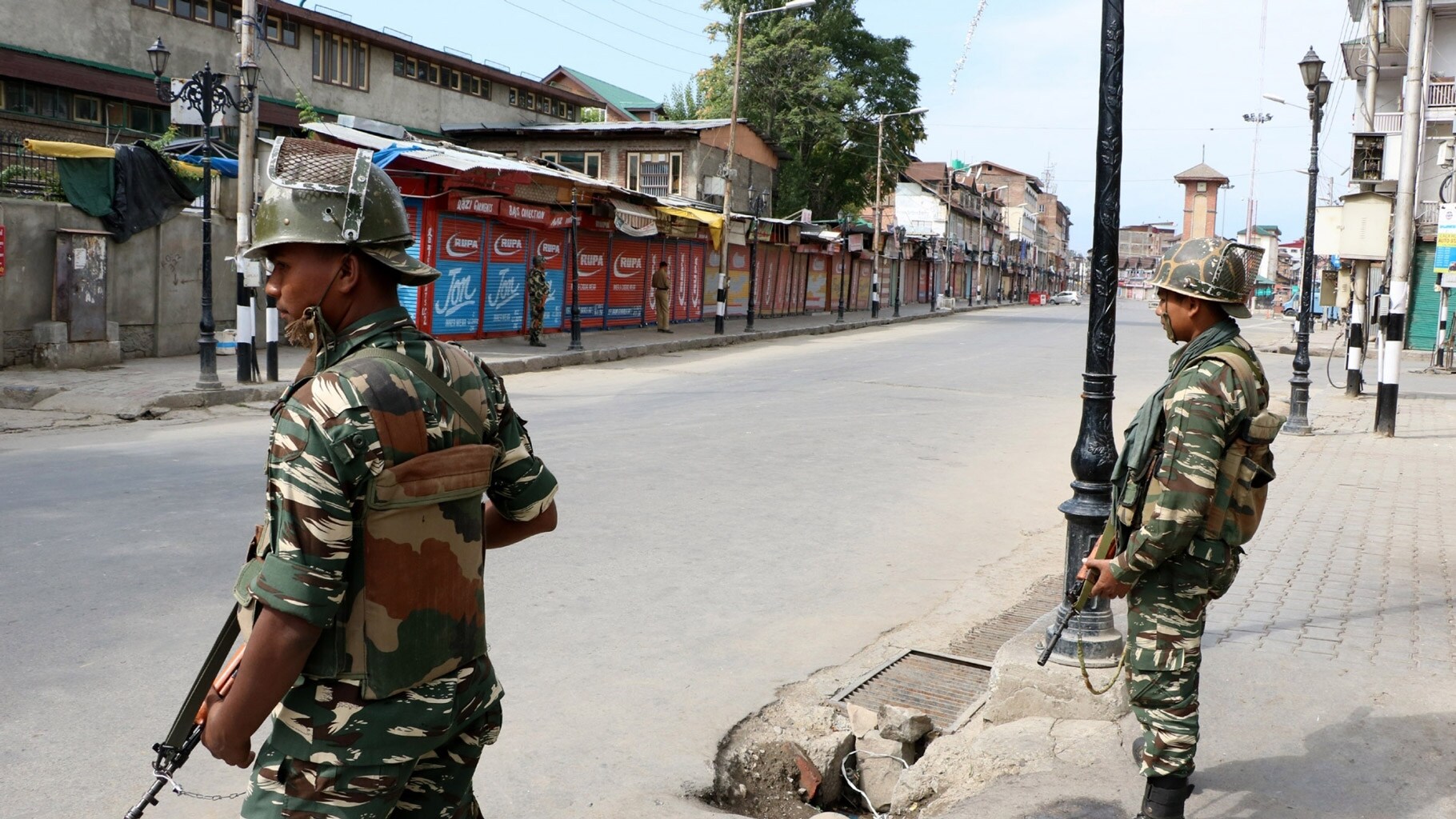
(There have been reports in mainstream newspapers suggesting that policemen have been evacuated from police stations in four districts of South Kashmir. However, our reporter has found a welcome coordination among all the forces, something that was missing in 2010. In fact, the army has provided the ‘steel frame' within which the paramilitary forces have also held ground.)
The Azad Gunj bridge spans the wide width of theJhelum river in Baramulla. On Sunday 14 August, it presented a scene straightout of a war film. Police and CRPF jeeps and lorries pushed forwardthree-quarters of the way across the bridge towards the congested Old Town, asmen from those forces moved in bullet-proof, battle-ready lines on either side,and in taut rows in front of the vehicles.
They fired tear-gas shells and pellets at a meleeof running, yelling boys on the road and along the bank on the Old Town side ofthe river. After a while, those forces slowly moved back. By then, there hadbeen a lot of injuries, some on each side.
That high-voltage battle was the district police'sreaction to the Pakistani flag being raised in a formal ceremony with young peoplein school uniforms. Students in school uniforms were lined up andtwo horses decked out for the ceremony. Led by an irate district officer, thepolice and CRPF swung across the bridge before a speech could be given afterthe flag raising.
Uneasy Truce
A couple of army soldiers in a green Gypsy jeepbehind the column of CRPF and police vehicles muttered unhappily that thebattle of the bridge had been unnecessary. The forces maintained an uneasytruce for several weeks, they said, but this action neutralised all thatrestraint.
Whether they were right or the gung-ho policeofficer who charged into battle was, the propaganda purpose of the little eventwas served. Even though motorcycle-borne youth swooped in to smash videocameras in Old Town, footage of the event — and the following carnage — wasbroadcast on Pakistani channels and such international platforms as Al Jazeera. But then who cares aboutinternational opinion as long as one's own propaganda sounds okay to one'sbackers and bosses?
Well-Oiled Coordination
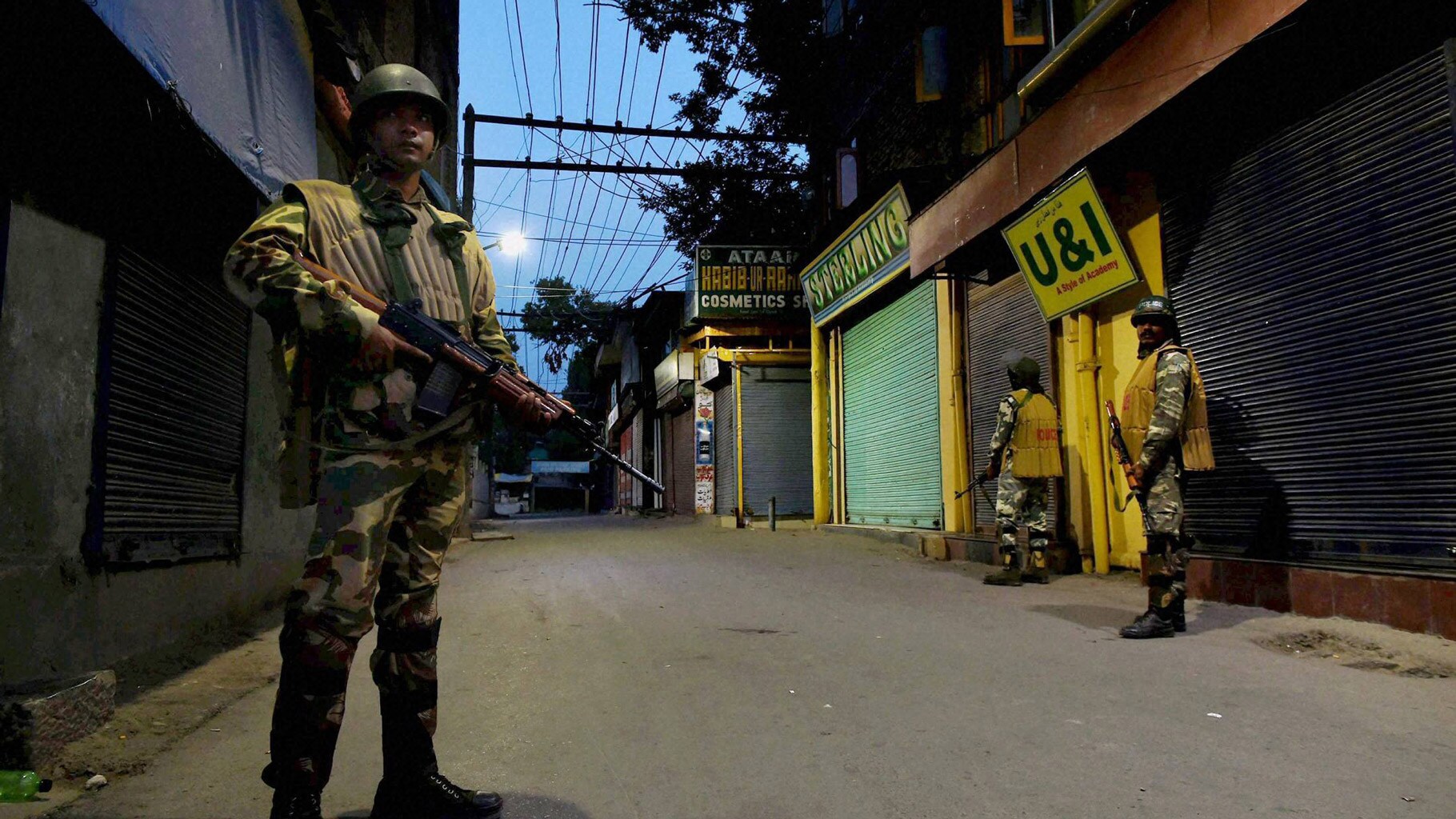
The caution of those army jawans was well-founded,but the important point is that they were there to back the other forces, rightbehind those forces' vehicles in case they needed to be called forward. Thatreflected a significant difference between the way things were in 2010 and arenow. Kashmiri youth exploded in rage in 2010 too, as they have since 9 July,but that year, the army remained assiduously away from the action. It was theright thing to do, then.
This year, the army — aware that this is a morepotent challenge — has stood squarely behind the police and the CRPF. The threeforces have worked in close coordination. Wherever one sees CRPF men and armymen deployed, one also sees a policeman, if not several — except of course in thearmy's anti-militant or anti-infiltration operations away fromcivilian populations.
Police Initiative
In fact, in some of the worst affected areas, thearmy has coordinated closely with the other forces. In Kupwara, for instance,stone-pelting mobs emerged in such large and vigorous numbers between 13 and 16July that the director general of police flew down to Kupwara and got the threeforces to work together.
Some officers had feared at the time that every police station and post in the district might be burned down by irate mobs. But senior officers posted there say that the army has since provided ‘a steel frame' for the other forces to function. It has worked.
Improvement on 2010
This is a great improvement on 2010. That summerwas an absolute nightmare in Kashmir as seething, boiling masses of youngpeople took to the streets with stones. They were most vehemently visible inthe lanes and gullies of inner city Srinagar — ‘Downtown' — but their ragespilled far and wide across the Valley as the cycle of stoning and firing andstoning and firing went on and on for several weeks.
That year, the police and the CRPF were the arms ofthe state — flailing, for the most part, like the arms and feet of a tumblingoctopus. The army remained assiduously out of it. When the then Chief MinisterOmar Abdullah ordered a flag march in desperation, a column of army trucksdecked with red flags drove along the Dal Lake — away from the city.
Mess of Six Years Ago
That was a very good strategy for the army thatyear. For, that mess was created by chaotically uncontrolled, trigger-happypolice and CRPF — almost as if key men on the ground were determined to queerthe pitch for India — and the political authorities, at least in the state,were out of their depth.
This year too those who should have strategised forthe state seemed to have lost the plot on those two crucial days — 8 and 9July. (8 July was the day militant commander Burhan Wani was killed.) Indeed,it seemed once again as if key persons on the ground were out to queer thepitch.
Tough to Maintain Restraint
Thereafter, the state's response has been muchbetter pitched and controlled — at least in terms of police and militarytactics. Compared with 2010, the forces' restraint has been commendable andsometimes amazing.
Some horrifying encounters have occurred but,thankfully, one of those is now under the scanner of the Supreme Court, and theNorthern Army Commander, Lt General Hooda has publicly regretted and castigatedanother.
It will become increasingly tough to keep restraintin place. Increased coordination is sorely needed.
(The writer is a Kashmir-based author and journalist. He can be reached at@david_devadas)
Also read:
Capturing My Son Would Have Punctured Movement: Burhan's Father
Misguided Nationalism: How the Government Lost the Plot in Kashmir
Essential Business Intelligence, Continuous LIVE TV, Sharp Market Insights, Practical Personal Finance Advice and Latest Stories — On NDTV Profit.