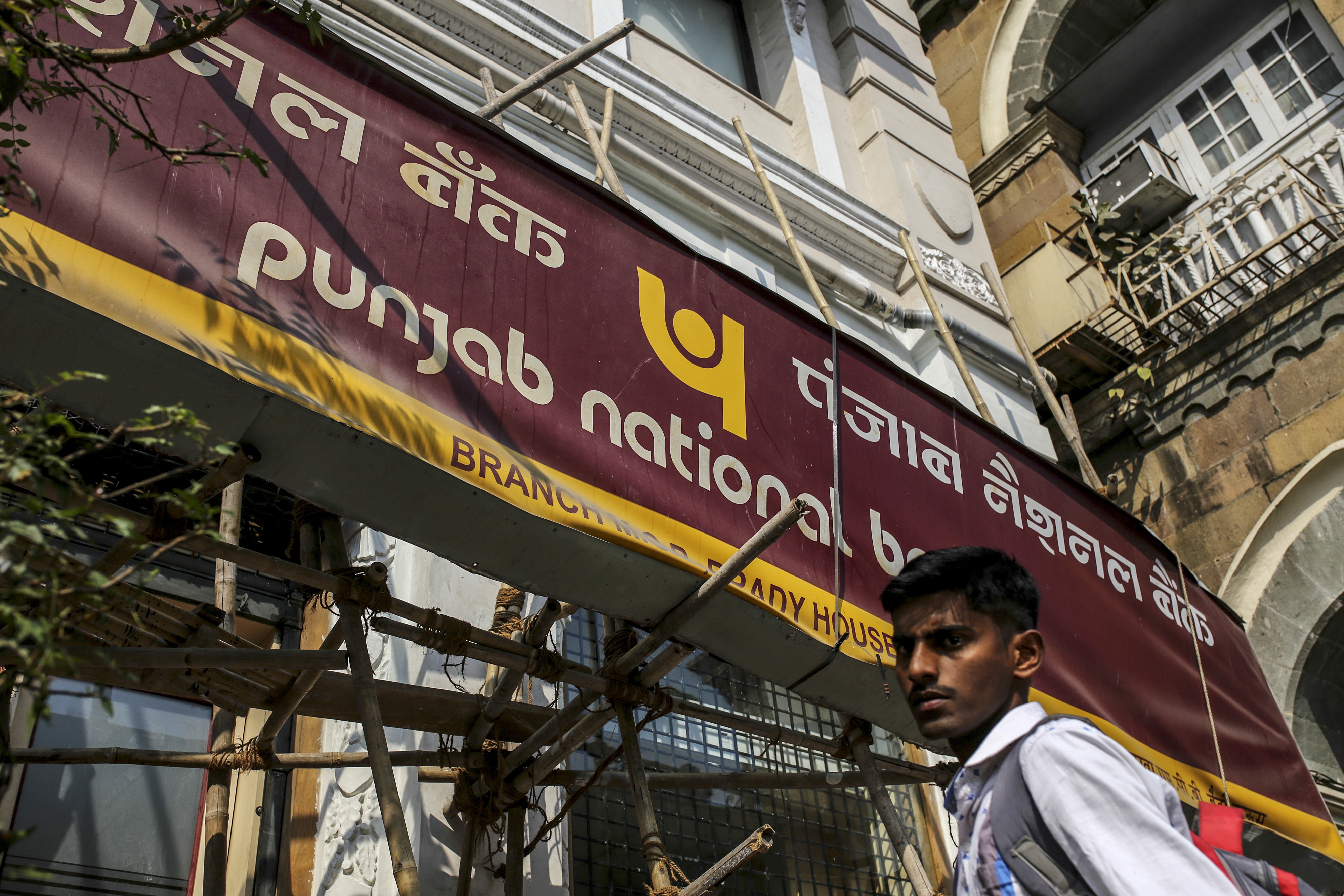
The Reserve Bank of India has declined to share inspection reports for scam-hit Punjab National Bank, citing RTI clauses that bar disclosure of details which may impede the investigation process or prosecution of offenders among other reasons.
Replying to a Right to Information query filed by news agency PTI, the central bank also said it does not have “specific information” on what resulted in detection of the over Rs 13,000-crore scam at Punjab National Bank and directed the application to the state-run bank for providing those details.
The scam, considered to be the biggest ever fraud in India's history, came to light in February this year. The lender was allegedly defrauded by diamantaire Nirav Modi and his uncle Mehul Choksi, the promoter of Gitanjali Gems.
Among other agencies and regulators, the RBI is also undertaking a detailed probe into the case for necessary action.
In response to queries under the RTI Act, the central bank clarified that the RBI does not carry out audit of banks. However, the RBI conducts inspection/risk-based supervision of banks, it added.
Giving details for the past 10 years, the RBI gave dates for the annual inspection carried out at the PNB head office between 2007 and 2017, except for 2011, for which the bank said the “dates (are) not available.”
When asked about the copies of inspection reports and details of objections raised by it, the RBI said the information was exempted under various clauses of the RTI Act.
“The inspection reports of banks and other related documents contain information which is exempt from disclosure under Section 8 (1) (a), (d), (j) and (h) of RTI Act, 2005,” it said in reply to the RTI application.
The Section 8(1) (a) bars disclosure of information which would prejudicially affect the sovereignty and integrity of India, the security, strategic, scientific or economic interests of the state, relation with foreign state or lead to incitement of an offence.
The clause (d) bars information the disclosure of which would harm the competitive position of a third party, whereas the section 8 (1) (h) exempts disclosure of information which would impede the process of investigation or apprehension or prosecution of offenders.
The clause (j) bars information which relates to personal information and the disclosure of which has no relationship to any public activity or interest, or which would cause unwarranted invasion of the privacy of the individual.
The RBI said that the severance of exempt parts in all inspection reports would divert the resources of the public authority in an unreasonable way.
“In view of the same, it is not feasible to disclose the information sought by the applicant,” the central bank said.
The RBI has transferred the application to the PNB on query seeking details of inspection reports that led to detection of the massive fraud in the bank.
Essential Business Intelligence, Continuous LIVE TV, Sharp Market Insights, Practical Personal Finance Advice and Latest Stories — On NDTV Profit.