While growing up, in a group of friends forming a cricket team, if we were asked, who wants to lead and can be a good captain, all 11 hands would go up.
We firmly believe that we are perfect employees, perfect citizens, perfect parents, perfect spouses, and perfect drivers and of course perfect investors. But how is it possible to be perfect in all aspects?
Welcome to a deadly emotional bias which has led to the downfall of great empires, ‘too big to fail' companies, artists and investment portfolios... overconfidence!
In an earlier column, we saw how ‘experts' run the risk of turning into astrologers. As Rolf Dobelli, the author of ‘The Art of Thinking Clearly', writes, we comment on stock market forecasts, the direction of interest rates, firms' profits in the next one to three years with a fair amount of overconfidence. We systematically overestimate our ability to predict, and the reach of our knowledge, on a massive scale. Often, experts fall prey to overconfidence more than the layperson.
If asked to forecast oil prices in the next five years, an economics professor will be as off the mark as a zookeeper. However, the professor will offer a forecast with a lot of conviction.
Know What You Don't Know
The ‘overconfidence bias' is a tendency to hold a false and misleading assessment of one's skills, intellect, or talent. It originates from an illusion of knowledge. Highly-qualified teams involved in robust research studies sometimes create an illusion of superiority and control to outsmart the market. Even good swimmers sometimes drown as they overestimate their swimming skills.
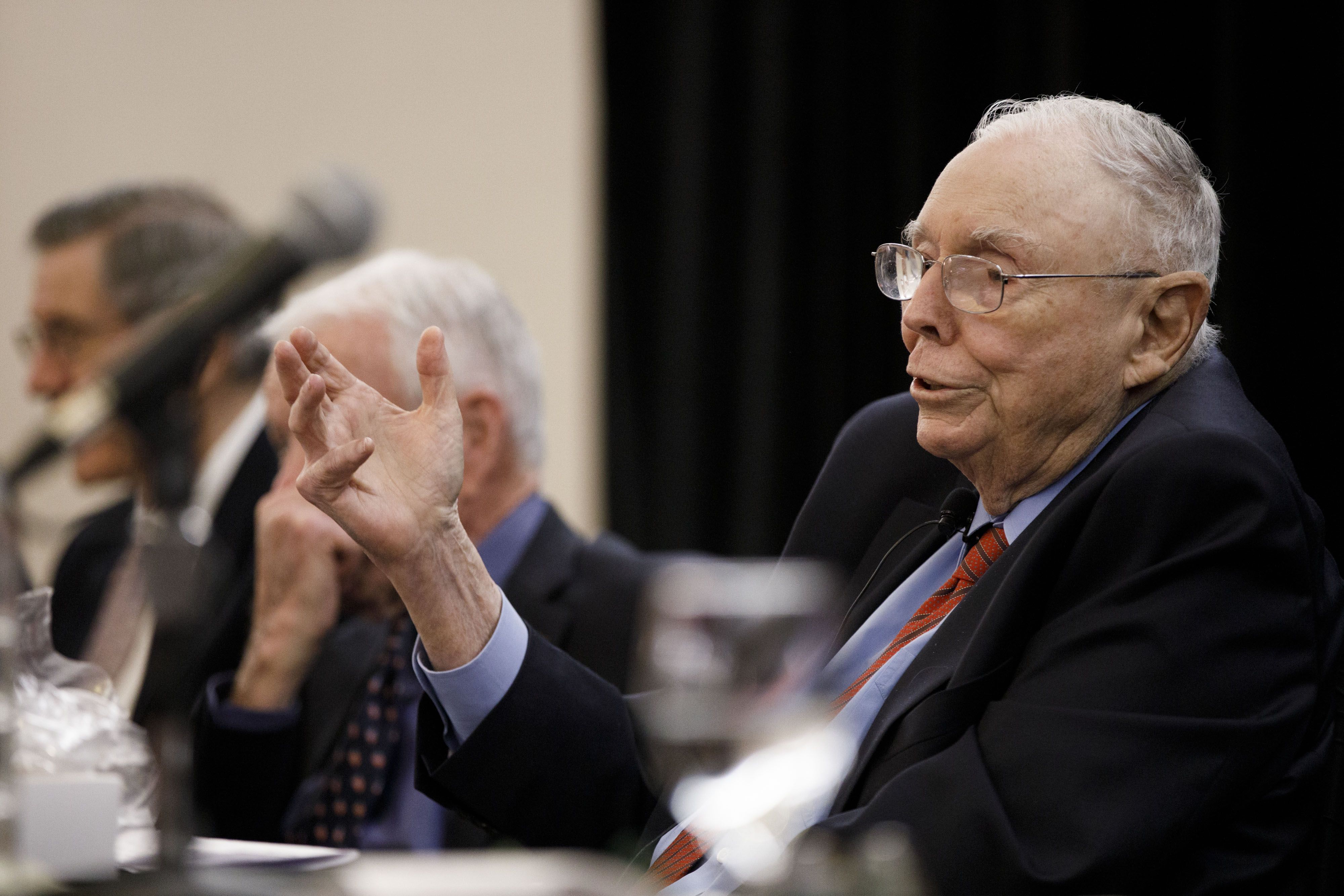
Charlie Munger gives a beautiful example from nature on how we act confident even when we don't know enough.
When a bee finds nectar, it comes back and does a little dance that tells the rest of the hive, as a matter of genetic programming, which direction to go in, and how far. So, fifty years ago, some clever scientist stuck the nectar straight up. Well, the nectar's never straight up in the ordinary life of a bee. The nectar's out. So, the bee finds the nectar and returns to the hive. But it doesn't have the genetic programming to do a dance that says straight up. So what does it do? It actually does this incoherent dance that creates confusion instead of just sitting there and accept it doesn't know how to signal in this new environment. And we are like the Bee. We answer most questions with a lot of certainty. And that is a huge mistake. Nobody expects us to know everything about everything.
I try to get rid of people who always confidently answer questions about which they don't have any real knowledge. To me, they're like the bee dancing its incoherent dance. They're just screwing up the hive.Charlie Munger, Vice-Chairman, Berkshire Hathaway
Lucky outcomes can also lead to overconfidence. With a few back-to-back wins, the gambler starts believing that he is led to favourable outcomes because of his skills. Complacency also makes us overconfident. Many cricket batsmen get out just after scoring a century. Investors forget to maintain an emergency fund, tend to overspend during good times and forget the basics of asset allocation in bull markets and misallocate capital. Likewise, as the noted personal finance columnist Jason Zweig says, we chronically chase the best-performing funds of the previous one year and assume with confidence that they will perform in the same way.
Many invest when past returns have been high, not realising that at that juncture, it's the risk that's high, not return potential. Good investors look for reasons for outperformance or high performance, understand the investment framework, question whether the cycle will turn and then take an investment decision.
Respect Variables
Investors like high conviction-advice from ‘experts' that the Nifty will cross 15,000; or that ten-year bond yields will drop to 5 percent. Some will not only forward these messages to friends but also invest money, based on such overconfidence. Instead, track how past predictions, made with ‘confidence', have under-performed.
Investing and economics are not like math or physics, which are fields of exact science, that run on a defined formula. In investing, there are many moving parts and non-stationary data. Research results in part-information, which is sometimes imperfect.
Markets are like a wheel with many spokes. We don't know which single spoke is keeping the wheel intact.
Coupled with these challenges, there are many uncertainties that are impossible to factor in any model. What Donald Trump will tweet next on the trade war is difficult to predict.
The deal I just made with China is, by far, the greatest and biggest deal ever made for our Great Patriot Farmers in the history of our Country. In fact, there is a question as to whether or not this much product can be produced? Our farmers will figure it out. Thank you China!
A Small Overconfidence Test
How many movies has Amitabh Bachchan acted in? How many runs has Sachin Tendulkar scored in one-day internationals and test matches combined?
You need to be correct in your answer and you have the choice of giving one number, or a range. Most of us still try to give precise answers, like 400 movies or 20,000 runs, and fall way off the mark. Very few will give a safe range – like 100 to 1,000 movies for Big B; and 1,000 to 60,000 runs for Sachin. Well, Bachchan has acted in 239 movies and Tendulkar has scored 34,347 test and ODI runs.
Would you have given a wide range to ensure you are broadly right or tried for a finite number and been precisely wrong?How To Resist The Temptation Of Being Overconfident With Money
First, let's acknowledge that being a good engineer or a doctor or lawyer or data scientist or teacher doesn't guarantee us a ticket to be amongst the best investors. Start with this acknowledgment and search for a good expert to help you with investment decisions.
I keep repeating this input of seeking advice, as investing is a serious business and good advice can go a long way in curbing our behavioural errors and coaching us to become better investors, over time.
Second, while forming confident views of the future, also evaluate what can go wrong if the view doesn't play out. What can the downside be?
Doubt extreme views and exaggerated returns.For example, when the return-on-equity of Indian companies varies from 10 percent to 20 percent across cycles, and you are promised 20-25 percent returns on the basis of just the last three years, be skeptical. When interest rates average 8 percent in India, and you expect to earn 10 percent in bond funds just because last year was 12, raise doubts.
Wise, good advisors and money managers will never be overconfident. They are more often in doubt, constantly thinking about what can go wrong as much as what will work out fine. They will always have answers in a range with probabilities of various good and bad returns. They will prepare you for some pain, rather than pull you to invest on the basis of guaranteed results.
If you have formed a view of investing based on a hypothesis, do also speak to a few others who have an opposite view. This will help you get a balanced perspective for decision-making and avoid losses due to a one-sided, overconfident view.
Last, learn from history. Read more about what failed in investing and why. Be objective, rational, evidence-based. Become an above-average investor by being less overconfident.
Kalpen Parekh is President at DSP Investment Managers.
The views expressed here are those of the author, and do not necessarily represent the views of BloombergQuint or its Editorial team.
Essential Business Intelligence, Continuous LIVE TV, Sharp Market Insights, Practical Personal Finance Advice and Latest Stories — On NDTV Profit.