Chandrayaan-3's soft-landing achieved, the rover module will now embark on its 14-day assignment to carry out the tasks mandated by the ISRO scientists. Its duties include experiments to further understand the lunar surface.
The rover 'Pragyan' which is in the belly of Lander Module is slated to come out to carry out series of experiments on the surface of the Moon later. The deployment of Rover to carry out in-situ scientific experiments would scale new heights in lunar expeditions, ISRO said.
More details here.
#Putin: This is a big step forward in space exploration & certainly a testament to the impressive progress made by India in the area of science & technology. Kindly convey my sincere congratulations & best wishes for new achievements to the leadership & staff of @isro https://t.co/yUeIm3gXi1
— Russia in India 🇷🇺 (@RusEmbIndia) August 23, 2023
Chandrayaan-3 Mission:
— ISRO (@isro) August 23, 2023
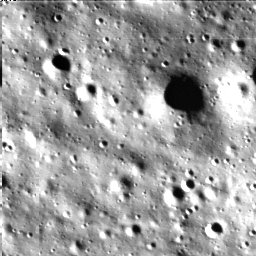
The image captured by the
Landing Imager Camera
after the landing.
It shows a portion of Chandrayaan-3's landing site. Seen also is a leg and its accompanying shadow.
Chandrayaan-3 chose a relatively flat region on the lunar surface 🙂… pic.twitter.com/xi7RVz5UvW
نهنئ جمهورية الهند وفريق عمل @isro على النجاح التاريخي بهبوط المركبة الفضائية الهندية تشاندريان 3 على القطب الجنوبي للقمر!
— وكالة الإمارات للفضاء (@uaespaceagency) August 23, 2023
تهدف المهمة إلى:
1. إثبات الهبوط الآمن والسلس على سطح القمر
2. التجوال على سطح القمر
3. استكشاف القطب الجنوبي للقمر وإجراء تجارب تساهم في المعرفة العلمية… pic.twitter.com/efdsJ5A9Cl
Chandrayaan-3 Mission:
— ISRO (@isro) August 23, 2023
Updates:
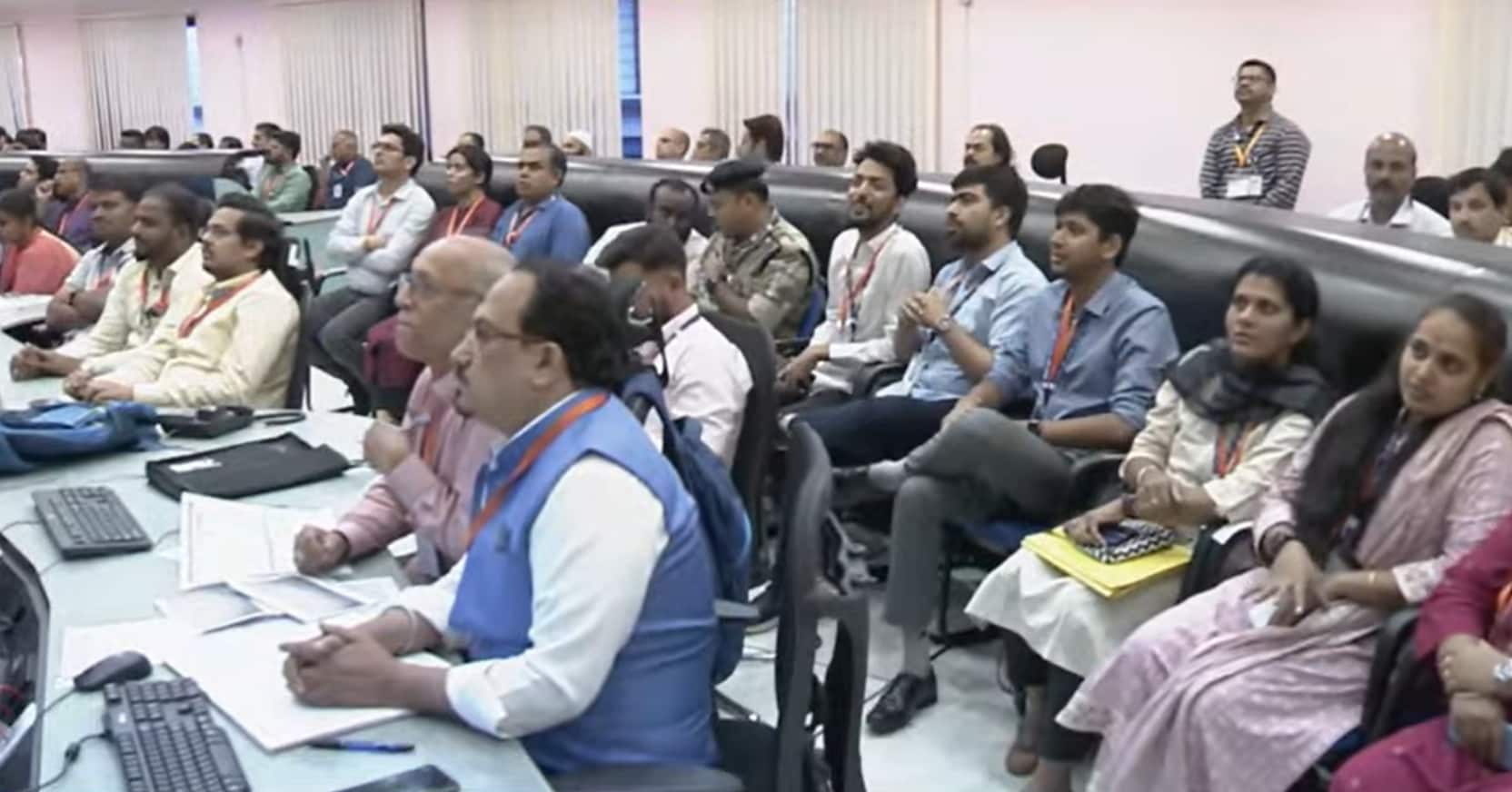
The communication link is established between the Ch-3 Lander and MOX-ISTRAC, Bengaluru.
Here are the images from the Lander Horizontal Velocity Camera taken during the descent. #Chandrayaan_3#Ch3 pic.twitter.com/ctjpxZmbom
#Chandrayaan3Landing: President #DroupadiMurmu congratulates #ISRO! @rashtrapatibhvn
— BQ Prime (@bqprime) August 23, 2023
Catch all #Chandrayaan3 updates here: https://t.co/v4szWsunbo pic.twitter.com/BhE5rNnA0J
Congratulations @isro on your successful Chandrayaan-3 lunar South Pole landing! And congratulations to #India on being the 4th country to successfully soft-land a spacecraft on the Moon. We’re glad to be your partner on this mission! https://t.co/UJArS7gsTv
— Bill Nelson (@SenBillNelson) August 23, 2023
WATCH: Prime Minister @NarendraModi congratulates @ISRO Chairman S Somanath on the successful lunar landing of #Chandrayaan3.
— BQ Prime (@bqprime) August 23, 2023
Catch all updates here: https://t.co/v4szWstPlQ
(📽️Source: @DDNewslive) pic.twitter.com/39NqXdoJMV
Incredible! Congratulations to @isro, #Chandrayaan_3, and to all the people of India!!
— Josef Aschbacher (@AschbacherJosef) August 23, 2023
What a way to demonstrate new technologies AND achieve India’s first soft landing on another celestial body. Well done, I am thoroughly impressed.
And kudos once again to @esaoperations for… https://t.co/GT3kyWHP6L
"India’s successful moon mission is not India’s alone. This is a year in which the world is witnessing India’s G20 presidency. Our approach of one earth, one family, one future is resonating across the globe."PM Narendra Modi
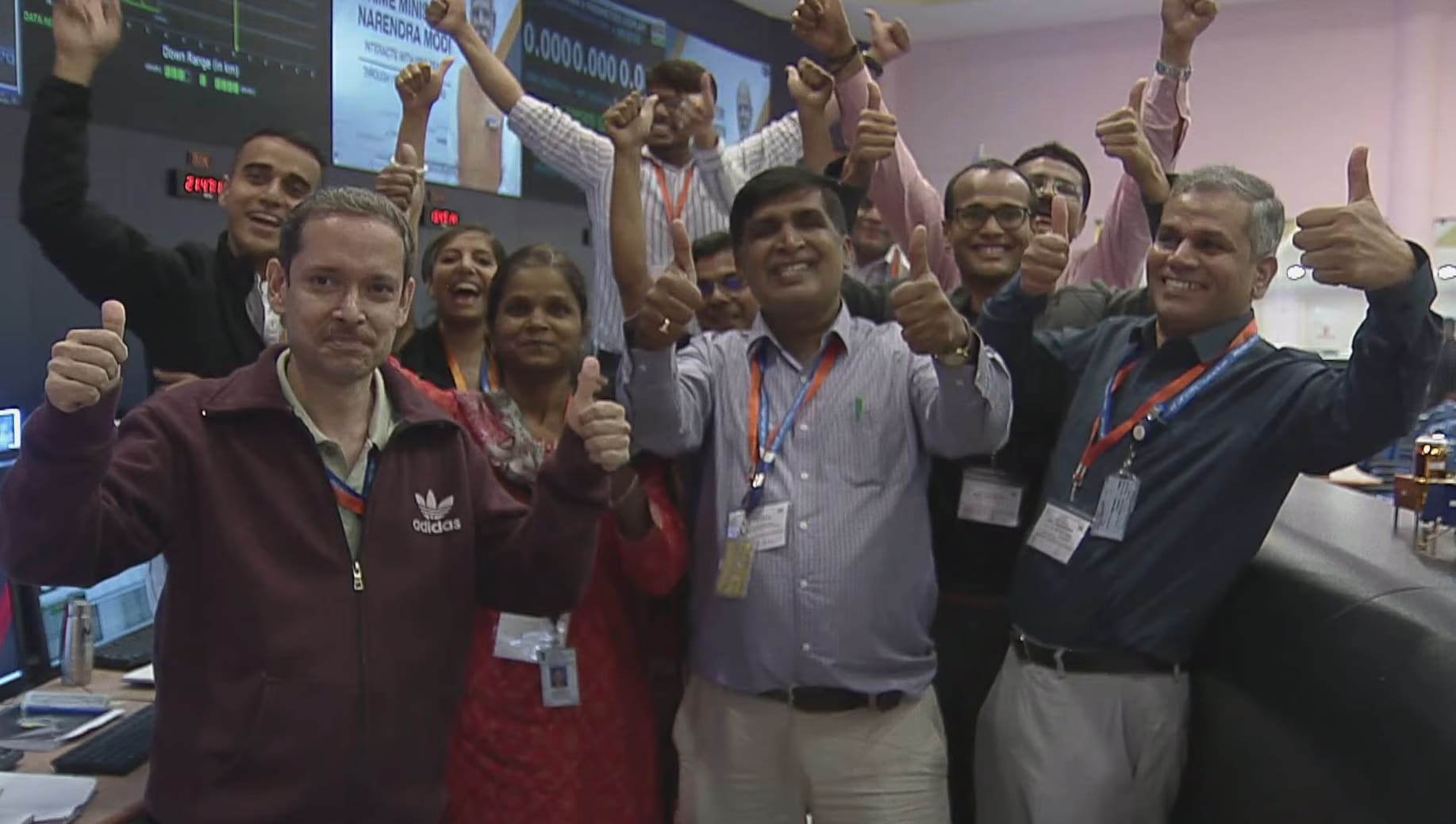
Historic day for India's space sector. Congratulations to @isro for the remarkable success of Chandrayaan-3 lunar mission. https://t.co/F1UrgJklfp
— Narendra Modi (@narendramodi) August 23, 2023
Chandrayaan-3 Mission:
— ISRO (@isro) August 23, 2023
'India🇮🇳,
I reached my destination
and you too!'
: Chandrayaan-3
Chandrayaan-3 has successfully
soft-landed on the moon 🌖!.
Congratulations, India🇮🇳!#Chandrayaan_3#Ch3
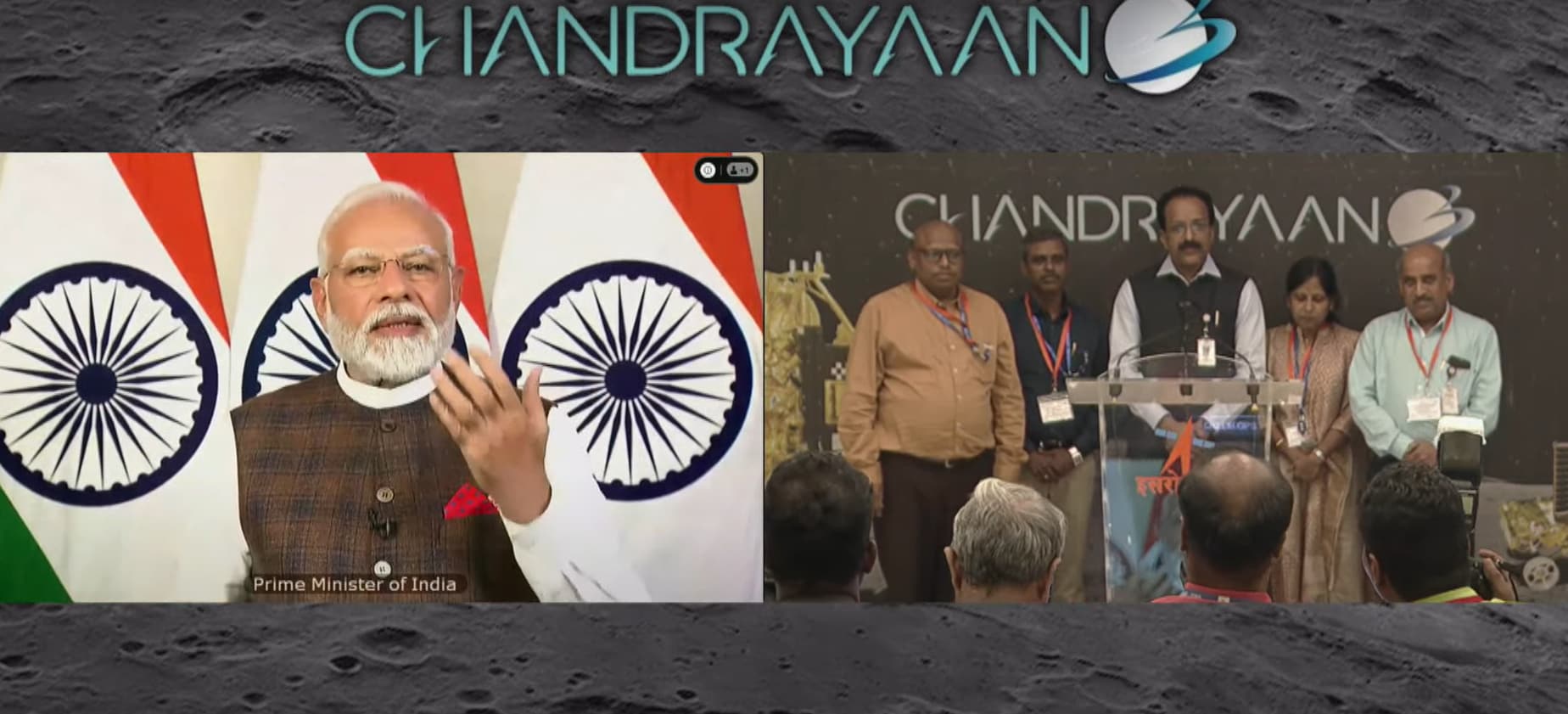
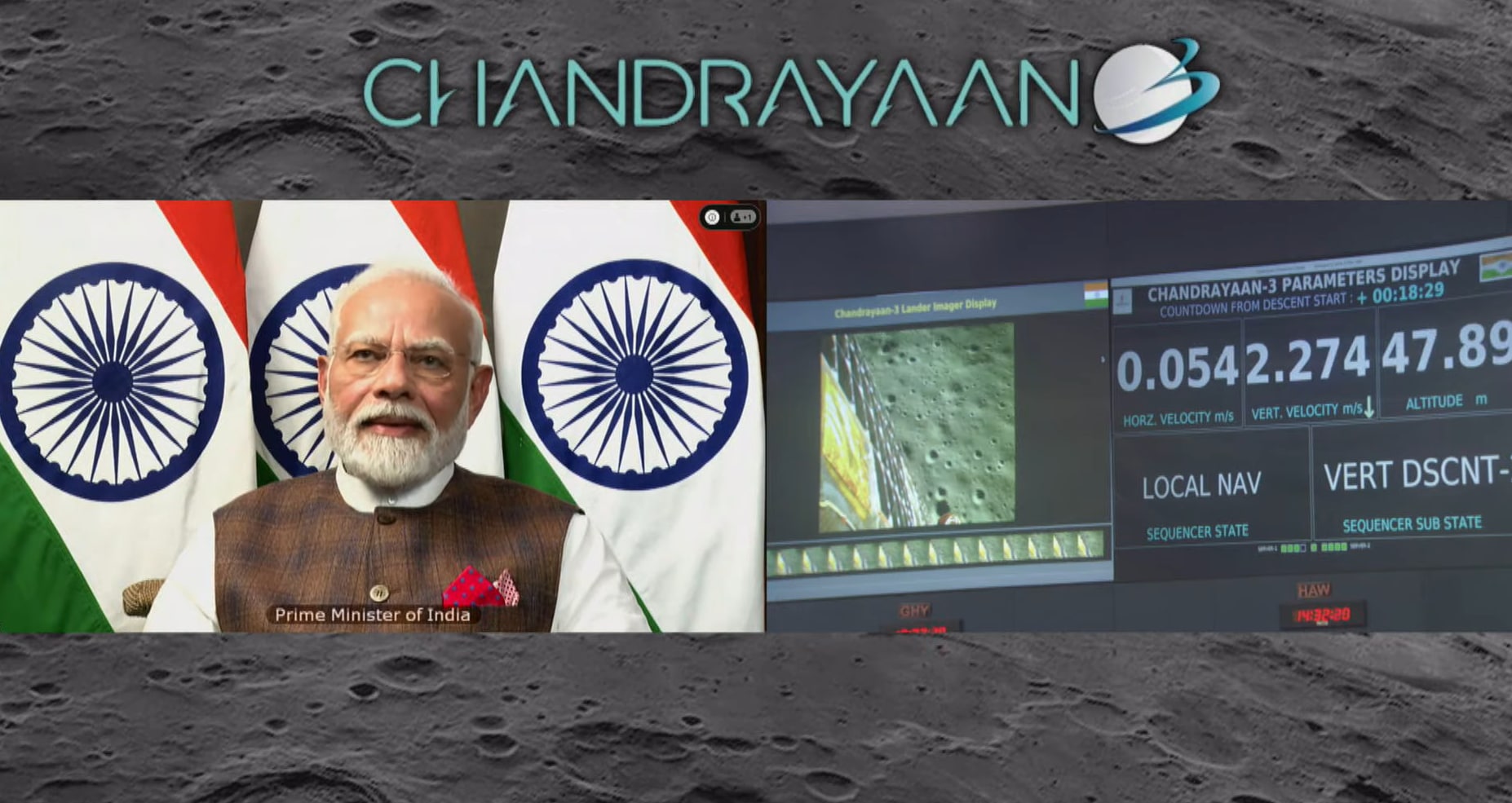
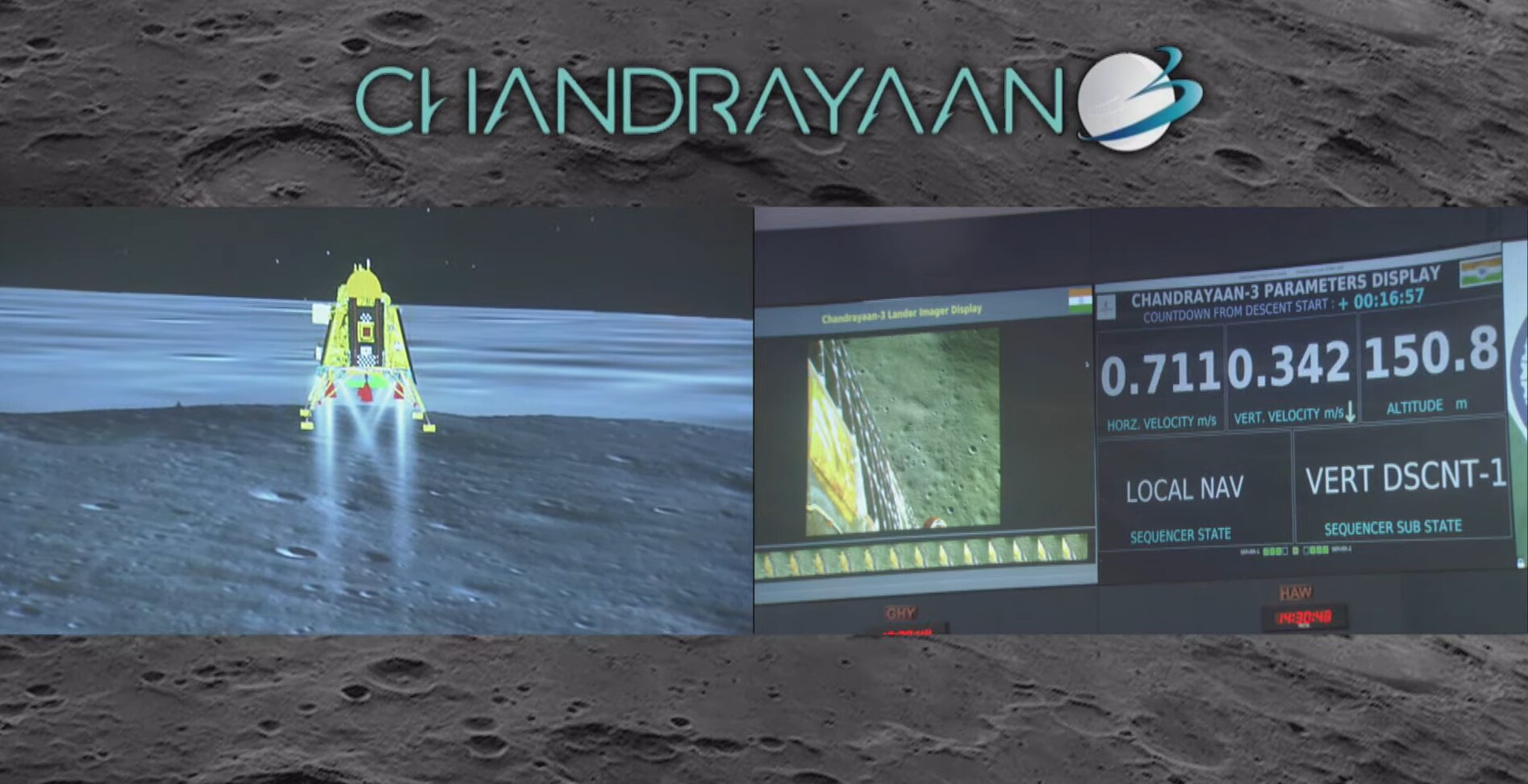
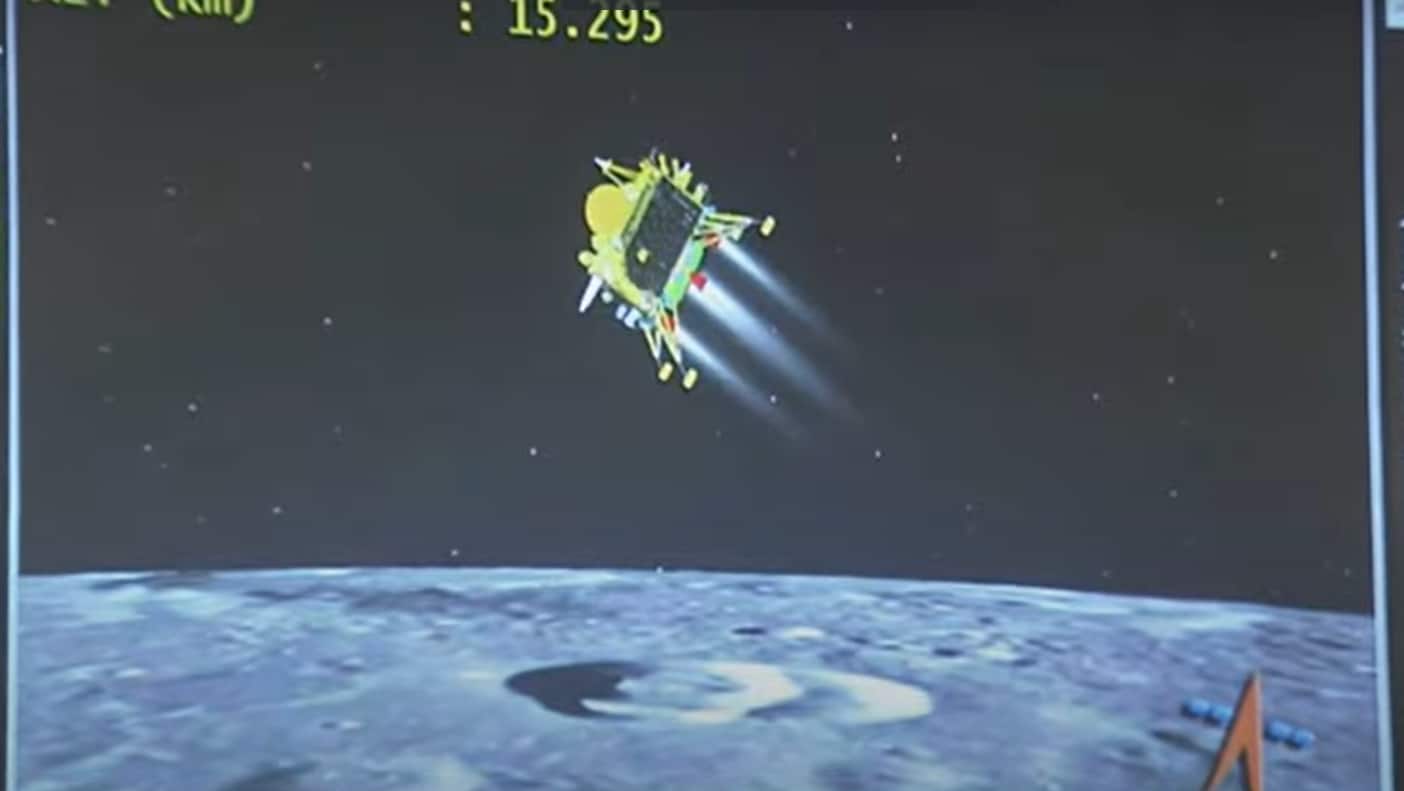
The lander is nearing the Moon surface as it undergoes its fine braking phase to attempt the soft landing.
Here's What Elon Musk And Jeff Bezos Said Ahead Of Chandrayaan-3 Moon Landing
As the nation eagerly awaits Chandrayaan-3 mission's Lander Module to soft land on the moon, do you know who the lander module is named after? Lander Module aka 'Vikram' is named after Vikram Sarabhai (1919–1971) who is widely recognised as the father of the Indian space programme.
Dr Sarabhai is often called as the father of the Indian space programme. He was instrumental in the establishment of the Indian National Committee for Space Research (INCOSPAR) in 1962, which later evolved into the Indian Space Research Organisation (ISRO) in 1969.
Recognising the potential of satellite technology for a country as vast as India, Dr Sarabhai was convinced of the role space technology could play in the nation's development. Under his leadership, India sent its first satellite, Aryabhata, into space in 1975. He also laid the foundation for the Thumba Equatorial Rocket Launching Station in Kerala.
Read on to know more about Vikram Sarabhai.
All systems Green at ESA for today’s #Chandrayaan3 Moon landing attempt! 💚📡〰️🛰️🇮🇳🌖
— ESA Operations (@esaoperations) August 23, 2023
Find out more about our support from Ramesh Chellathurai, ESA Service Manager and ESA Liaison Officer for ISRO: pic.twitter.com/r8AhHAGDME
"It is a very proud feeling for us because the lander has been named after Vikram Sarabhai. But, this pride is for all of us, not just the immediate family. Different components of this lander are made by different people. So it actually integrated so much of India into it. Scientists from all over the country were involved. It represents new India."Kartikeya Sarabhai to PTI
Chandrayaan-3 Mission:
— ISRO (@isro) August 23, 2023
All set to initiate the Automatic Landing Sequence (ALS).
Awaiting the arrival of Lander Module (LM) at the designated point, around 17:44 Hrs. IST.
Upon receiving the ALS command, the LM activates the throttleable engines for powered descent.
The… pic.twitter.com/x59DskcKUV
Read the full conversation here.
India's journey in space exploration is poised to achieve a notable landmark as the #Chandrayaan3 prepares to soft land on the lunar surface.
— BQ Prime (@bqprime) August 21, 2023
How many countries so far have successfully pulled off soft landing on the #Moon? Swipe to know.
Chandrayaan-3 — India's third space mission to the Moon — after a month-long journey is all set to create history on Wednesday. The Lander Module will attempt to touch down near the South Pole of the Moon today. A successful soft-landing will make India the first country to venture into this uncharted region of the Earth's natural satellite.
The Lander Module, comprising the lander 'Vikram' and rover 'Pragyan', will demonstrate safe and soft-landing on the Moon's surface, roving on the Moon, and conduct in-situ scientific experiments.
The lander houses seven scientific payloads. These include Chandra’s Surface Thermophysical Experiment, or ChaSTE, to measure the thermal conductivity and temperature; an Instrument for Lunar Seismic Activity for measuring the seismicity around the landing site, and a Langmuir Probe to estimate the plasma density and its variations. A passive Laser Retroreflector Array from NASA also part of the payload, and will be used for lunar laser ranging studies.
The rover carries two payloads — a LASER Induced Breakdown Spectroscope and an Alpha Particle X-ray Spectrometer — to ascertain the elemental composition around the landing site of Chandrayaan-3.
The Propulsion Module ferrying the Lander Module also has Spectro-polarimetry of Habitable Planet Earth payload to study the spectral and Polari metric measurements of Earth from the lunar orbit. It will be operated after the latter separates from it.
The mission life of Chandrayaan-3 on the Moon's surface will be of one lunar day, which is equivalent to 14 days on the Earth.
Chandrayaan-3 Mission:
— ISRO (@isro) August 21, 2023
Here are the images of
Lunar far side area
captured by the
Lander Hazard Detection and Avoidance Camera (LHDAC).
This camera that assists in locating a safe landing area -- without boulders or deep trenches -- during the descent is developed by ISRO… pic.twitter.com/rwWhrNFhHB
The Chandrayaan-2 orbiter currently in the Moon's orbit has established two-way communication with the Chandrayaan-3 Lander Module, ISRO announced on Monday.
Consequently, the Mission Operations Complex now has more routes to reach the Lander Module.
Essential Business Intelligence, Sharp Market Insights, Practical Personal Finance Advice, Daily Fuel, Gold and Silver Prices and Latest Stories — On NDTV Profit.