(Bloomberg) -- The Federal Reserve's continued push to remove liquidity from the financial system is bringing back volatility to year-end trading in the overnight funding markets for the first time in five years.
Volatility in the market for overnight repurchase agreements is generally tame, but it has started to move, with repos trading as high as 5.53% before closing at 5.32% on Tuesday, according to Curvature Securities. The last time the repo market moved at all around year-end was in 2018, when it spiked more than 3 percentage points to 6%.
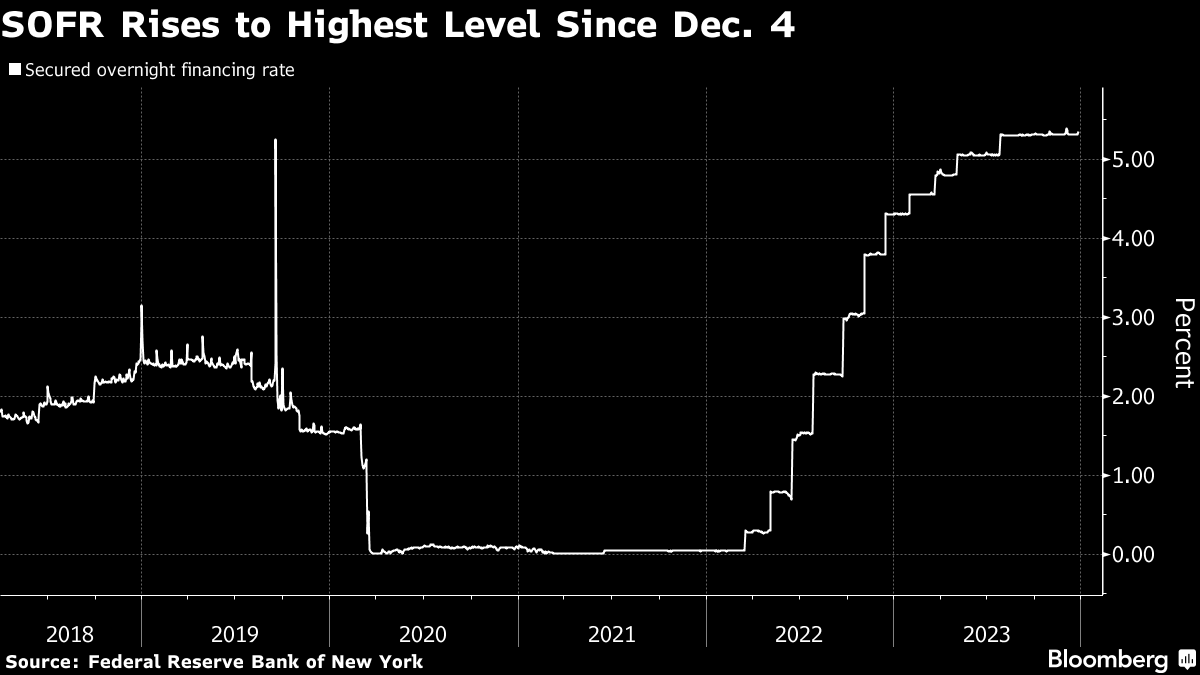
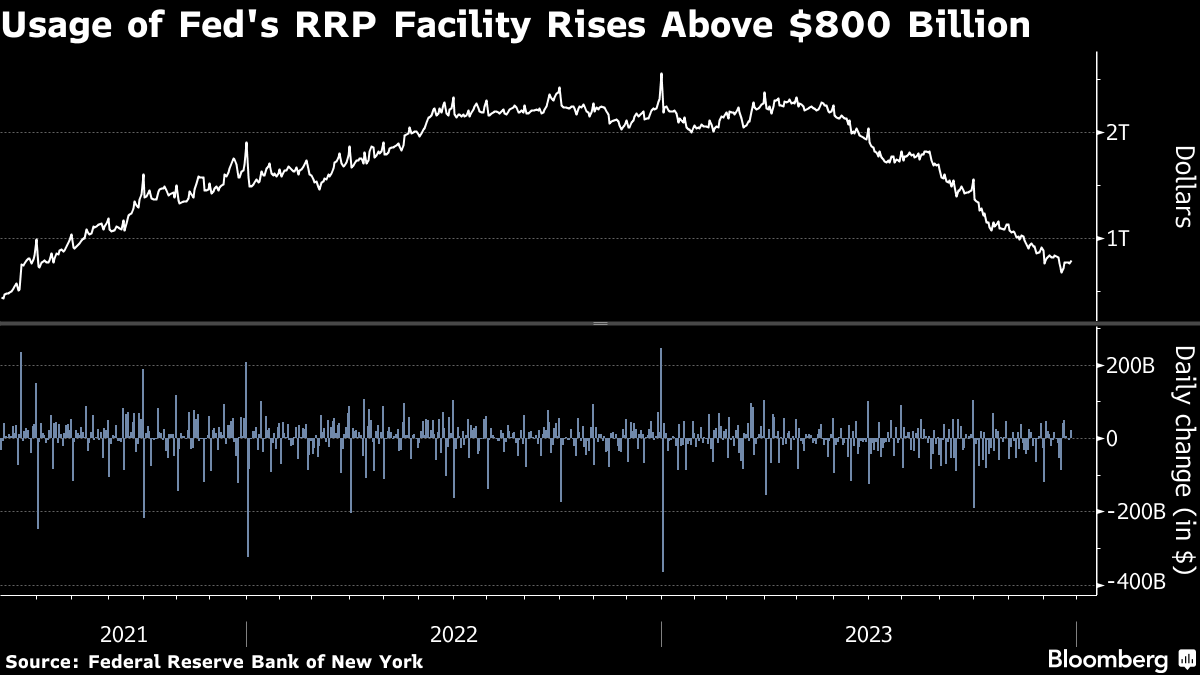
The move comes as the Secured Overnight Financing Rate rose to the highest level in more than three weeks through Tuesday, which is just shy of the all-time high reached on Dec. 1. Usage of the Fed's reverse repo facility, where counterparties can park cash overnight, is expected to rise further in coming days.
Strains in funding markets traditionally increase at the end of the year when banks pare activity to shore up their balance sheets for regulatory purposes. Their withdrawal forces market participants to either find alternatives, or else risk paying even higher funding costs.
Unlike the previous five years though, when markets relied on the central bank for extra liquidity — the Fed boosted temporary repo operations after a period of turmoil in 2019 before embarking on its rate-easing cycle of 2020 and 2021, followed by the start of its balance sheet unwind — traders are now on alert for additional pressure after repo rates surged last month in the aftermath of a rally in the Treasury market.
Here's what to watch for further signs of funding strains in the coming days:
Secured Overnight Financing Rate
The Secured Overnight Financing Rate, or SOFR, is a reference rate connected to transactions of overnight repurchase agreements. When funding costs rise it tends to drive SOFR higher as well. SOFR fixed at 5.35% as of Dec. 26 from 5.32% the prior session, according to New York Fed data published Wednesday. That's off the all-time high of 5.39% reached on Dec. 1.
Reverse Repo Facility
The Fed's reverse repo facility, or RRP, has been a place where counterparties — mostly money-market mutual funds — can park excess cash to earn a market rate, currently 5.3%. As banks pare their repo market activity to tidy up their balance sheets, it spurs money funds to shift more cash to the RRP. On Wednesday, 90 counterparties parked $819 billion at the facility, the most since Dec. 13.
Sponsored Repo
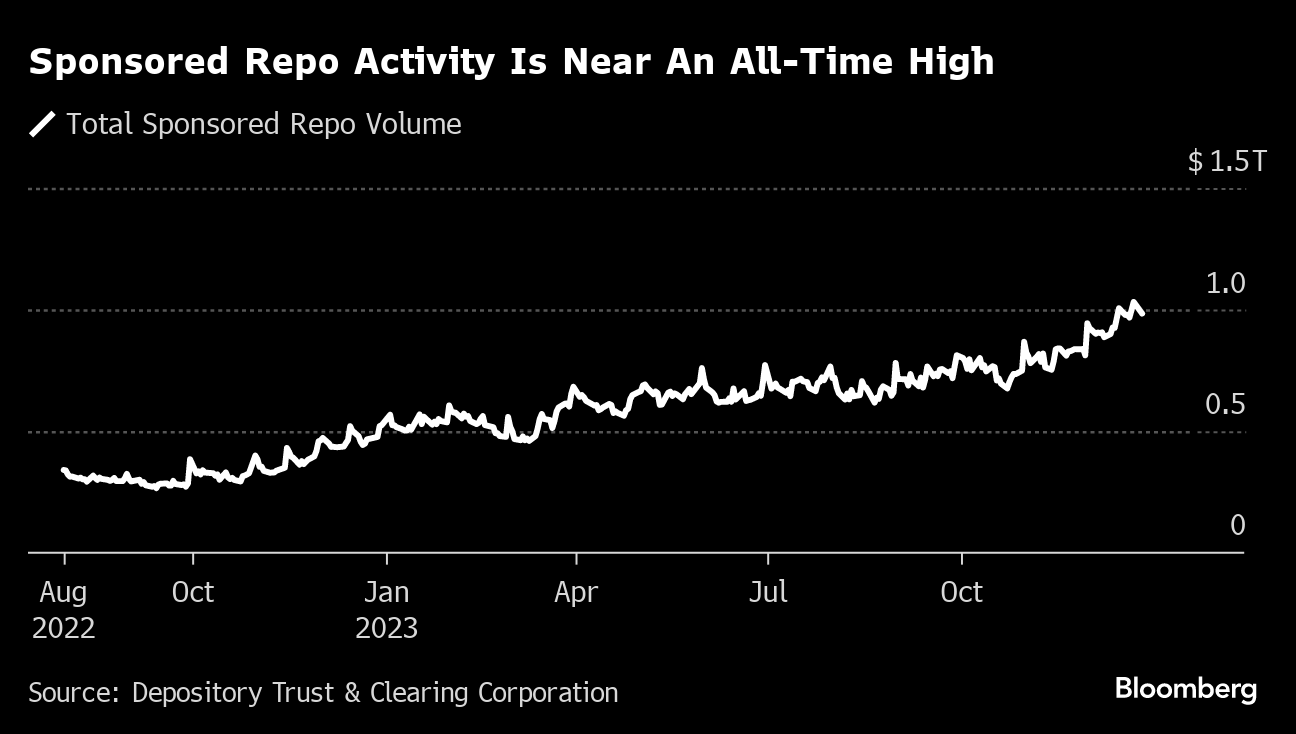
With year-end balance sheet constraints and increased need to finance long Treasury positions in the cash market, banks are shifting more activity to sponsored repo.
Total sponsored repo activity has risen, even reaching an all-time high $1.031 trillion as of Dec. 22, Depository Trust & Clearing Corp. data show. That's because sponsored repo transactions allow lenders to transact with counterparties like money-market funds and hedge funds, without bumping up against regulatory constraints of their own balance sheets. These agreements are effectively “sponsored” or cleared via the Fixed Income Clearing Corp's repo platform, thereby allowing dealer-banks to net two sides of a trade and hold less capital against it.
(Updates repo levels in second paragraph.)
More stories like this are available on bloomberg.com
©2023 Bloomberg L.P.
Essential Business Intelligence, Sharp Market Insights, Practical Personal Finance Advice, Daily Fuel, Gold and Silver Prices and Latest Stories — On NDTV Profit.