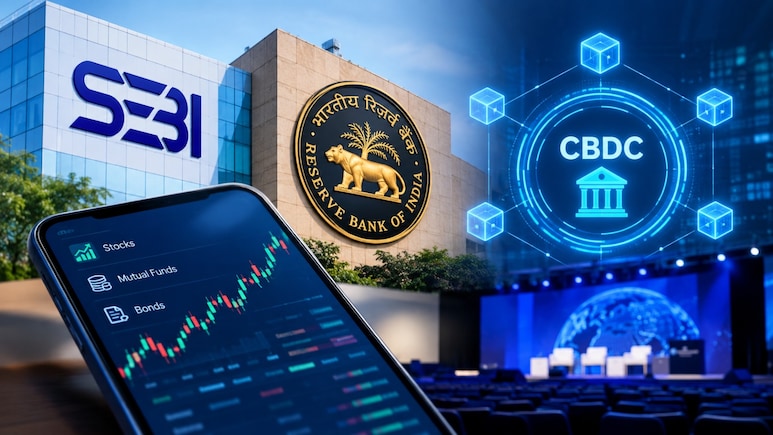
- RBI Governor and SEBI Chief launch India's first tokenised corporate bond pilot using CBDCs and blockchain
- Tokenisation may extend to equity, mutual funds, and electronic gold receipts after bonds
- Malhotra highlights massive financial inclusion with 57 crore Jan Dhan accounts and 80 crore UPI transactions
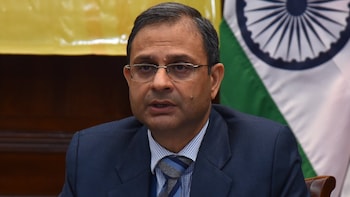
Reserve Bank of India (RBI) Governor Sanjay Malhotra and Securities And Exchange Board of India Chief Tuhin Kanta Pandey launch India's First Tokenised Corporate Bond Pilot at Global Fintech Fest 2026.
Tokenised securities and asset settlements will use CBDCs (Central Bank Digital Currency) and blockchain technology. After bonds, tokenisation can be extended to equity, mutual fund units and electronic gold receipts.
ALSO READ: SEBI To Rework Determination Of Derivative Expiry Day Closing Prices Under CAS
Also Read | Layoffs Are Rising In Tech, But These Skills Are Helping People Unlock Better Pay
Malhotra stated that the Global Fintech Fest has developed beyond a industry conference to where all stakeholders exchange ideas which shape the future of finance
"Today we have 57 crore PM-Jan Dhan Yojana account, 25 crore micro insurance policies, nine crore people are covered under Atal Pension Scheme with 80 crore UPI transactions being seen today," Malhotra said.
The most remarkable aspect of this transformation not scale of these numbers but digital finance becoming part of everyday life, he said.
Malhotra said massive financial inclusion had taken place over the past few years, driven by public-private partnerships.
“We need to make the financial services space ubiquitous and omnipresent,” he said, adding that traditional lenders had struggled to extend small-ticket loans to women, MSMEs and farmers. Fintech companies can help address this gap and contribute to financial inclusion by using technology, he said.
He further stressed that fintechs must focus on building trust, noting that trust takes years to build but can be broken quickly.
“A financial system which moves at the speed of light but does not command trust will not see many takers,” he said, urging fintechs to mitigate risks related to opacity, exclusion and cybersecurity.
He also urged fintech companies to treat data as a fiduciary responsibility rather than merely an asset. Financial and other data should be treated the way a trustee treats assets for a beneficiary, used strictly within the consent provided and protected as if it were their own, he said.
The RBI Governor stated that the account aggregator framework was built with this objective.
Financial institutions must take systemic responsibility that scales with their size, he said. While many fintechs remain outside regulatory frameworks, their responsibility increases as their payment volumes, loan books and user bases grow.
He said that operational resilience, business continuity and cybersecurity should not be treated as costs to be minimised.
Malhotra also cautioned against structuring businesses around gaps between regulatory categories, scaling first and seeking regulatory clarity later.
India's fintech ecosystem ranks third globally and received $2.4 billion in funding last year, while the country has 30 domestic unicorns, he said.
ALSO READ: Agentic AI Relevant For Markets, Regulations Must Evolve, Says SEBI Chief
India's solutions for financial inclusion and interoperability can be adopted more widely globally, Malhotra said, calling for the export of financial products, sharing of approaches, and common digital infrastructure and governance frameworks.
He said the RBI remained committed to supporting the fintech industry and did not view fintech primarily as an industry to be regulated, but as a strategic partner in leveraging the latest technology.
Essential Business Intelligence, Sharp Market Insights, Practical Personal Finance Advice, Daily Fuel, Gold and Silver Prices and Latest Stories — On NDTV Profit.