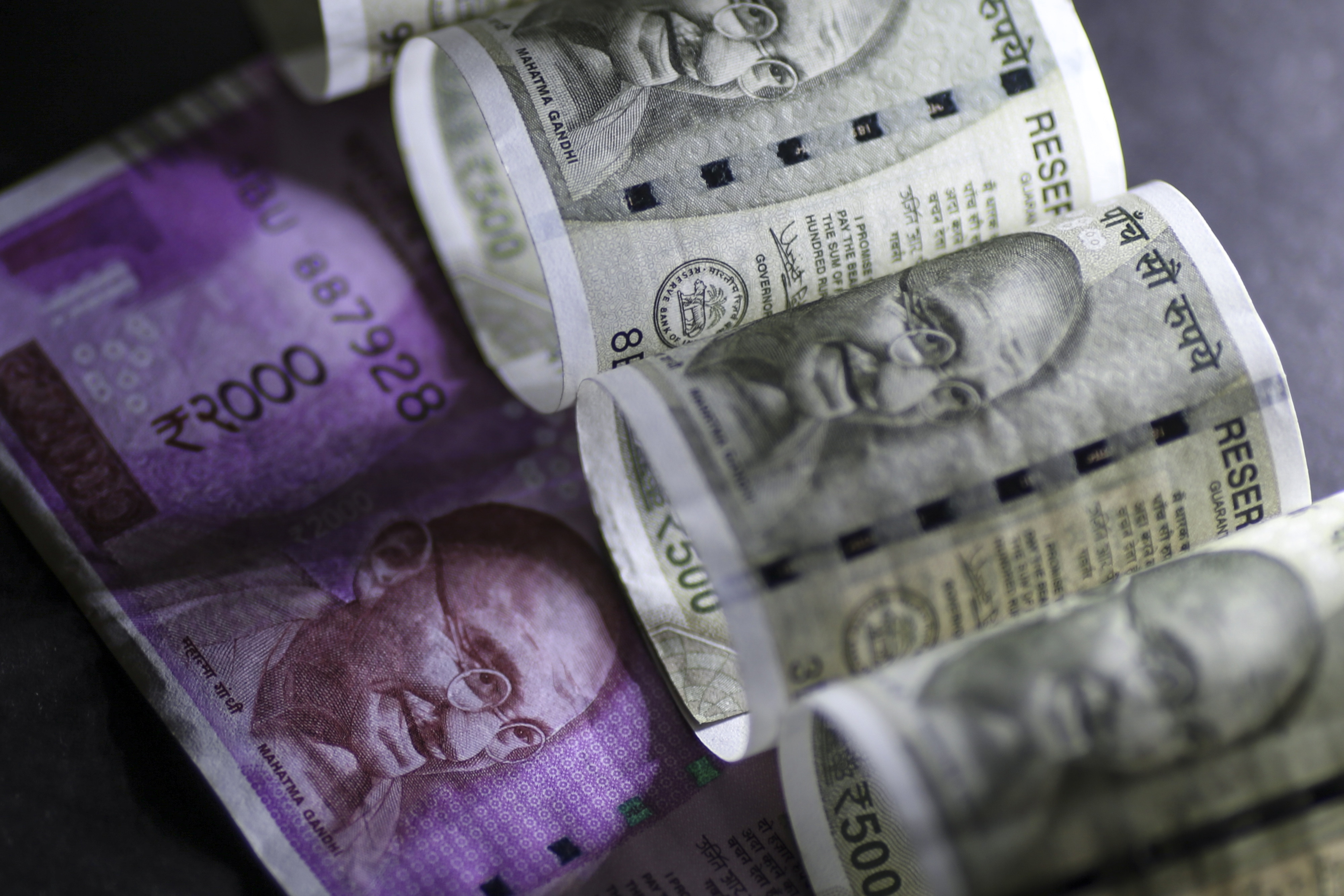
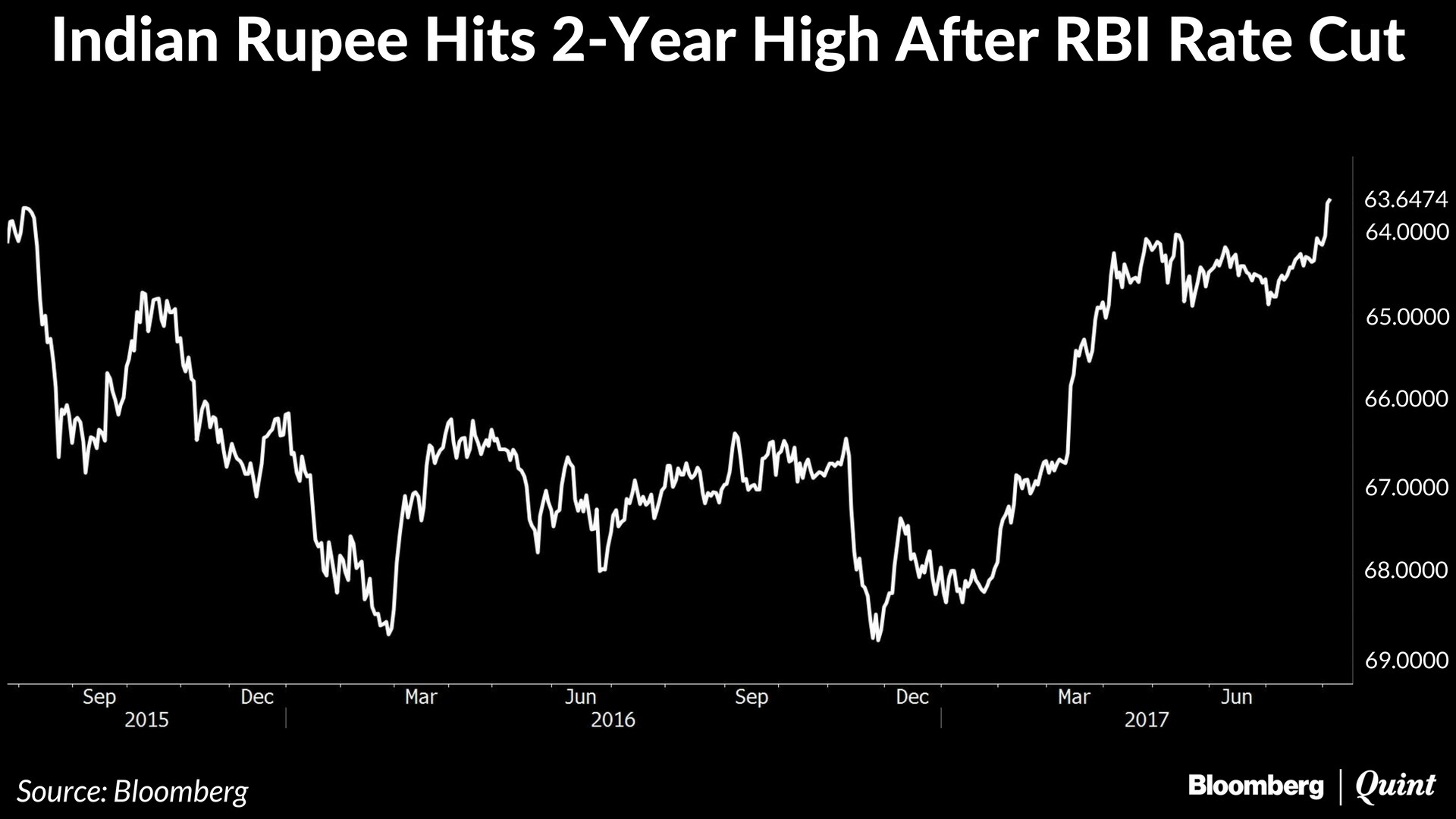
The Indian rupee strengthened to its two-year high after the Reserve Bank of India reduced the benchmark repo rate by a quarter of a percentage point.
The Indian currency strengthened to as much as 63.56 against the U.S. dollar on Thursday. So far this year, the rupee has strengthened 6.5 percent, making it one of the best performing Asian currency.
“Macroeconomics strengthened, political stability came about post UP elections and dollar weakness globally led to improved prospects for the rupee,” said Ananth Narayan, regional head-financial markets, ASEAN & South Asia, Standard Chartered Bank.
Sustained inflows from foreign funds in equity and debt segments, which stands at Rs 1.71 lakh crore year-to-date and Rs 24,028 crore for July, continues to fuel rupee's rise, according to Bloomberg data. The interest rate differential between Indian market and developed markets remains substantially high, even after the repo rate cut, which has attracted further foreign inflows into the domestic capital market.
Excessive rupee strength is not good for the economy as it may lead to higher imports, according to Narayan. The trade deficit in the quarter ended June surpassed $13 billion. If the trend were to continue, India's financial stability is likely to hamper, said Narayan.
Narayan sees 63.30-63.50 against the dollar an important range. If it breaks out, India is expected to move into an “uncharted territory”.
Essential Business Intelligence, Sharp Market Insights, Practical Personal Finance Advice, Daily Fuel, Gold and Silver Prices and Latest Stories — On NDTV Profit.