(Bloomberg) -- The pullback in bets on peak US interest rates is being mirrored by traders in emerging Asia, bolstering the investment case for bond bulls in the region.
Rising economic uncertainty around the world and tightening financial conditions has seen traders bring forward forecasts for the peak in Federal Reserve interest rates, and also on the start of easing. The shift means Asian policy makers can also be less hawkish, especially as inflation appears to be slowing.
The easing of hawkish Fed bets “will definitely take pressure off central banks that had their eyes on the Fed as a source of external policy pressure,” notably Indonesia, South Korea and the Philippines, said Galvin Chia, a strategist at NatWest Markets in Singapore.
The following three charts show how traders are turning less hawkish in emerging Asia :
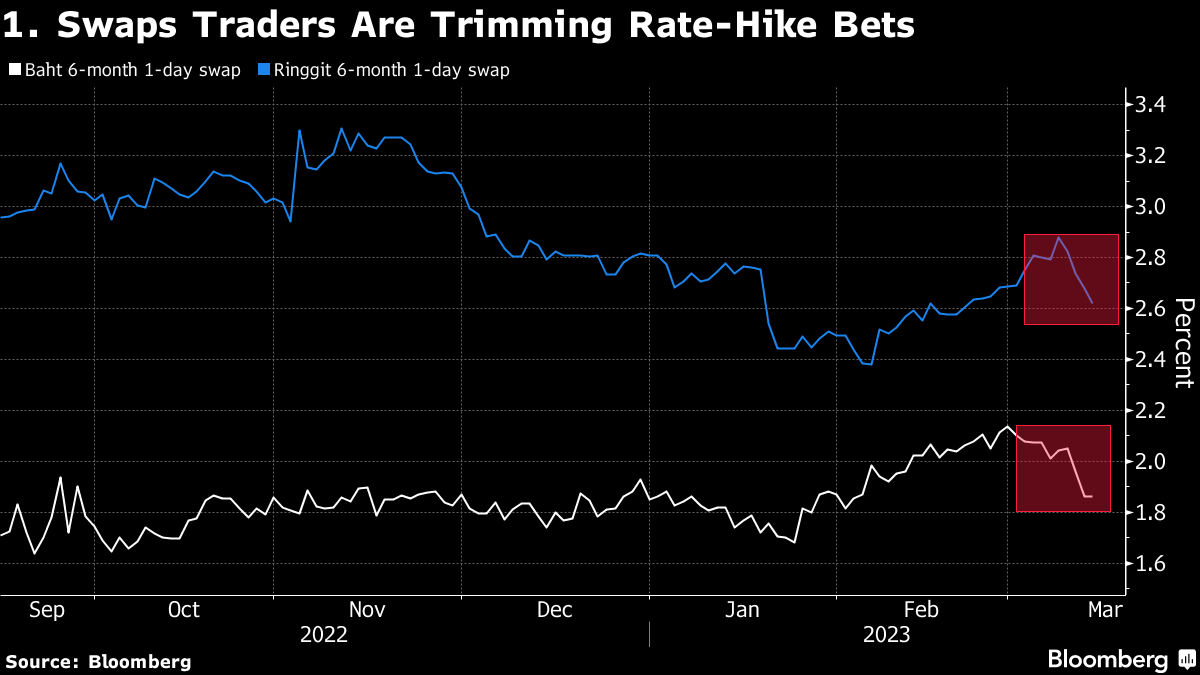
Swaps traders are dialing back bets on higher interest rates in Asia — providing a tailwind to regional bonds. Baht swaps are now pricing in only about 30 basis points of hikes over the next six months, down from about 65 basis points in late February. Similarly, ringgit contracts are pricing in over 15 basis points of cuts over a 12-month horizon, compared to a 15 basis-point increase just last week.
Asian fixed-income markets have rallied over the past week following the sharp drop in US two-year yields, which reflects either reduced hawkishness, as in Thailand, or increased dovishness, like in South Korea, Goldman Sachs Group Inc. strategists including Danny Suwanapruti in Singapore wrote in a research note this week.
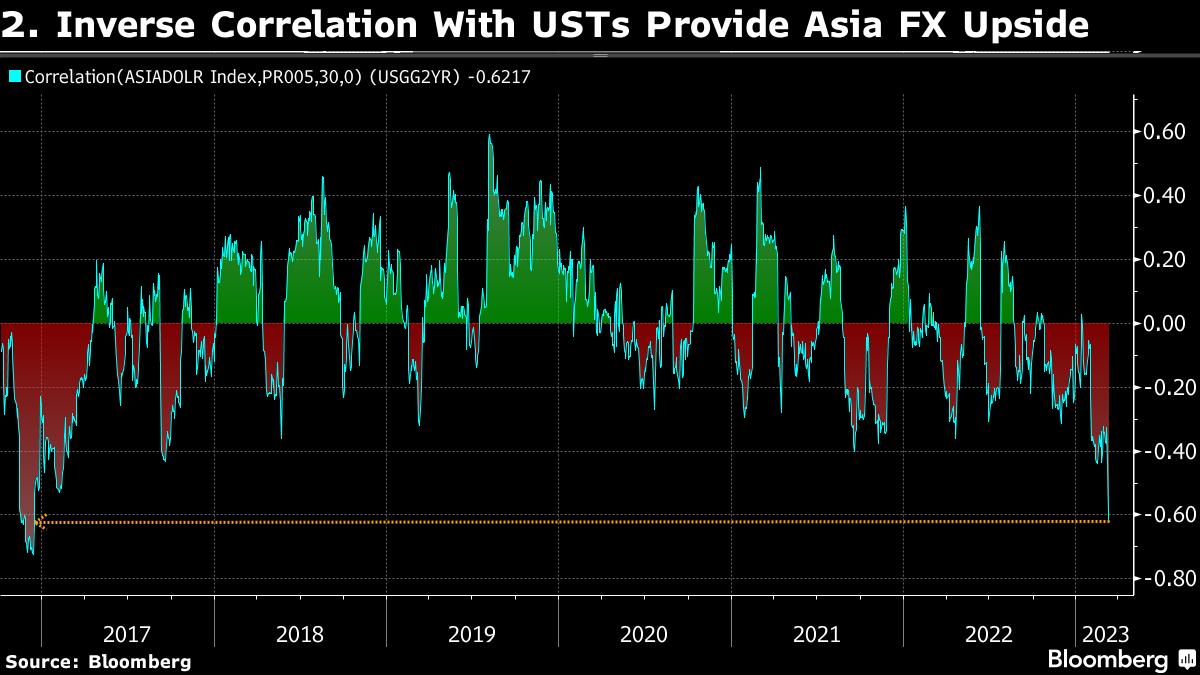
The correlation between US Treasuries and Asian currencies has become increasingly inverse over the past year — with that between US two-year yields and the Bloomberg Asia Dollar Index becoming the most negative since 2016 this week. That has meant the surge in US yields has meant sizable losses for the region's foreign exchange.
At the same time, the stretched correlation means any pullback in Treasury yields, such as the one seen this week, gives plenty of scope for Asian currencies to bounce back. Any gain in regional currencies will slow inflation further, and ease pressure on regional central banks to raise interest rates.
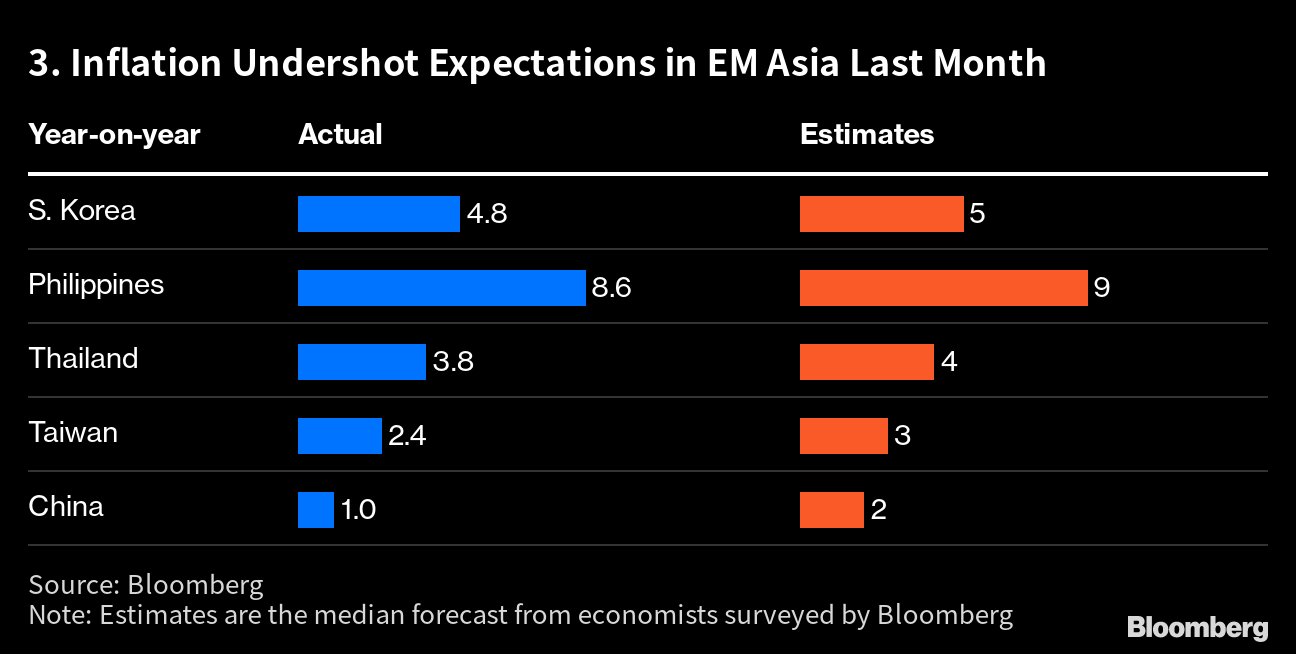
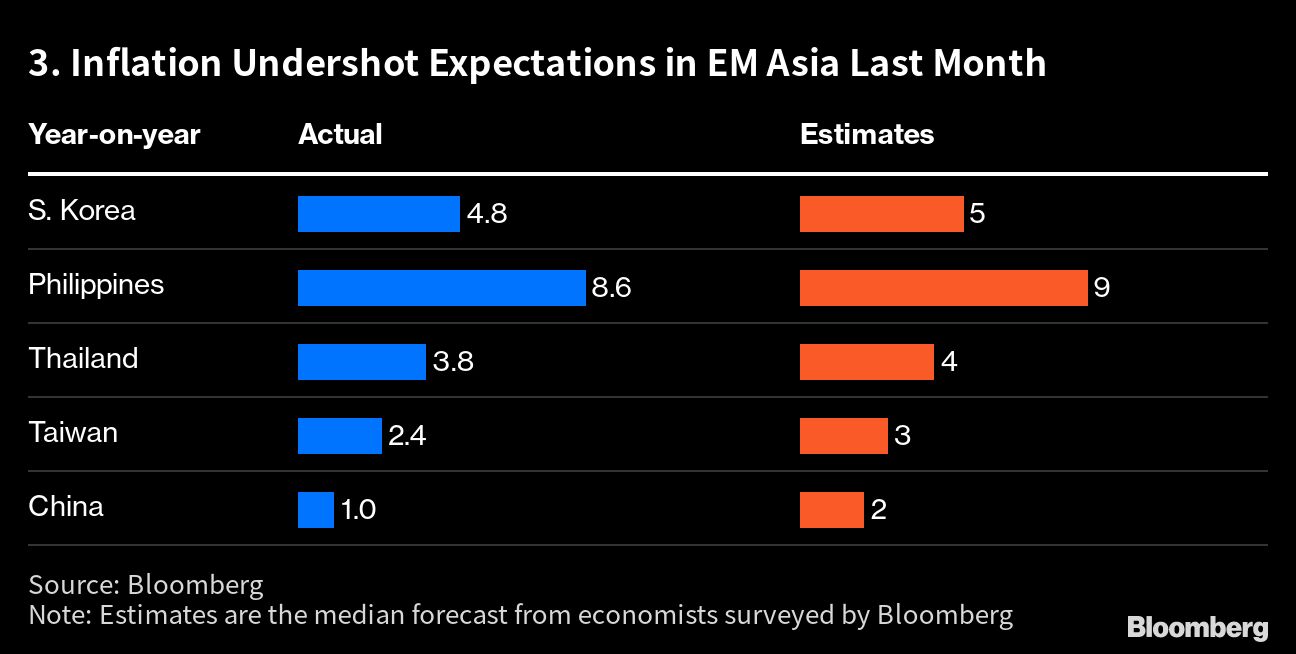
Inflation also looks to be peaking across the region — another positive for the region's bonds. Consumer-price index numbers for February in China, the Philippines, South Korea, Taiwan and Thailand were all below the median forecast of economists in Bloomberg surveys. That also takes away another driver for higher central bank interest rates.
At the same time, price pressures have still proved to be sticky in some economies — such as India, where inflation figures for February beat estimates for a second straight month.
(Updates swap prices in fifth paragraph)
More stories like this are available on bloomberg.com
©2023 Bloomberg L.P.
Essential Business Intelligence, Continuous LIVE TV, Sharp Market Insights, Practical Personal Finance Advice and Latest Stories — On NDTV Profit.