- Sebi will not change the newly introduced closing auction session (CAS) system now
- CAS aims to prevent market manipulation and increase transparency in trading
- Sebi is close to approving NSE's Draft Red Herring Prospectus for its IPO
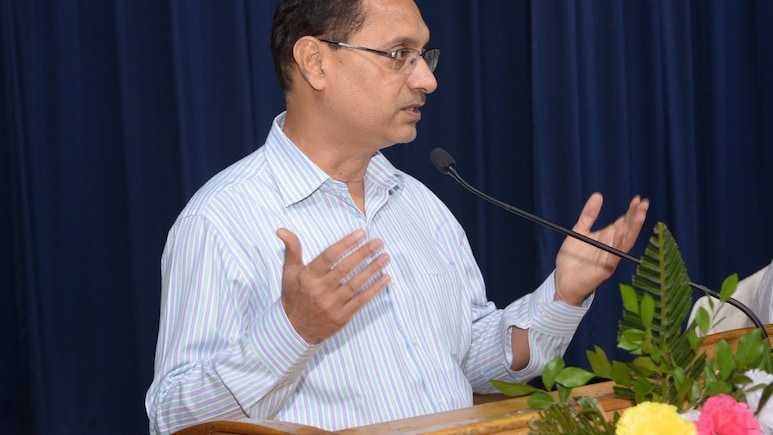
Sebi Chairman Tuhin Kanta Pandey on Thursday said the capital market regulator will not make any changes to the newly introduced closing auction session (CAS).
He also said that the regulator is very close to approving the National Stock Exchange's (NSE) Draft Red Herring Prospectus (DRHP), which will clear the decks for the largest equity bourse's initial public offering (IPO).
"We are not seeing any changes right now to CAS, and the system is running as it is. Participation will increase and everyone, brokers, will enable it in their apps," Pandey said on the sidelines of the 30th Anniversary Celebration of NSE Clearing.
Also Read | Layoffs Are Rising In Tech, But These Skills Are Helping People Unlock Better Pay
Sebi introduced CAS to prevent market manipulation and increase transparency.
Under the framework, buy and sell orders are pooled without immediate execution during a designated time window toward the end of trade under an auction-style order-matching process.
Introduction of the system led to what the Sebi chief had earlier referred to as "teething troubles". He had also appealed to participants to undertake more efforts at learning the new framework, and migrate to technology systems that support CAS.
Pandey had earlier assured the stakeholders to look into their concerns and make changes to the CAS framework if need be.
On August 19, Pandey had warned that any attempt to "defame" the newly introduced closing auction session (CAS) through manipulation will be dealt with sternly by the capital markets regulator. Within hours, the Sebi passed orders against two entities for manipulation.
ALSO READ: NSE To Trade On NSE? SEBI Chief Says Will Assess PTT Proposal When It Comes
Amid wide-ranging concerns expressed by market participants since CAS was introduced on August 3, Pandey said Sebi's ability to catch manipulation in CAS is higher than under the older volume-weighted average price system (VWAP) it replaces.
Meanwhile, on NSE's IPO, Pandey said the market regulator will assess the NSE proposal to allow its shares to trade on its own platform if and when such a proposal is received.
"No proposal received yet from NSE; we will assess when it comes," Pandey said.
While addressing the conference, Pandey called for a shift from measuring risks in the securities market to anticipating them, with interconnectedness among financial institutions, technology failures and liquidity shocks emerging as key areas of concern.
"Risk can no longer be understood only by looking at individual institutions. We must also understand the relationships between them," Pandey said.
He said the risks faced by the securities market have evolved beyond settlement, counterparty failure and default of clearing members, requiring greater focus on network-level and system-wide risks.
A clearing member may be financially sound on its own, but common exposures can create concentrations across the system, Pandey said.
Similarly, sudden liquidity shocks could affect several participants at the same time.
Sebi also flagged technology service providers as a potential source of systemic risk, saying a failure at an entity that may appear peripheral could affect multiple market institutions simultaneously.
Artificial intelligence is likely to add another layer of risk even as it can improve surveillance, risk analytics and decision-making, he said, adding that the risks could be related to opaque models, data, governance and operations.
"Therefore, risk management must evolve. We must move from measuring risk to anticipating risk. We must move from entity-level risk management to network-level and system-wide risk management," Pandey said.
(This story has not been edited by NDTV staff and is auto-generated from a syndicated feed.)
Essential Business Intelligence, Sharp Market Insights, Practical Personal Finance Advice, Daily Fuel, Gold and Silver Prices and Latest Stories — On NDTV Profit.