- Federal Reserve Chair Kevin Warsh will keynote Jackson Hole symposium on inflation and policy
- Warsh avoids forward guidance, focusing on Fed's broader economic and structural issues
- Markets seek clarity on Fed's reaction function to changing economic conditions
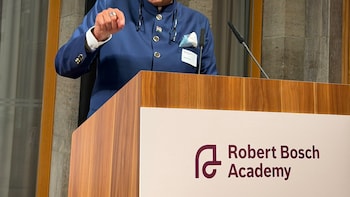
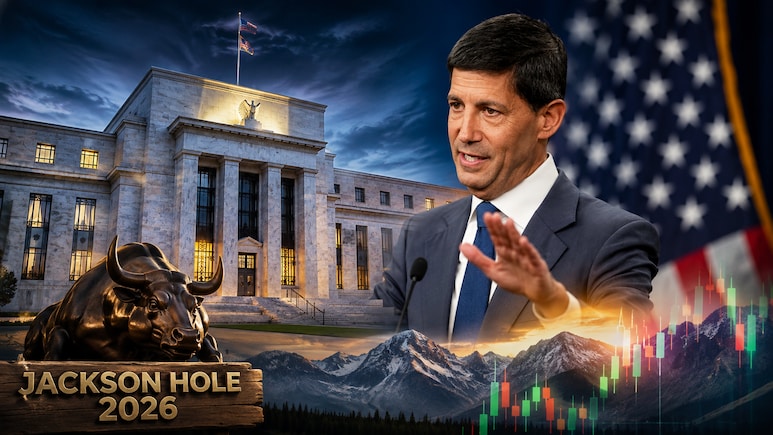
Jackson Hole 2026 Expectations: Federal Reserve Chair Kevin Warsh is set to deliver his much-awaited keynote speech at the Jackson Hole Economic Policy Symposium on Friday, with investors and economists looking for clues on the central bank's approach to inflation, interest rates, the economy and its broader policy framework.
According to multiple reports, expectations are high despite Warsh's reluctance to provide traditional forward guidance.
Warsh, who took over as Fed chair in May, 2026, has adopted a relatively restrained approach to communication, moving away from the practice of signalling the central bank's future policy moves. His Jackson Hole address will be his debut keynote at the annual symposium, according to multiple reports.
Also Read | Layoffs Are Rising In Tech, But These Skills Are Helping People Unlock Better Pay
What Are Investors Looking For?
Markets are particularly interested in whether Warsh will provide greater clarity on the Fed's reaction function — the economic conditions that could prompt policymakers to change interest rates.
According to The Hill, investors are not necessarily expecting Warsh to provide a clear signal on the next rate move, but they want to understand how the Fed would respond to changing economic conditions.
A CNBC survey found that 80% of respondents want Warsh to provide deeper insight into his view of the economy.
However, expectations are tempered by Warsh's known reluctance to “spoon-feed” financial markets with guidance on the future path of interest rates, according to multiple reports.
Lindsey Piegza, chief economist at Stifel Financial, told The Hill that Warsh has shied away from forward guidance and has limited Fed communication overall.
Warsh Could Focus On Broader Economic Themes
According to multiple reports, Warsh could use the speech to discuss broader economic and structural issues rather than provide specific guidance on the September rate decision.
ALSO READ: Hormuz Under Pressure: Iran To Set Reopening Conditions As Trump Claims 24 Ships Passed
The Jackson Hole symposium this year is titled “Financial Innovation: Implications for Payments and Policy.”
Luke Tilley, chief economist at M&T Bank and Wilmington Trust Investment Advisors, told CNBC that he expects Warsh to provide a high-level look at the work of the task forces he has established and discuss how he thinks the Fed should operate, rather than offer a detailed assessment of the economy and policy expectations.
Warsh has set up five task forces examining Fed functions from a “first principles” perspective. Their areas of focus include inflation, the central bank's balance sheet, the data that influences policy decisions, technology-related issues and communications, according to the report.
Toomas Laarits, an assistant finance professor at New York University's Stern School of Business, told The Hill that Warsh is likely to emphasise long-term price stability while remaining vague about near-term policy.
Sticky Inflation Keeps Rate Outlook In Focus
The Fed is grappling with inflation that remains above its 2% target, according to multiple reports.
The personal consumption expenditures (PCE) price index, the central bank's preferred inflation gauge, was unchanged in July, with prices rising 3.7% year-on-year, according to Bureau of Economic Analysis data cited by The Hill.
The annual rate was unchanged from June but below May's three-year high of 4.1%.
The July jobs report was also weaker than expected, with the US economy shedding 23,000 roles, while GDP growth slowed to 1.5% in the second quarter, according to The Hill.
The uneven economic data has made it more difficult for investors to assess the Fed's policy outlook.
Bond Market Volatility Adds To Pressure
The US bond market is another major focus ahead of Warsh's speech.
The yield on the 30-year Treasury bond surpassed 5.3%, reaching a 19-year high and its highest level since 2007, according to The Hill. The yield briefly declined after Treasury Secretary Scott Bessent announced plans to double the maximum amount of long-term government debt the Treasury can buy back, before rising again.
The 30-year yield stood at 5.18% as of Thursday afternoon, according to The Hill.
CNBC also reported that rising Treasury yields have left the bond and currency markets vulnerable to further volatility if Warsh's speech fails to provide sufficient clarity.
Joseph Brusuelas, chief economist at RSM, told CNBC that the unusual market conditions have raised the stakes for Warsh's address.
What Does The Market Expect On Rates?
At the Fed's July meeting, three officials dissented from the decision to keep rates steady, voting instead for a 25-basis-point increase, according to The Hill.
Traders were pricing in a 66% probability of rates remaining unchanged and a 34% chance of a hike at the September meeting, according to CME's FedWatch tool cited by The Hill.
Mark Cabana, head of US rates strategy at Bank of America, said in a client note cited by CNBC that he expects Warsh to signal that he is prepared to raise rates again if inflation does not continue to moderate.
Cabana also warned that if Warsh focuses exclusively on structural themes such as productivity or demographics, markets could interpret the message as dovish.
Why The Reaction Function Matters
One of the major criticisms of Warsh's approach so far has been his reluctance to provide forward guidance and his limited discussion of the conditions that would warrant a rate move in either direction, according to multiple reports.
Cabana said a lack of clarity could weigh on long-dated Treasurys, potentially pushing the 30-year yield to 5.5% or higher, according to CNBC.
Ian Katz, managing director at Capital Alpha Partners, told The Hill that investors want some understanding of the Fed's reaction function rather than necessarily expecting a clear signal on rates.
What Could Warsh Say At Jackson Hole?
According to multiple reports, Warsh is unlikely to provide a conventional roadmap for near-term interest rates. Instead, he could focus on price stability, structural economic issues, productivity, demographics, financial innovation and his broader framework for how the Fed should operate.
Piegza told The Hill that Warsh is unlikely to offer a concrete pathway or commitment for rates, while Laarits expects him to remain focused on long-term price stability.
At the same time, analysts cited by CNBC argue that greater specificity could be important for calming markets.
“We're in a unique set of conditions here,” RSM's Brusuelas said, according to CNBC. He added that Warsh would need to be more forthright and clear in his remarks.
ALSO READ: Track Stock Market Live Updates Here
Essential Business Intelligence, Sharp Market Insights, Practical Personal Finance Advice, Daily Fuel, Gold and Silver Prices and Latest Stories — On NDTV Profit.