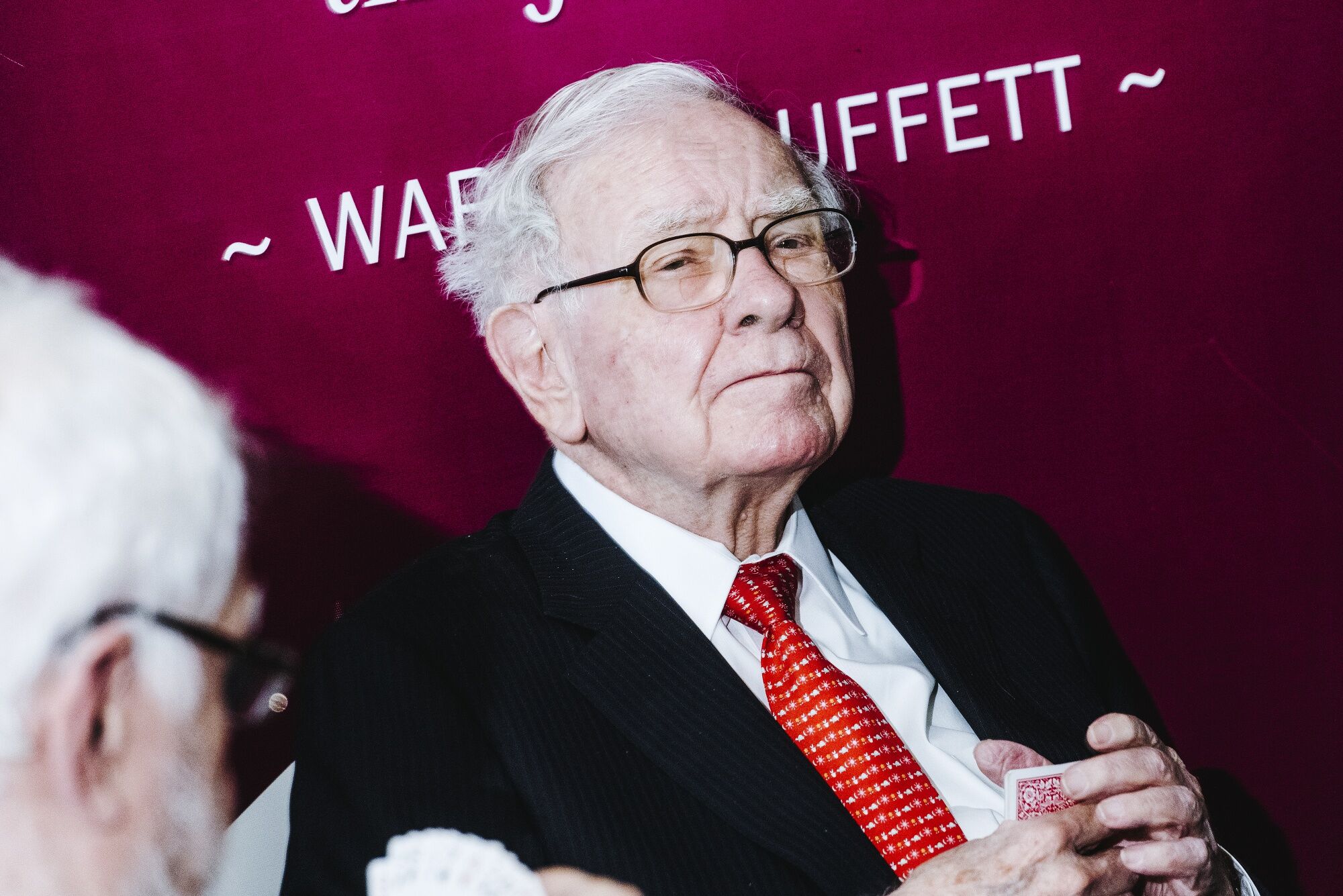
(Bloomberg) -- Warren Buffett's Berkshire Hathaway is poised to show that persistently high interest rates have helped the conglomerate more than they hindered it.
The Omaha, Nebraska-based firm owns operations spanning railroad and energy to candy and insurance, making it particularly susceptible to higher interest rates that can crimp demand. But it also holds a vast cash pile parked largely in short-term Treasury bills, a haul being burnished by elevated interest rates amid Federal Reserve efforts to contain inflation.
“It's clearly benefitting from higher short-term interest rates,” Jim Shanahan, an analyst with Edward Jones, said. “There are a handful of businesses that are hurting from higher interest rates as home sales and car sales slow down as interest rates move up, but this is way overwhelming the negative impact.”
For the full year, Berkshire may reap interest and other investment income of $5.5 billion, dwarfing the $1.7 billion from 2022, according to Shanahan. That could help tip its cash pile into a new record — potentially topping the $149.2 billion high set in the third quarter of 2021 — and drive a more-than 30% bump in operating earnings to $9 billion, analysts predict.
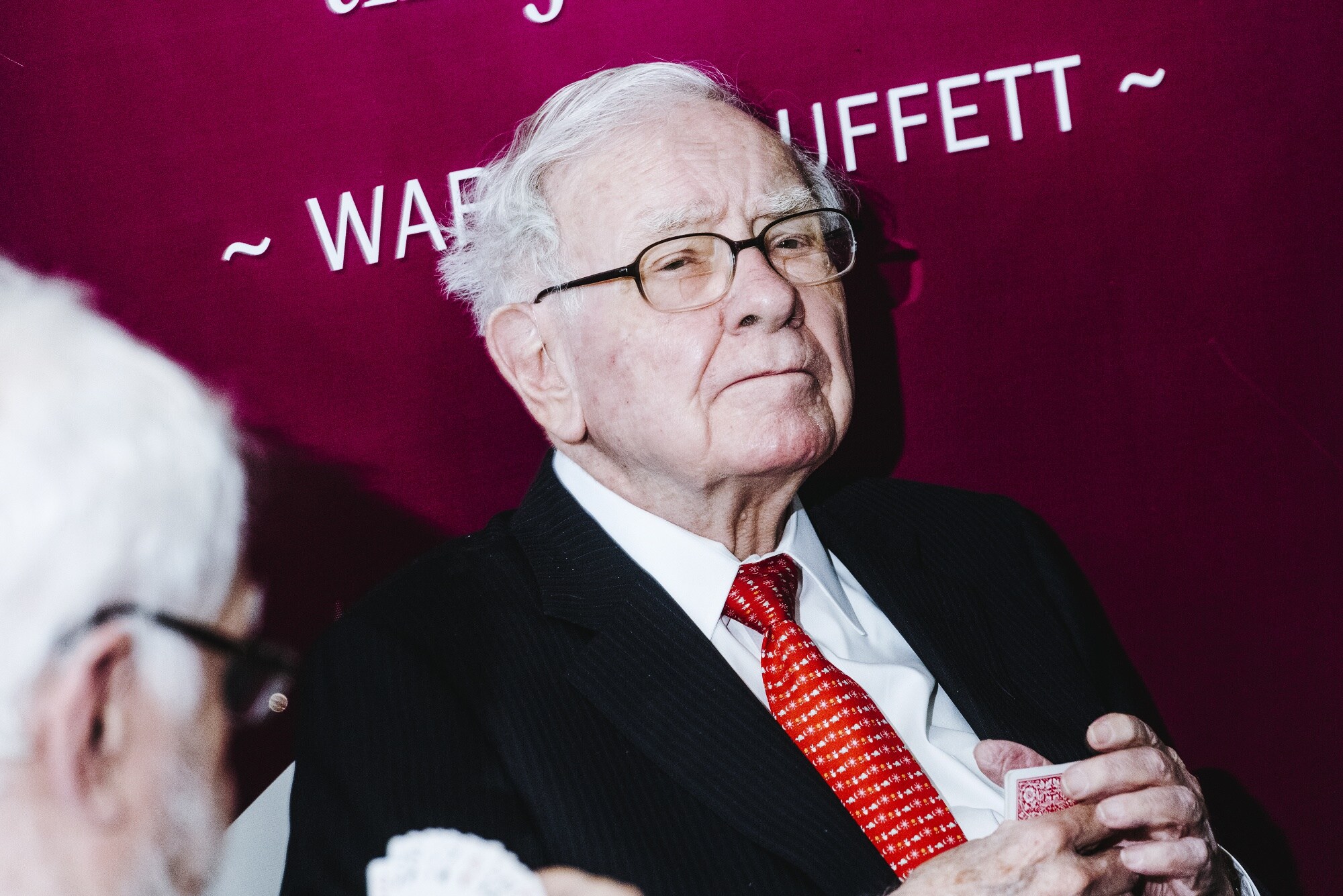
Berkshire's earnings are always closely watched as a proxy for US economic health because of the expansive nature of his businesses — ranging from BNSF, Geico and Dairy Queen. Buffett warned in May that earnings at most of its operations could fall this year as an “incredible period” for the US economy draws to an end.
Read More: Warren Buffett Predicts Earnings Decline at Berkshire Units
“Results should be pretty good — but not great — because there's a couple of headwinds,” said Meyer Shields, an analyst with KBW.
One such headwind is confronting its equities portfolio, a $350 billion pool dominated by stock in Apple Inc. The tech giant's shares dropped 12% in the third quarter, driving a likely 8% loss on the portfolio for the period, according to Bloomberg Intelligence analysts. Overall, the portfolio may see $27 billion in pretax unrealized investment losses for the quarter, the analysts estimated.
Still, Berkshire often recommends that investors look past investment gains or losses, which are tied to accounting rules, saying that can be misleading to investors.
What Bloomberg Intelligence Says:
“Berkshire Hathaway's 3Q earnings (excluding eliminations and other) can grow more than 30% from last year to at least $9 billion, we believe. Geico should remain under pressure, but insurance earnings will rise significantly vs. 3Q22, given higher interest rates and the impact of Hurricane Ian in the prior year. Reinsurance earnings may be strong, but it's too early to declare victory on Berkshire's Florida market bet.”
Matthew Palazola, BI senior industry analyst, and Eric Bedell, BI associate analyst
Cash Hoard
A major question for Berkshire each quarter is its plans for deploying its cash stockpile. The blockbuster deals that galvanized the billionaire investor's renown have been few and far between in recent years — although it did strike an $11.6 billion deal to buy Alleghany Corp. which closed in 2022. In July, Berkshire Hathaway Energy agreed to buy Dominion Energy Inc.'s stake in a Maryland liquefied natural gas export project for $3.3 billion.
Even with those transactions, the company is still awash in cash. It ended the second quarter with a little over $147 billion, and analysts predict it could surpass $150 billion in the third quarter — marking the highest level in data going back to 2014.
Pricey valuations may be keeping the company on the sidelines when it comes to larger deals. If valuations don't fall in-line with the higher interest rates, “then the right thing to do is to do nothing,” said KBW's Shields.
Pilot Flying J
In January, Berkshire struck another deal, paying $8.2 billion to boost its existing stake in Pilot Flying J — a truck-stop provider closely held by Cleveland Browns owner Jimmy Haslam and his family — to 80%. The transaction is currently subject of a legal dispute, providing a rare glimpse behind-the-scenes of Berkshire and one of its operating companies. The business accounted for 14% of Berkshire's operating revenue for the first six months of year.
In a complaint made public last week, the family said Berkshire violated terms of the acquisition by changing the accounting methods used to value part of the deal.
“It is a little surprising that they couldn't come to an out-of-court agreement and instead had to litigate it,” said Cathy Seifert, an analyst with CFRA Research. “That's a little bit of a departure from the Berkshire historical model.”
More stories like this are available on bloomberg.com
©2023 Bloomberg L.P.
Essential Business Intelligence, Sharp Market Insights, Practical Personal Finance Advice, Daily Fuel, Gold and Silver Prices and Latest Stories — On NDTV Profit.