India's fight to stabilize the rupee is starting to exact a price in the bond market, as traders ramp up bets on faster interest-rate hikes.
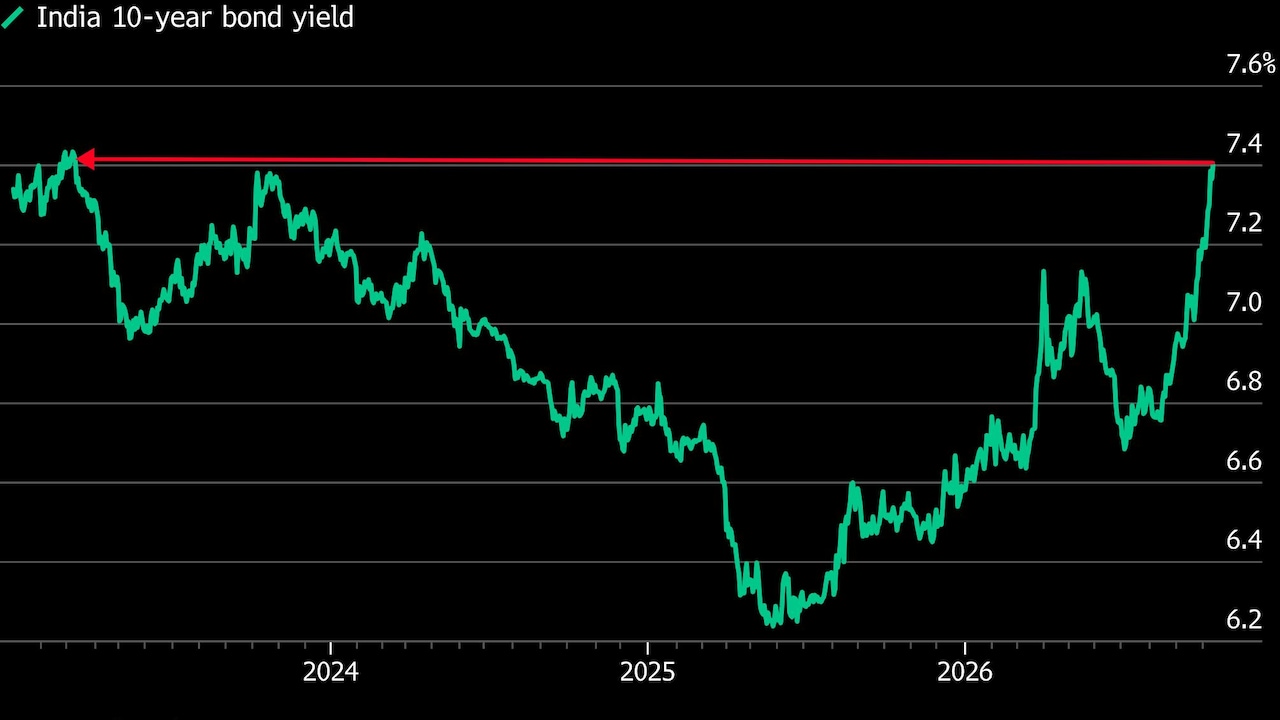
The 10-year government bond yield may hit 7.5% as soon as this month, according to analysts at Ujjivan Small Finance Bank and IDFC First Bank - extending its climb from 7.4% on Wednesday, the highest since March 2023.
The selloff highlights the trade-off facing the Reserve Bank of India after its boldest effort in more than a decade to support the rupee. The central bank has rolled out measures to curb dollar demand, including a special window to supply foreign currency to state-run oil refiners. But with elevated oil prices and foreign outflows persisting, traders are betting the RBI will need to rely more on rate hikes, which tend to push bond prices down and yields higher.
Also Read | Layoffs Are Rising In Tech, But These Skills Are Helping People Unlock Better Pay
ALSO READ | Higher Rates Could Hurt Weaker Companies Before Economy, Says Morgan Stanley
"The market is pricing in faster rate hikes after the RBI's recent currency measures, which is signaling their resolve toward ensuring an orderly rupee," said Rajeev Pawar, head of treasury at Ujjivan. Traders now see a greater chance of a 50-basis-point hike in December, weighing on bonds, he added.
Those expectations were reinforced by Governor Sanjay Malhotra's comments Tuesday that the RBI was prepared to take further steps if needed to curb speculation in the foreign-exchange market. It raised rates earlier this month for the first time in nearly four years and signaled more may follow.
Some investors see the policy rate climbing to as high as 6.5%, from 5.5% now, if oil prices stay elevated, said VRC Reddy, head of treasury at Karur Vysya Bank.
"Basically the market is fearing an ultimate recourse to higher interest rates by RBI if the measures announced fail to have the desired impact," said Puneet Pal, head of fixed income at PGIM India Mutual Fund, who expects the 10-year yield to climb to as high as 7.60% over the next month.
Yet rate hikes may not be the biggest risk for bonds. Defending the rupee means selling dollars, and every dollar the RBI sells pulls rupees out of the financial system. That leaves banks with less cash to lend to each other, and less to invest in government debt.
That liquidity squeeze may be the bigger surprise for the market. While expected rate hikes are largely priced in, tighter cash conditions are not, according to Gaura Sen Gupta, chief economist at IDFC First Bank.
ALSO READ | Nifty 50 At 26,500 By March? Monarch Networth Capital CEO Flags Three Big Triggers
"So far, liquidity was the wall that had protected domestic bonds from the global selloff, but now that cover is reducing," she said. She sees the 10-year yield trading between 7.20% and 7.50% in the near term, compared with an earlier forecast of around 7.25%.
For now, the RBI's measures have helped the rupee rally 1.6% this week to around 95 per dollar. The question is how long that relief can last. Brent crude remains above $100 a barrel amid turmoil in the Middle East, inflation has climbed to a two-year high and surging US yields are pulling capital away from emerging markets - a combination that may push the currency lower again.
That leaves the RBI with increasingly difficult choices. It has already encouraged banks to raise $133 billion from Indians overseas in less than three months, a drive that ended in August but failed to reverse bearish sentiment.
Much of the RBI's traditional playbook has now been deployed. Further rate hikes and curbs on outward remittances are among the few options left, Swayamsiddha Panda, an economist at Ambit Capital, wrote in a note.
(This story has not been edited by NDTV staff and is auto-generated from a syndicated feed.)
Essential Business Intelligence, Sharp Market Insights, Practical Personal Finance Advice, Daily Fuel, Gold and Silver Prices and Latest Stories — On NDTV Profit.