Asian stocks extended their slide into a third day and oil edged up as the war in Iran threatens to unleash a wave of global inflation and traders pare bets for interest-rate cuts by the Federal Reserve.
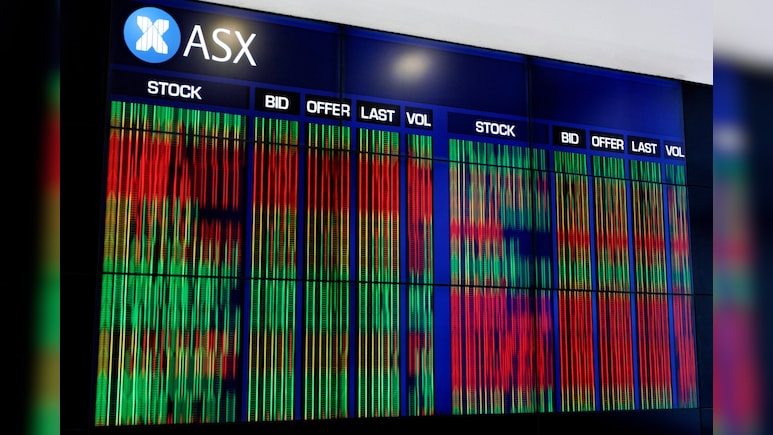
The MSCI Asia Pacific Index tumbled 1.6% with stocks opening lower in Japan, South Korea and Australia. That came after a late recovery in the US session trimmed some of the losses from a global selloff after President Donald Trump's assurances on securing shipping through the Strait of Hormuz helped steady nerves. US benchmarks fell around 1%.
West Texas Intermediate crude rose as much as 1.2% on Wednesday amid prospects of crude flows through the Strait of Hormuz. Trump said the US will escort and insure tankers and other vessels through the world's most-critical energy chokepoint, a measure meant to head off a potential crisis.
Also Read | Layoffs Are Rising In Tech, But These Skills Are Helping People Unlock Better Pay
Gold rose 0.5% to trade close to $5,110 on Wednesday, rebounding after a 4.4% slide in the New York session that came amid a recovery in stocks. The yield on 10-year Treasuries climbed three basis points to 4.06% on Tuesday, while the dollar rose for a second consecutive day on Tuesday.
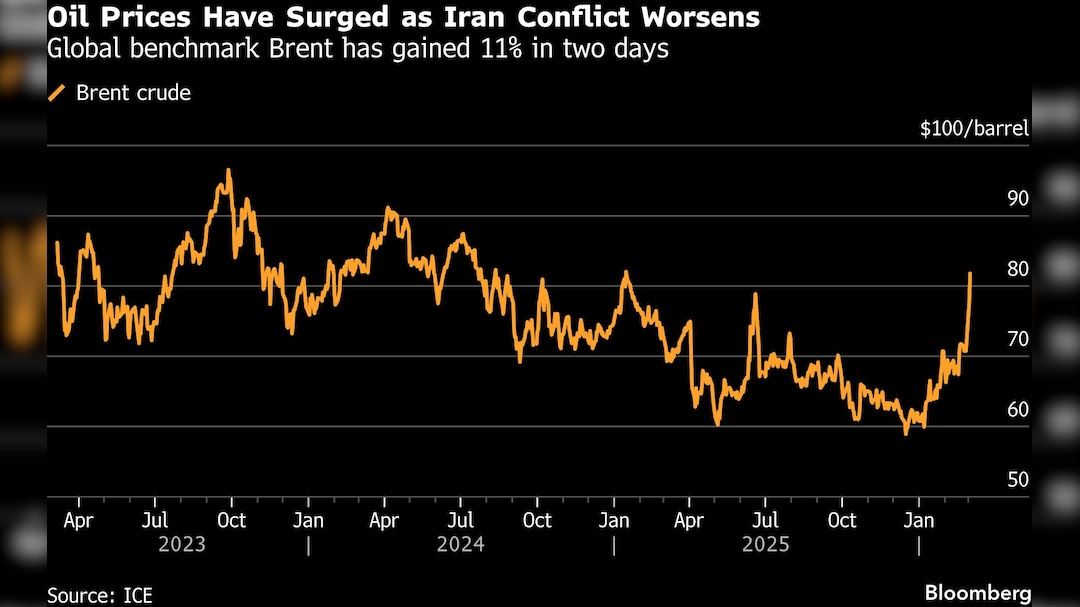
Photo Credit: Bloomberg News
“For now, markets are trading headline to headline,” said Fawad Razaqzada at Forex.com. “Much will depend on whether tensions stabilize — or whether this proves to be the start of a more prolonged disruption to global supply.”
The US-Israeli attack on Iran has destabilized the Middle East and threatens to deliver a new inflationary shock to the US economy by pushing up oil prices. There's also no clear sense of when or how it will end, raising the prospect of prolonged conflict and unforeseen consequences beyond the White House's control.
The war continued to reverberate across the region, with Israel bombarding Tehran in a fresh wave of strikes. The Islamic Republic fired missiles at Qatar, Bahrain and Oman, with Doha saying targets weren't limited to military interests. Qatar and Iraq halted production at major energy sites.
“There is significant room for global market corrections to continue, as risk has been built up over the last three years of global growth,” according to Bob Savage, head of markets macro strategy at BNY. “The problem for offsetting equity pain is that fixed income is more correlated to than divergent from equity risks.”
ALSO READ: Gold, Silver Price Today, March 4: Check Prices In Mumbai, Delhi, Chennai, And Other Cities
Attention in Asia is also on South Korea's stocks and currency. The benchmark Kospi index slumped 4.5%, extending a 7.2% plunge on Tuesday, which was the worst session since August 2024. The South Korean won edged up on Wednesday after sliding to its weakest level since 2009 in the prior session.
In other corners of the market, European natural gas spiked to a three-year high, which may lift prices in Asia as the regions compete for liquefied natural gas cargoes.
With the conflict disrupting shipments, fuel costs have been on the rise. A sustained surge in prices for diesel — used in freight, power and heating — could add to the cost of transportation — a key component of inflation. Gasoline prices have also jumped, intensifying those risks.
Meanwhile, traders in the futures markets are sharply reducing expectations for interest rate cuts from the Federal Reserve, as the war with Iran drives fears of an inflationary resurgence.
The view is being expressed in interest-rate futures spreads, which are tightening on bets that a war-fueled spike in oil prices could aggravate inflation and make it harder for policymakers to reduce borrowing costs this year.
A prolonged conflict pushing oil to $90-$100 for a sustained period would be a significant economic headwind, noted Jennifer McKeown at Capital Economics. The adverse effects should be limited by central banks looking through the shock and avoiding rate hikes, but cuts would probably be delayed, she added.
Barring a prolonged disruption of oil supplies, the conflict is unlikely to end the cyclical stock bull market by itself, according to Ed Clissold and Thanh Nguyen at Ned Davis Research, which has tracked crisis events for decades.
“The risk here is the scale of the supply shock the war will create,” wrote Kyle Rodda at Capital.com. “Given the very chaotic nature of the events and the strong incentive for all combatants to escalate right now, this uncertainty could drag on for a while.”
Some of the main moves in markets:
Stocks
- S&P 500 futures fell 0.1% as of 9:13 a.m. Tokyo time
- Hang Seng futures fell 0.8%
- Japan's Topix fell 2.7%
- Australia's S&P/ASX 200 fell 1.7%
- Euro Stoxx 50 futures fell 3.7%
Currencies
- The Bloomberg Dollar Spot Index was little changed
- The euro was little changed at $1.1608
- The Japanese yen was little changed at 157.66 per dollar
- The offshore yuan was little changed at 6.9156 per dollar
- The Australian dollar was little changed at $0.7030
Cryptocurrencies
- Bitcoin rose 0.2% to $68,139.99
- Ether rose 0.6% to $1,981.27
Bonds
- The yield on 10-year Treasuries was little changed at 4.06%
- Japan's 10-year yield declined 1.5 basis points to 2.115%
- Australia's 10-year yield advanced one basis point to 4.78%
Commodities
- West Texas Intermediate crude rose 1.2% to $75.43 a barrel
- Spot gold rose 0.5% to $5,116.71 an ounce
Essential Business Intelligence, Sharp Market Insights, Practical Personal Finance Advice, Daily Fuel, Gold and Silver Prices and Latest Stories — On NDTV Profit.