- Indian firms shift from broad pay hikes to modular, skills-based reward systems
- Flexible benefits platforms rise, boosting employee satisfaction over traditional pay
- Mental health support is now standard, with usage up 40% and strong ROI reported
The annual increment used to dominate compensation conversations. Today, it's just one piece of a much larger architecture. According to EY's Future of Pay 2026 report, Indian organisations are fundamentally rethinking how they allocate reward capital - shifting from broad-based pay expansion toward sharper differentiation, skills-led premiums and, increasingly, a redesigned benefits ecosystem.
Compensation is becoming modular. Instead of relying primarily on fixed pay, employers are building multi-layered reward portfolios: wellness programs, flexible benefits wallets, financial security support, learning credits and inclusion-led policies.
From Paycheques to Portfolios
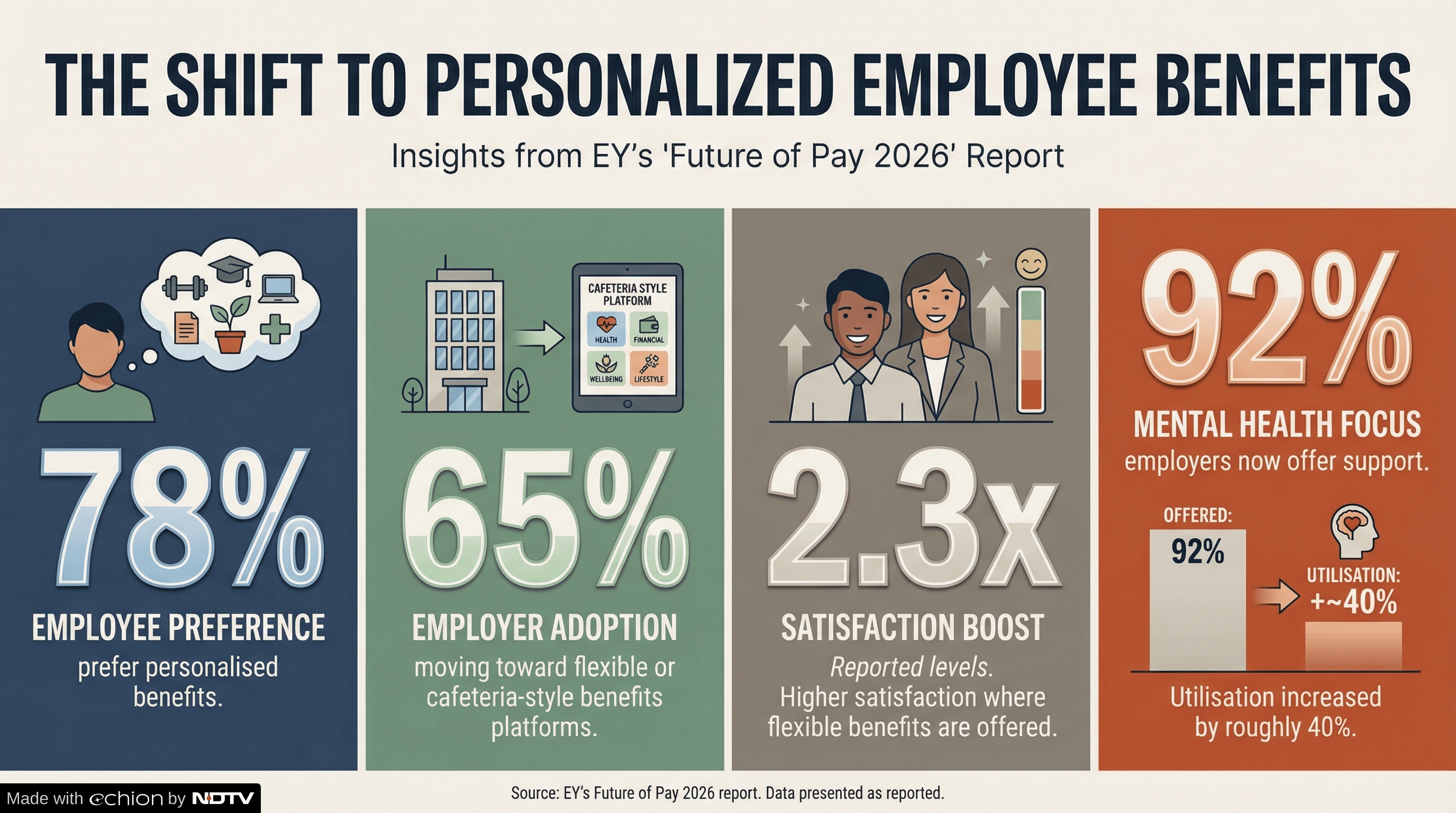
78% percent of employees say they prefer personalised benefits. In response, 65% of employers are moving toward flexible or cafeteria-style benefits platforms, allowing employees to allocate a defined pool across options that matter most to them.
The shift reflects workforce fragmentation. A young digital professional may prioritise AI certifications. A mid-career parent might choose childcare or expanded health coverage. A senior executive may focus on retirement or long-term insurance enhancements.
Where flexible benefits are offered, satisfaction levels are reported to be 2.3 times higher - even when overall reward budgets remain disciplined.
Wellness Is Now Infrastructure
If one area illustrates the reset most clearly, it is mental health. 92% percent of employers now offer mental health support, and utilisation has increased by roughly 40%. What was once progressive is now baseline.
As AI integration accelerates and hybrid work models mature, productivity expectations have intensified. Organisations are responding by expanding counselling services, preventive healthcare, and wellbeing platforms. Wellness programs report a 3x to 4x return on investment - reinforcing the economic case for proactive support. In a market where attrition remains largely voluntary, employee wellbeing is no longer optional. It is defensive strategy.
Financial Security as a Benefit
Another quiet but meaningful shift is the expansion of financial wellbeing programs. Around 30% of organisations now provide structured financial wellness offerings - from emergency loans and salary advances to tax advisory and financial literacy services.
The move reflects a broader understanding: financial stress is a productivity issue. Rather than relying solely on compensation adjustments, employers are addressing liquidity and planning gaps directly.
DEI commitments are also moving from narrative to structure. Gender-neutral health coverage, same-sex partner benefits, menstrual leave policies and fertility support are becoming more prevalent. Inclusive benefits are aligning with broader ESG-linked reward strategies and governance frameworks.
ALSO READ: Hiring And Appraisals: Silent Governance Risk Boards Ignore
Learning as Long-Term Compensation
As AI reshapes job content faster than traditional role structures can adapt, skills have become the new unit of pay differentiation. The report notes that most employees now use AI tools in some capacity.
Organisations are responding by embedding learning and digital upskilling budgets directly into benefits portfolios. Continuous capability-building is emerging as a retention tool, particularly for younger employees and scarce talent segments.
What ties these threads together is a shift in philosophy. Rather than expanding costs indiscriminately, companies are reallocating reward capital with greater precision. Fixed pay remains important, but it is no longer the only - or even primary - differentiator.
Benefits provide flexibility. They allow organisations to address generational diversity, hybrid expectations, regulatory change and AI-driven productivity pressures without permanently inflating base costs.
They also change how compensation is experienced. Employees increasingly evaluate employers not just by take-home pay, but by fairness, transparency, flexibility and long-term security.
ALSO READ: Global Careers Go Hybrid: Why More Indians Are Choosing Remote Roles Over Relocation
Essential Business Intelligence, Sharp Market Insights, Practical Personal Finance Advice, Daily Fuel, Gold and Silver Prices and Latest Stories — On NDTV Profit.