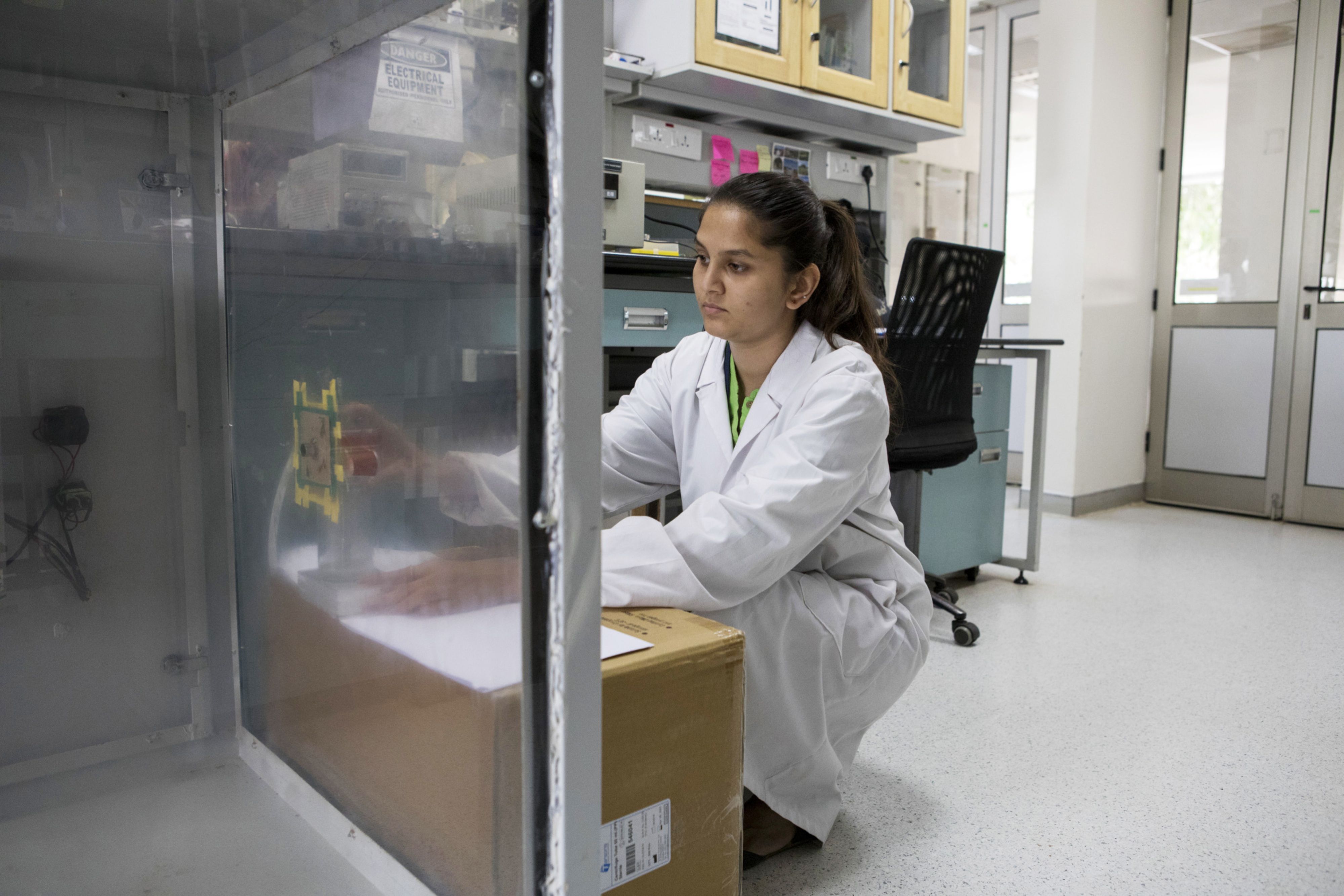
Science and technology institutes will be rated based on the support they give to female staff under the new Science Technology and Innovation Policy, 2020, that aims to make the arena more inclusive and diverse.
Besides stressing on support to female staff, the focus of ranking parameters will also be language and geographical locations.
"There will be a separate chapter on equity, inclusion and diversity in the new science policy," Department of Science and Technology Secretary Ashutosh Sharma said.
Deliberations are underway to have a new STIP 2020 which is expected to be unveiled by December, he said. Both government and private institutions will be graded.
"We are setting up a framework based on which evaluation will be done. There will different parameters like how many women are recruited every year, what is total number (of women in an institute), how well they have progressed in their career, what kind of support they get, are there committees to address their grievances and a whole lot of things that can ensure them a level playing field," Sharma added.
He said the percentage of women in the area of science, technology, engineering and mathematics is low. For instance, the representation of women in engineering courses in top institutes is just 10-12%.
To ensure that the percentage increases, the DST has started many initiatives.
The DST is also implementing 'Knowledge Involvement in Research Advancement through Nurturing (KIRAN)' Scheme to provide various career opportunities to women scientists and technologists, primarily aimed to bring gender parity in the S&T sector by inducting more women talent in the research and development domain through various programmes.
Sharma stressed that other aspects like language, socio-economic strata and age will also be the part of the grading process.
For instance, all the committees in an institution may have people over the age of 50.
"But there needs to be a balance of perspective as well. Different perspectives may come because of gender, geographic locations, age and language. The idea is to leverage everybody's intelligence," Sharma said.
With regards to language, Sharma said not every country studies or practises science in English. So, the language aspect will also be factored in.
Essential Business Intelligence, Continuous LIVE TV, Sharp Market Insights, Practical Personal Finance Advice and Latest Stories — On NDTV Profit.