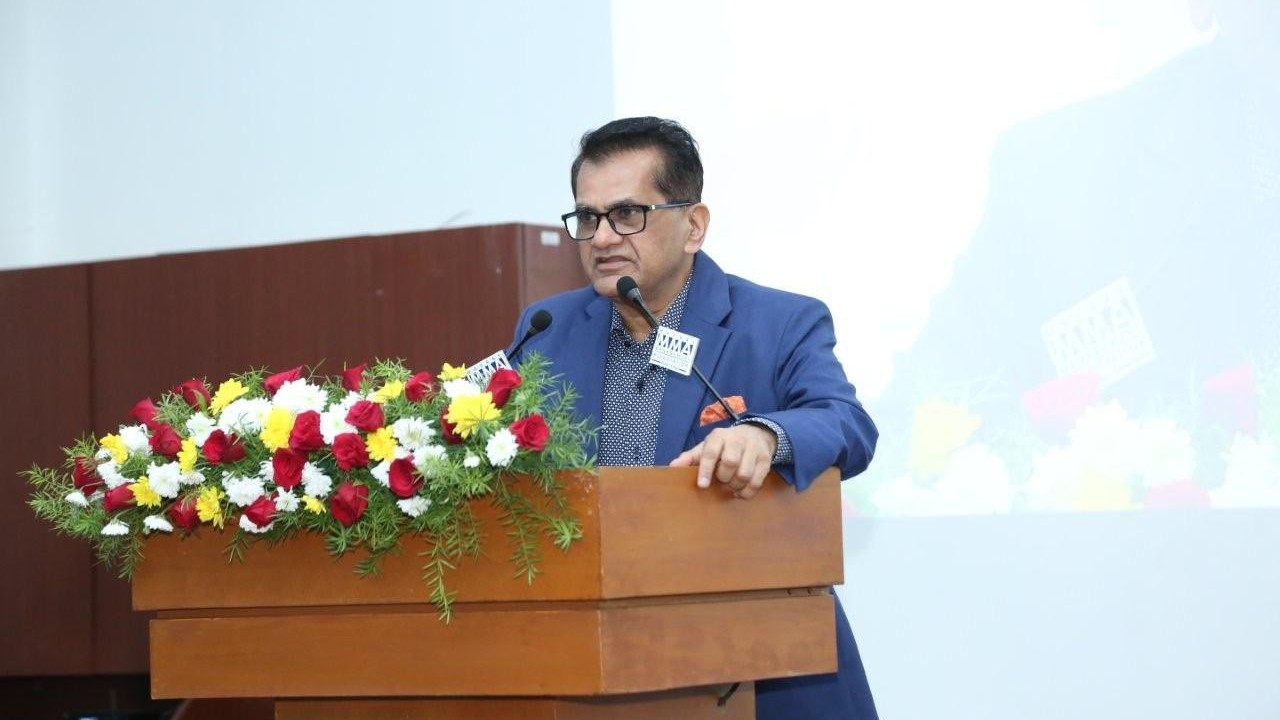
Amitabh Kant, the former CEO of NITI Aayog shared his views on the new Viksit Bharat – G RAM G Act, 2025 and said that evidence pointed to design limits with MGNREGA and therefore, its replacement with the new scheme had become necessary.
"CAG audits and independent studies showed that MGNREGA utilisation was often lowest in the poorest states and districts, while relatively better-off states absorbed a larger share of funds", Kant stated in an X post on Wednesday adding that the self-targeting assumption weakened over time.
MGNREGA was enacted in 2005 for a very different rural economy. Nearly two decades later, Parliament has replaced it with the Viksit Bharat â G RAM G Act, 2025, reflecting how rural India, labour markets, and governance capacity have structurally changed. Electrification, roads,â¦
— Amitabh Kant (@amitabhk87) December 24, 2025
According to the ex-CEO, MGNREGA was enacted in 2005 for a very different rural economy and that Electrification, roads, digital payments, DBT and more diversified livelihoods meant that a wage-employment law which was designed for a low-capacity, cash-based system needed updating to remain effective.
"The new law shifts focus from relief to productive rural employment, linking wage work to durable assets, water security, climate resilience and livelihood infrastructure," Kant stated.
He highlighted that it also addresses long-standing concerns about fragmented, low-impact works and strengthens the statutory employment guarantee to 125 days.
"Improved digital monitoring, faster payments and clearer accountability reflect higher governance capacity," Kant stated.
The former G20 Sherpa also underlined that his analysis is that this is not dilution of social protection, but an evidence-based update of a 2005 law, aligning rural employment with productivity, accountability and today's rural realities.
The parliament passed the Viksit Bharat — Guarantee for Rozgar and Ajeevika Mission (Gramin) Bill or the VB G RAM G Bill.
The bill, which seeks to replaced the two-decade-old Mahatma Gandhi National Rural Employment Guarantee Act, increases the number of guaranteed wage employment days in a fiscal year to 125 from 100 offered under MGNREGA.
Another key change under the new bill is how the financial burden of the employment guarantee will be divided. Earlier, the weight of expenses was primarily borne by the central government, with states carrying roughly 10% of the burden.
Under MGNREGA, the Centre took care of 100% of the wage costs and 75% of the material costs, but the new VB-G RAM G tweaks the ratio of responsibility and mandates a 60:40 spend share pattern for most states.
Cabinet Approves Rs 12,000-Crore Expansion Of Delhi MetroEssential Business Intelligence, Continuous LIVE TV, Sharp Market Insights, Practical Personal Finance Advice and Latest Stories — On NDTV Profit.