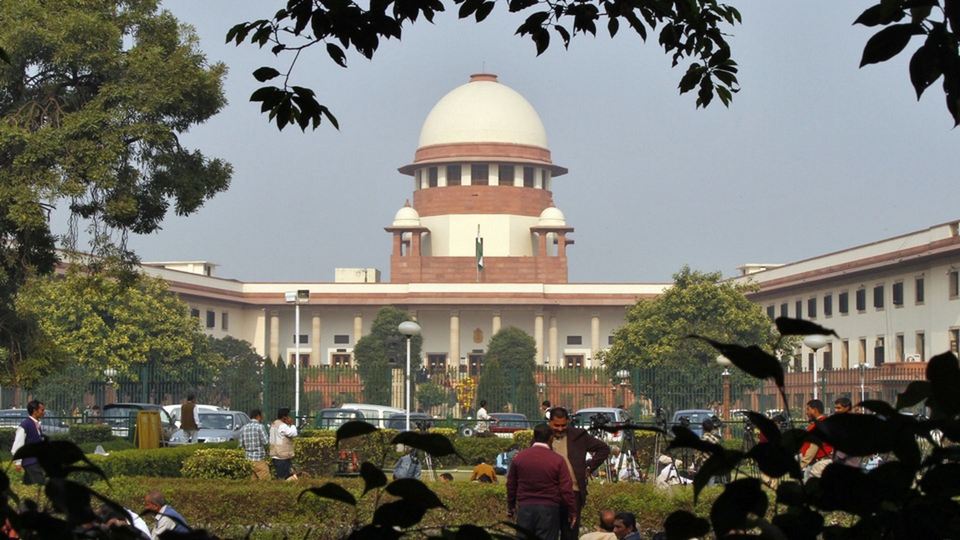
The Supreme Court on Wednesday refused to entertain a plea filed by 14 political parties alleging misuse of investigative agencies, such as the CBI and Enforcement Directorate, to stifle political dissent against the government.
Arguing for the political parties, Senior Advocate Abhishek Manu Singhvi laid down certain facts for the court to show how these agencies were being used to crush political dissent and upend the fundamental premises of a representative democracy.
He argued that 95% of the cases being probed by these investigative agencies are against opposition leaders, which has a chilling effect on legitimate and constitutionally protected political speech.
It was contended by Singhvi that certain guidelines be framed by the court for the arrest, remand, and bail of persons being investigated by the CBI and ED. If the alleged person is not a flight risk or there is no reasonable apprehension of tampering with evidence or influencing or tampering with witnesses, then the powers of these agencies must be limited, he said.
Singhvi argued that these proposed guidelines were being asked for a prospective application and that the intention was not to interfere with existing cases.
However, the bench, comprising Chief Justice DY Chandrachud and Justice JB Pardiwala, was not inclined to treat political leaders on a different footing than the common man.
The difficulty with this petition is that you are trying to extrapolate statistics into binding legal guidelines, wherein these statistics pertain only to politicians.Chief Justice Of India, DY Chandrachud
The court highlighted that guidelines cannot be formulated only for politicians.
The bench further said that general guidelines cannot be formulated without a factual context. Framing general guidelines divorced from the facts of the case would be outside its remit, the apex court said.
Essential Business Intelligence, Sharp Market Insights, Practical Personal Finance Advice, Daily Fuel, Gold and Silver Prices and Latest Stories — On NDTV Profit.