Remembering Manmohan Singh: Architect Of India's Economic Liberalisation
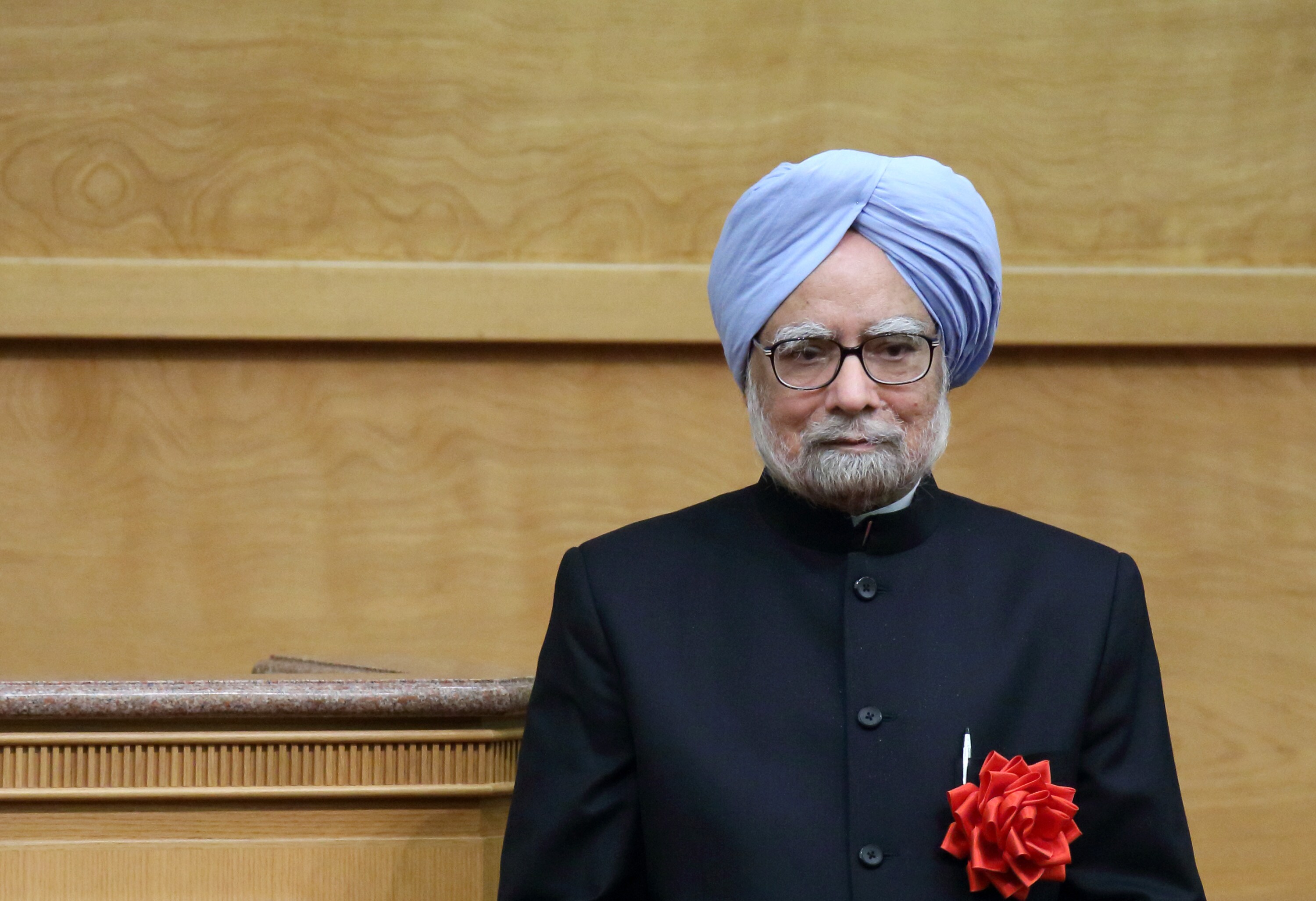
Manmohan Singh, the Gandhi family confidant who freed India's economy from Soviet-inspired controls and was one of the country's longest serving prime ministers, has died. He was 92.
Singh was admitted to AIIMS Delhi hospital on Thursday in a critical condition, local media reported earlier. He was one of India's “most distinguished leaders” and the country mourned his loss, Prime Minister Narendra Modi said in a post on social media platform X.
Singh, a Sikh who studied economics at both Oxford and Cambridge universities, is the only Indian to have served as central bank governor, finance minister and prime minister, the latter as the first from a religious minority. From 1991 to 1996, he scrapped quotas for state companies, abolished a complex system of permits and opened the door to foreign companies, cutting loose an economy that increased seven times in size in more than two decades to become Asia's third-largest.
Born in what is now Pakistan, Singh, usually clad in his trademark sky-blue turban and white tunic, was respected for his simple lifestyle in a nation plagued by political scandals. For a decade, he ran the world's largest democracy for Sonia Gandhi's Indian National Congress party.
Singh was born to parents Gurmukh Singh and Amrit Kaur on Sept. 26, 1932, in the village of Gah, part of the Punjab province awarded to Pakistan upon independence from British rule 15 years later. He said in November 2008 that he had spent the first 10 years of his life in that dusty village, where there was no doctor, school, electricity or clean drinking water.
“In my childhood I had to walk a long distance to go to school. I read under the dim light of a kerosene lamp,” Singh said in April 2010. “I am what I am today because of education. I want every Indian child, girl and boy, to be so touched by the light of education.”
Oxford Doctorate
Singh earned bachelor's and master's degrees in economics at Panjab University before completing an honors degree in economics at the University of Cambridge's St. John's College in 1957. He then gained a doctorate at the University of Oxford's Nuffield College in 1962.
By the time of partition in 1947, Singh's family had moved to Amritsar, now in India's Punjab state and home to the Golden Temple, Sikhism's holiest shrine. Sikhs account for almost 2% of India's population.
After joining India's finance ministry and later becoming governor of the Reserve Bank of India from 1982 to 1985, Singh was appointed finance minister in the Congress government of Prime Minister P.V. Narasimha Rao in 1991.
Forced into action by a surge in oil prices that evaporated India's foreign-exchange reserves, Singh began removing barriers to investment. He cut import tariffs, permitted foreign companies to set up plants and removed the need for new factories to require government authorization.
‘Think Big'
“We were in the midst of an unprecedented crisis, and it was time to think big, not to shrink,” Singh told PBS in a 2001 interview. A decade earlier, in a budget speech to parliament, he had borrowed a phrase from Victor Hugo to tell lawmakers, “No power on earth can stop an idea whose time has come.”
Singh's premiership began by default. The Italian-born Sonia Gandhi, the widow of assassinated former Prime Minister Rajiv Gandhi, drove Congress to electoral victory in 2004. She then turned down the opportunity to run the government on concern that her foreign ancestry would trigger sustained protests by Hindu nationalists, so she picked Singh for the job.
He presided over record economic growth averaging 8.3% from 2004 to 2010, steering India through a global recession, and forged closer U.S. ties. Sonia Gandhi remained as Congress president and managed the multiparty governing alliance, creating what India Today magazine in May 2010 called “a curious separation of powers.”
“Manmohan Singh was no ordinary PM,” Montek Singh Ahluwalia, former deputy chairman of planning body and former economic affairs secretary wrote in his book “Backstage,” recalling Singh's handling of the 2008 global financial crisis. “He had a long experience in dealing with the international economy and had also dealt with the 1991 crisis. Except we were not battling a crisis that had exploded, as in 1991. We were only preparing to avoid one.”
Harsh Critics
Singh's opponents were harsher. Lal Krishna Advani, a leader of the main opposition Bharatiya Janata Party, branded him “the weakest prime minister” ever. The shy Singh, a technocrat in a political system dominated by powerful elites, had in 1999 lost the only parliamentary election he fought.
Singh returned from heart surgery in January 2009 to lead Congress to its biggest election victory in 20 years. He ended up disappointing investors with few moves to extend his market-opening policies of the 1990s, and charges of corruption against a member of his cabinet sparked street protests in 2011, eventually paving the way for Modi's BJP to wrest control of parliament.
“I don't believe in legacy — it depends who writes it and when,” Singh said in a December 2011 interview with Bloomberg News. “In 1991, when I started the economic liberalization of the economy, the opposition said the finance minister should be impeached.”
Before the 2014 elections, Singh defended his record, saying he oversaw the economy's fastest-ever expansion that helped to lift 138 million people out of poverty.
“There may be zigzags along the way, but the path is the one I set,” he said in the 2011 interview. “It is my conviction that it is the only path to reduce the chronic poverty millions still live under.”
Singh and his wife, Gursharan Kaur, had three daughters, Upinder, Daman and Amrit.

-
India's Troika Of Good Luck | Joining The Dots

A weaker Trump, a cooling AI trade and resilient earnings have put Indian markets back in favour. Rising inflation could spoil the party.
-
Talking Points This Week: Leadership Shock At Nvidia, Earnings Strength, And The Fog Over Hormuz
The Anthropic IPO pricing and first trading day, Nvidia's upcoming earnings, and any fresh signals from Iran will set the tone for the following week.
-
Signature Play: The Classic Cocktail Is Dead. Or Is It?
Classic cocktails are disappearing from India's cocktail menus. But they're still being ordered, taught to bartenders and borrowed from. So, who's really having the last drink?
-
A New Samvat Wishlist: Inclusive Prosperity And Human Development
India has strengthened its economic foundations through infrastructure, digital access and enterprise. Its next growth chapter must deepen productivity, create better livelihoods and widen participation in prosperity.
-
Love, Sex Aur Dhokha: The Audacious Plot To Spy On Jensen Huang
A Taipei dinner, a Singapore chip buyer and a suspected Chinese asset: inside the alleged spy operation that got close to NVIDIA's Jensen Huang.
-
Ten Things I Learnt This Samvat
Patience can be a trap. Cheap stocks can stay cheap. Leverage can wipe you out. What did Samvat 2082 teach us? Niraj Shah writes on 10 lessons from the year gone by.
-
Talking Points This Week: Tech Nerves, FII Buying, And A Faraway Banking Shock
The global markets are not shining this Diwali. The exception in the large markets is, India.
-
Midterm Rally Lasted A Day. The Hard Reality Of A Divided US May Last Two Years | Opinion
Between a contested AI boom, a debt ceiling that arrives in 2027 and a president with every incentive to act alone, the next two years may prove more volatile than the first day's rally suggests.
-
Blue Wave Will Derail the AI Trade but Won't Dismantle the AI Era | Unhedged Position
The Democrats' sweep of the US Congress will see politics collide with economic forces both over the long and short term.
-
It's Time To Take The GST Council's Bet On Trust Global
Payment records can prove India's services exports, and clear, proportionate rules can bring foreign digital sellers into the tax net.