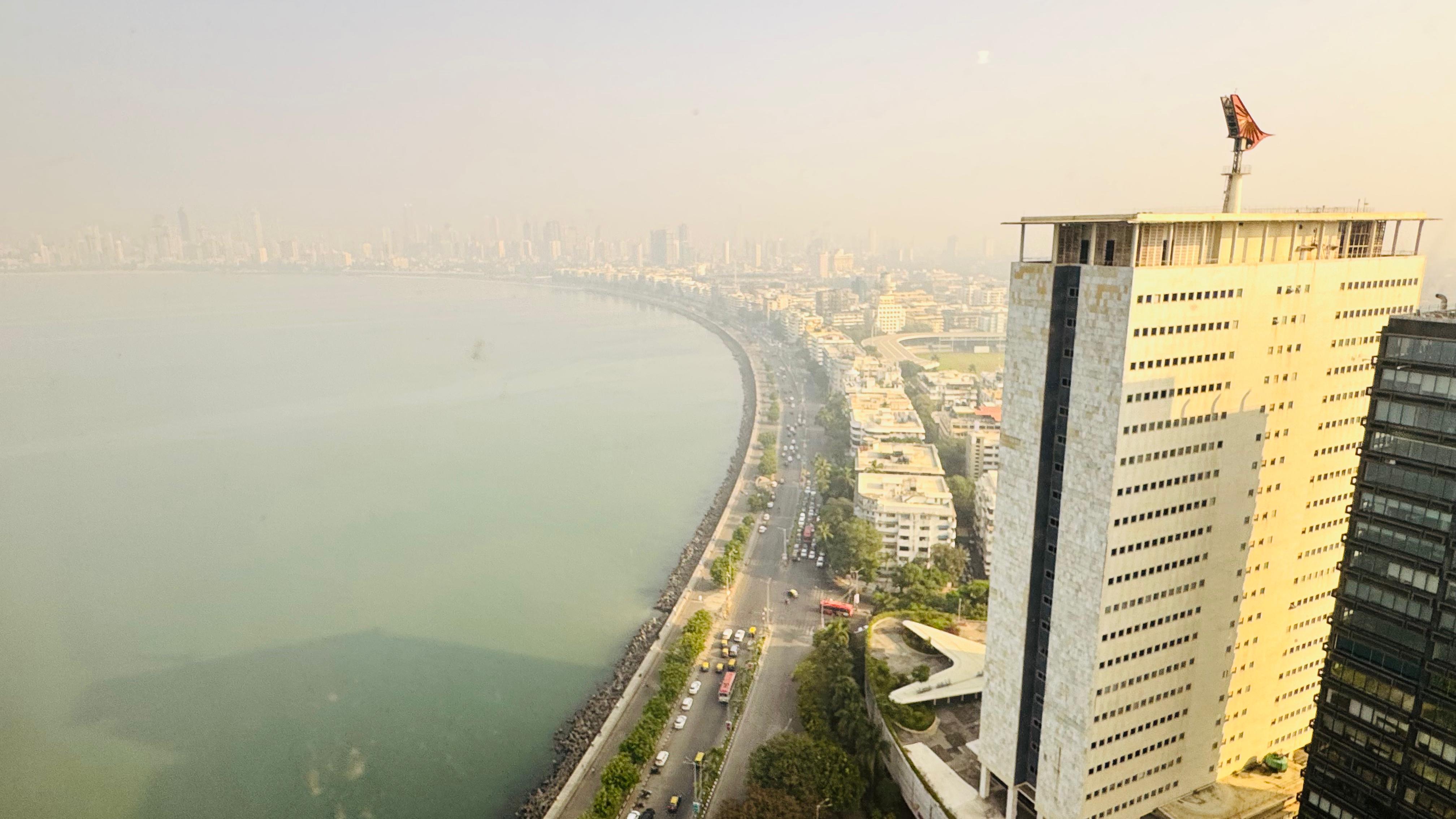
Air quality levels in Mumbai were better but remained in the 'poor' category on Tuesday. The city's Air Quality Index reached 114, according to data from aqi.in. It was 1.03 times higher than the average in Maharashtra.
The city's air quality has become a major concern for its residents. Particulate Matter stood at 55 µg/m³, while PM10 levels were at a concerning 118 µg/m³. Both are indicators of harmful particles in the air that can penetrate the lungs and bloodstream, leading to serious health issues, especially for those with pre-existing respiratory conditions.
Other major pollutants contributing to Mumbai's air pollution include carbon monoxide at 601ppb, sulfur dioxide at 12ppb, nitrogen dioxide at 16ppb, and ozone at 8pp. These pollutants can exacerbate the city's air quality problems, further impacting the health of its population.
The AQI scale categorises air quality as follows:
Good (0 to 50): Fresh and toxin-free air.
Moderate (50 to 100): Acceptable for most, with mild discomfort for sensitive individuals.
Poor (100 to 200): Breathing may be uncomfortable, especially for those with respiratory issues.
Unhealthy (200 to 300): High risk for children, pregnant women, and the elderly. Limiting outdoor activities is advised.
Severe (300 to 400): Prolonged exposure can cause serious health problems. Outdoor activities should be avoided.
Hazardous (400 to 500+): Extremely dangerous air quality, posing life-threatening risks with prolonged exposure.
Most polluted regions in Mumbai were Bandra East, Deonar, Bandra Kurla Complex, Bandra West, Kalina, Powai and Sion East, among others.
Mumbai's air pollution levels have been historically largely attributed to construction work in the city.
Essential Business Intelligence, Sharp Market Insights, Practical Personal Finance Advice, Daily Fuel, Gold and Silver Prices and Latest Stories — On NDTV Profit.