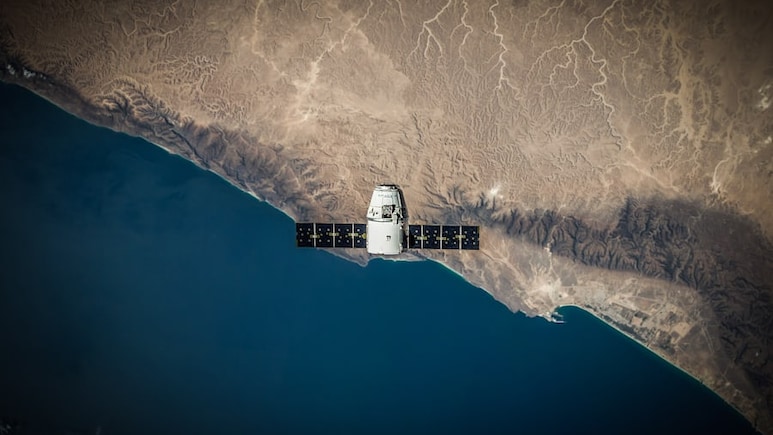
The Indian Space Research Organisation (ISRO) is scheduled to launch the EOS-05 Earth-observation satellite aboard the GSLV-F17 rocket on September 4, 2026. The mission will place the satellite in geosynchronous orbit, adding to India's Earth-imaging and monitoring capabilities.
The launch is scheduled for 2:55 am IST from the Second Launch Pad at the Satish Dhawan Space Centre in Sriharikota, Andhra Pradesh. GSLV-F17 will mark the 19th flight of India's Geosynchronous Satellite Launch Vehicle and will use a four-metre-diameter ogive composite payload fairing.
GSLV-F17/EOS-05 Mission is scheduled for launch on 04 Sept 2026 at 02:55 AM IST from Satish Dhawan Space Centre, SHAR, Sriharikota.
Launch enthusiasts and visitors can witness the mission from the Launch View Gallery at SDSC SHAR by registering online at:https://t.co/vjNE4RyJYD…Also Read | Layoffs Are Rising In Tech, But These Skills Are Helping People Unlock Better Pay
— ISRO (@isro) August 31, 2026
As per the press release by ISRO, "GSLV-F17 is the 19th flight of India's Geosynchronous Satellite Launch Vehicle (GSLV) and the configuration of GSLV-F17 Payload Fairing is 4 m dia Ogive (composite) version."
Weighing around 2,367 kg, EOS-05 will initially be placed into a Sub-Geosynchronous Transfer Orbit (Sub-GTO), with a reported perigee of 170 km and apogee of 28,934 km. Its onboard propulsion system will subsequently raise the satellite into its intended geosynchronous orbit, as per media reports.
ALSO READ: 'Avoid Buying Gold Unless Needed': PM Modi Says Must Opt For Self Reliance To Maintain Q1 GDP Pace
EOS-05 is set to be India's first Earth-observation imaging satellite to operate from geosynchronous orbit. Its high-altitude position will allow it to repeatedly monitor large areas, enabling more frequent imaging than conventional low-Earth-orbit satellites.
The satellite will use multispectral and hyperspectral imaging to provide frequent regional images in cloud-free conditions. Its data is expected to support weather monitoring, cyclone and disaster detection, flood and forest-fire monitoring, agriculture, natural-resource mapping and strategic surveillance.
The mission also marks a fresh attempt to build this capability after India's earlier effort ended unsuccessfully. EOS-05 is designed to replace EOS-03, or GISAT-1, which was lost during the GSLV-F10 launch in August 2021 after an anomaly in the rocket's cryogenic upper stage.
The GSLV-F17 mission is therefore an important step in ISRO's efforts to improve wide-area and frequent Earth monitoring from geosynchronous orbit.
Essential Business Intelligence, Sharp Market Insights, Practical Personal Finance Advice, Daily Fuel, Gold and Silver Prices and Latest Stories — On NDTV Profit.