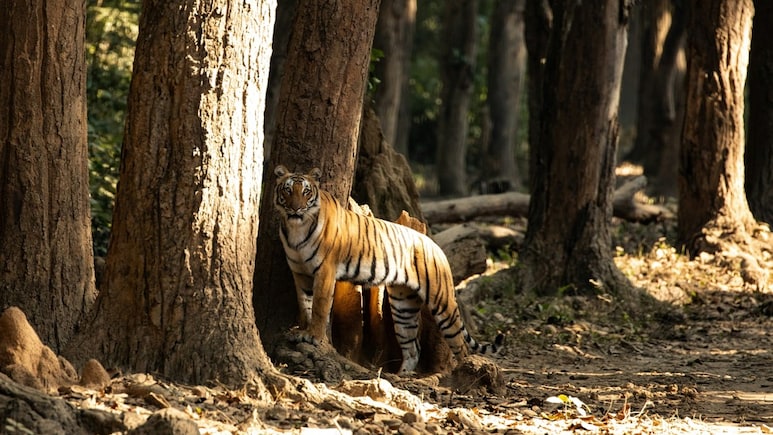
Tigers are starting to behave differently. A new State of India's Environment 2026 (SOE 2026) report by the Centre for Science and Environment (CSE) and Down To Earth magazine, warns that rapid ecological changes are reshaping how India's big cats live and hunt. According to the report, shifts in habitat, shrinking forests, and swelling human populations around protected areas are driving noticeable behavioural changes in tigers. These pressures are altering how the animals move, stalk prey, and interact with communities living on the forest fringes.
Man–Animal Conflicts Rising
Are tigers increasingly targeting humans for food? The report notes a worrying trend: deadly encounters between humans and tigers remain consistently high. Between January and June 2025, 43 people were killed near tiger reserves — almost the same as 44 deaths in the same period of 2024. In four of the 2025 cases, tigers partially consumed the victims.
With tiger numbers rising and reserves nearing saturation, more big cats are pushing beyond protected boundaries. A study cited in the report finds that in 20 Indian states with tiger populations, 40% of tiger habitats are shared with nearly 60 million people. This crowding, combined with habitat degradation and expanding human activity, is accelerating behavioural shifts in tigers — and intensifying conflict on the ground.
Also Read | Layoffs Are Rising In Tech, But These Skills Are Helping People Unlock Better Pay
ALSO READ: Tiger Rescued After 11-Hour Operation From Open Well In Kerala | Watch Video
Rise of the Lantana Tigers - Pattern Of Tigers Hunting
The reports document a trend in what some researchers call 'Lantana Tigers'. The rapid spread of Lantana camara, an invasive shrub that forms dense, impenetrable thickets, has reshaped forest undergrowth in states like Madhya Pradesh and Maharashtra. These lantana patches are now becoming unexpected tiger refuges especially outside reserve boundaries.
In landscapes around Bandhavgarh and Tadoba, tigers have been observed using lantana‑dominated areas as daytime shelters and strategic hunting grounds for the tigers and the prey is cattle. Cattle offer a richer calories meal than animals like cheetal, enabling a tiger to feed well with fewer hunts.
Interestingly, this behaviour is reshaping village economies in unexpected ways. When a tiger kills cattle, owners often receive substantial compensation from forest departments. As a result, in some areas, villagers may not resent livestock loss as strongly especially if the animal in question was elderly, unproductive, or surplus to household needs.
The report cites expert recommendations recommending local community-based conservation strategies and discouraging human interventions in tiger-dominated areas as ways to control these actual and potential human-tiger conflict scenarios.
ALSO READ: Return Of The Tiger: Big Cat Makes Gujarat Homecoming After 30 Years Of Extinction
Essential Business Intelligence, Sharp Market Insights, Practical Personal Finance Advice, Daily Fuel, Gold and Silver Prices and Latest Stories — On NDTV Profit.