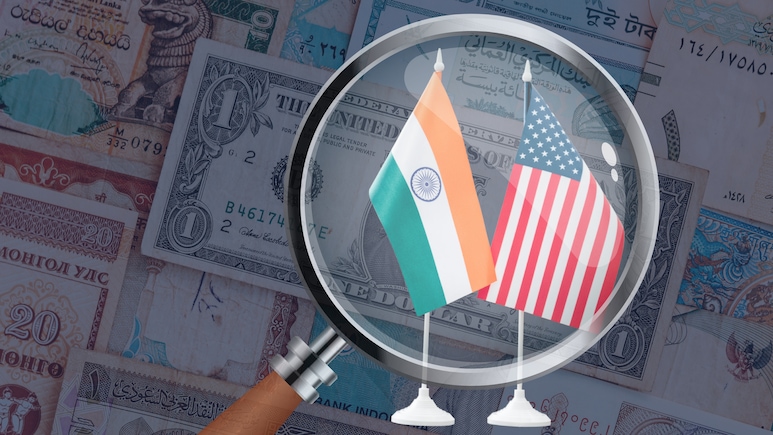
The government is studying all the tariff-related developments in the US for their implications and remains engaged with America, Parliament was informed on Tuesday.
In a written reply to the Lok Sabha, Minister of State for Commerce and Industry Jitin Prasada said that on Feb. 7, an additional tariff of 25% was imposed by the US on certain Indian exports over India's purchase of Russian oil.
"Pursuant to the US Supreme Court judgement dated 20th February 2026 invalidating reciprocal tariffs, the reciprocal tariffs are no longer in force.
Also Read | Layoffs Are Rising In Tech, But These Skills Are Helping People Unlock Better Pay
"The US government has issued executive orders imposing 10% tariffs on certain products for all countries. The government is studying all the developments thereafter for their implications and remains engaged with the US government," he said.
In a separate reply, he said India has offered limited and carefully calibrated tariff concessions on select agricultural products while safeguarding domestic sensitivities through quotas, phased concessions, and partial duty reductions under the first phase of the bilateral trade agreement.
ALSO READ: Centre Seeks Parliament Approval To Spend Rs 2.01 Lakh Crore More In FY26
On products such as Apples, Walnuts and Soyabean Oil, where India imports in significant quantities due to domestic demand exceeding production, concession is limited and quota-based so that imports help in diversification of sourcing, Prasada said.
"The quotas are well within current global imports so that supply gaps are met without adversely affecting Indian farmers," he said, adding in the backdrop of growing demand, animal feed-related products such as DDGS and Non-GM Red Sorghum have been considered in limited quantities and with partial tariff concessions so that there is no adverse impact on domestic feed crops.
Likewise, Cotton has been offered in a calibrated quota-based concession considering India's existing trade pattern of both importing and exporting cotton and cotton products to meet quality requirements, the minister said.
India and the United States announced a trade deal on Feb. 2, 2026.
In another reply, the minister said the government is aware of the US-Bangladesh Agreement on Reciprocal Trade signed on Feb. 9, 2026.
"India's cotton trade with Bangladesh may continue to benefit considering the geographical proximity, lower freight costs, shorter transit times, established supply chains, and long-standing industry linkages, which provide resilience to the bilateral trade relationship," he said.
During April–January 2025–26, India's exports to the US stood at $20.86 billion in electronics (including smartphones), $5.98 billion in engineering goods, $0.96 billion in solar equipment, $4.83 billion in metals and equipment, $2.03 billion in auto components, $7.25 billion in pharma, $7.88 billion in textiles, and $4.19 billion in gems and jewellery.
ALSO READ:Cabinet Clears Revised Cost Of Rs 3,630.77 Crore For Developing Road Connectivity To Jewar Airport
(This story has not been edited by NDTV staff and is auto-generated from a syndicated feed.)
Essential Business Intelligence, Sharp Market Insights, Practical Personal Finance Advice, Daily Fuel, Gold and Silver Prices and Latest Stories — On NDTV Profit.