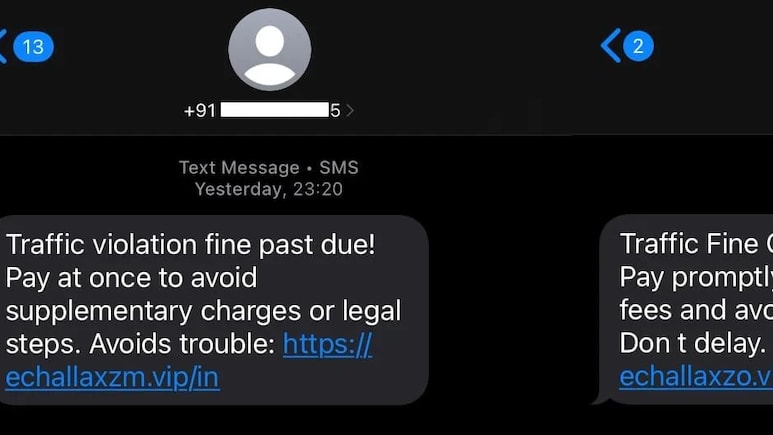
A new and sophisticated digital scam has emerged, targeting people with fake traffic penalty messages. In this, victims receive texts claiming they have a pending traffic fine. The message urges them to pay quickly using a link.
Comedian Shridhar V recently shared that he received a similar message. He posted screenshots of the link on social media to warn others. Based on Shridhar's X post, the screenshots show that the link leads to a fake website that looks genuine.
It includes fields to enter a challan number and personal details. Users are then redirected to a payment gateway. The site closely copies official portals, which can mislead many people into paying the fine.
Also Read | Layoffs Are Rising In Tech, But These Skills Are Helping People Unlock Better Pay
Who says Indians are not innovative? Look at the sophistication of this scam ???? I almost entered my card details before googling the domain. Insane amount of fraud must be happening with so many people. By the time police starts acting on it, they'd make millions! Terrible ???? pic.twitter.com/KZyg6R4RnI
— Shridhar V (@iimcomic) January 17, 2026
“Who says Indians are not innovative? Look at the sophistication of this scam. I almost entered my card details before googling the domain. An insane amount of fraud must be happening with so many people. By the time the police start acting on it, they'd make millions! Terrible,” the comedian posted last Saturday.
Besides financial fraud, the scammers may also be using it to steal sensitive data. Shridhar warned users to be careful.
“Look at how cunning the design is! Whatever you input as the vehicle/DL number comes next to the challan number in the next page to make it even more believable,” he said, sharing a screenshot of the page. He had entered the DL as ‘stupid', but the page still generated a fake challan number and directed users to proceed for next steps to pay the fine.
Netizens Concerned
As Shridhar's post went viral, many people raised concerns about the growing sophistication of such scams and the government's failure to curb them. Some users pointed out that the message was received from a regular 10-digital number, which should raise alarms.
“A random number messaged you with challan details. Is the scammer smart?” a user said. To this, the comedian noted that many people may not understand this and the interface can fool vulnerable victims.
Others said it was worrying that payment aggregators like Paytm were issuing merchant accounts to such profiles.
“I remember I had to get a merchant account for donations for a registered trust, and it involved a long list of documents and verifications,” a user posted.
How To Prevent Such Scams?
Authorities have urged citizens to always verify any traffic penalties through official websites before making payments. They warn that scams often use fake links to steal money and personal information from unsuspecting users. To avoid falling prey to such scams, here a few things that users can verify:
1. Check if the message comes from a regular number.
2. Verify the link's domain for suspicious elements as official sites usually end with .gov.in.
3. Look at the language of the message; scams often use informal wording or contain grammatical errors.
4. Always search for the website using Google or another search engine.
5. Check if any news articles have reported similar scams.
6. Look on social media using relevant keywords to see if others have received the same message.
7. While details such as PAN or DL, fill irrelevant keywords to see if the portal still generates genuine looking challan. This means it could likely be a scam.
Essential Business Intelligence, Sharp Market Insights, Practical Personal Finance Advice, Daily Fuel, Gold and Silver Prices and Latest Stories — On NDTV Profit.