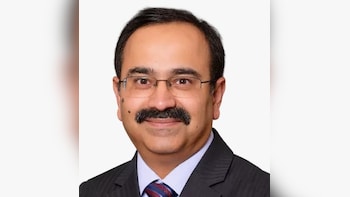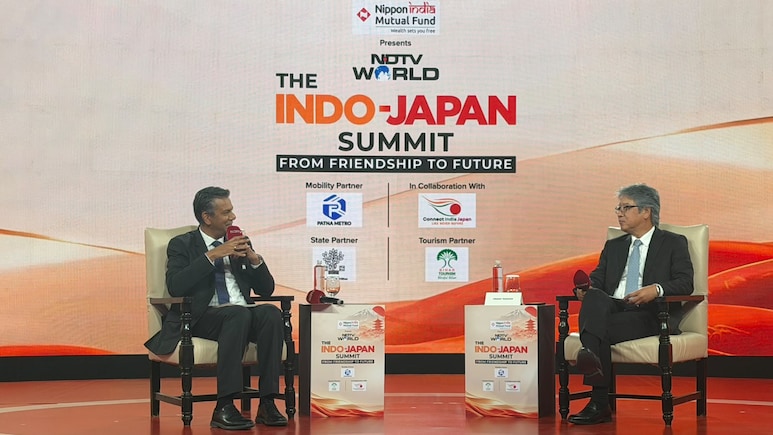
India's green mobility transition may not have to follow the same road as developed economies. For Maruti Suzuki CEO Hisashi Takeuchi, the country's coal-heavy power mix and vast agricultural economy create a case for a distinctly Indian approach, one that goes beyond electric vehicles.
Speaking at the India-Japan Summit, Takeuchi said EVs will remain an important part of the future, but India's circumstances create opportunities for other technologies, particularly bio-CNG.
“EV looks like a perfect answer, but right now it is not really the ecological solution,” Takeuchi said, pointing to the fact that around 75% of India's electricity generation comes from coal-based thermal power plants.
Also Read | Layoffs Are Rising In Tech, But These Skills Are Helping People Unlock Better Pay
ALSO READ: Suzuki Tells India Suppliers To Adopt 6-Day Production Week Amid Quality Push: Report
Instead, he sees India's agricultural waste as an opportunity to build a cleaner domestic fuel ecosystem.
“India is one of the largest agricultural countries. And because of that, there are a lot of agricultural waste available in India. And we can change this agricultural waste into wealth,” he said.
Maruti Suzuki has started collecting cow dung in Gujarat to produce biogas, which can then be used as fuel for CNG vehicles. Takeuchi said nearly 40% of Maruti Suzuki's sales are CNG cars, giving the company an existing platform to scale the technology.
He argued that using cow dung and agricultural waste such as paddy straw could potentially create a carbon-neutral mobility pathway while also addressing environmental problems associated with methane emissions and crop burning.
“By utilizing those waste of like paddy straws, we can make this paddy straw into CNG, bio CNG once again,” Takeuchi said.
His argument is that India does not necessarily need to replicate the mobility transition of developed markets.
“India, because it's a unique country, it's a big country, it's a big agricultural country, and we can have a slightly different path,” he said.
That does not mean Maruti Suzuki is stepping away from electric vehicles. The company has introduced EV manufacturing in India and is exporting electric vehicles to more than 100 countries, including markets such as Europe and Japan.
But Takeuchi said India still needs to build a deeper domestic EV ecosystem to make electric cars globally competitive.
While Maruti Suzuki has achieved nearly 95% localisation for internal-combustion engine vehicles, EVs remain more dependent on imported components, particularly battery cells from China.
“Important is how we can make really the total ecosystem in India for battery electric vehicles,” Takeuchi said. “Only then we can make the products really cost effective.”
The broader strategy, therefore, is not EV versus CNG, but a multi-pathway transition tailored to India's realities.
ALSO READ: September Auto Sales Review: Tractors Falter; TVS & Maruti Beat Estimates — Check Top Picks
Takeuchi said Maruti Suzuki produced and sold 2.4 million vehicles last year, while its Indian production capacity has expanded to 2.9 million vehicles annually. Nearly 60% of Suzuki Group's global production now comes from India, he said.
For Takeuchi, India's scale is ultimately the biggest opportunity. With car penetration still at around 34 vehicles per 1,000 people, far below developed markets, he sees substantial room for growth.
“India has a huge potential,” he said. “If you come and start business in India, you have to start now. Don't wait.
Essential Business Intelligence, Sharp Market Insights, Practical Personal Finance Advice, Daily Fuel, Gold and Silver Prices and Latest Stories — On NDTV Profit.