A fresh discussion over whether hotel room tariffs should be capped has started ahead of the India AI Summit which kicks off on February 16. Attendees have raised a complaint about exorbitant hotel rates with some saying that they have been quoted prices as high as Rs 20 lakh a night. A survey of those attending from outside the National Capital Region has revealed that the surge is not just 'peak pricing' but outright profiteering and requested a government intervention.
According to a LocalCircles report released on Tuesday, those seeking to attend are flagging five-star hotels in Central Delhi, that are close to the venue, have reportedly quoted over Rs 60,000 a night, while four-star properties that typically charge around Rs 6,000 are being listed at over Rs 30,000.
The survey received over 34,000 responses from consumers located in 307 districts of India. 67% respondents were men while 33% respondents were women. 47% respondents were from tier 1, 30% from tier 2 and 23% respondents were from tier three and four rural districts.
Also Read | Layoffs Are Rising In Tech, But These Skills Are Helping People Unlock Better Pay
Survey conducted over last 15 months brings to the fore the key issue of profiteering by hotels
Photo Credit: (Photo: LocalCircle)
The organisation argues that India lacks any effective upper guardrail on room tariffs during major events, leaving customers exposed when demand spikes. It points to earlier flashpoints: hotels near Navi Mumbai's DY Patil Stadium allegedly charging up to Rs 5 lakh for three nights during last year's Coldplay concert, and room rates jumping three to five times during the 2023 Cricket World Cup.
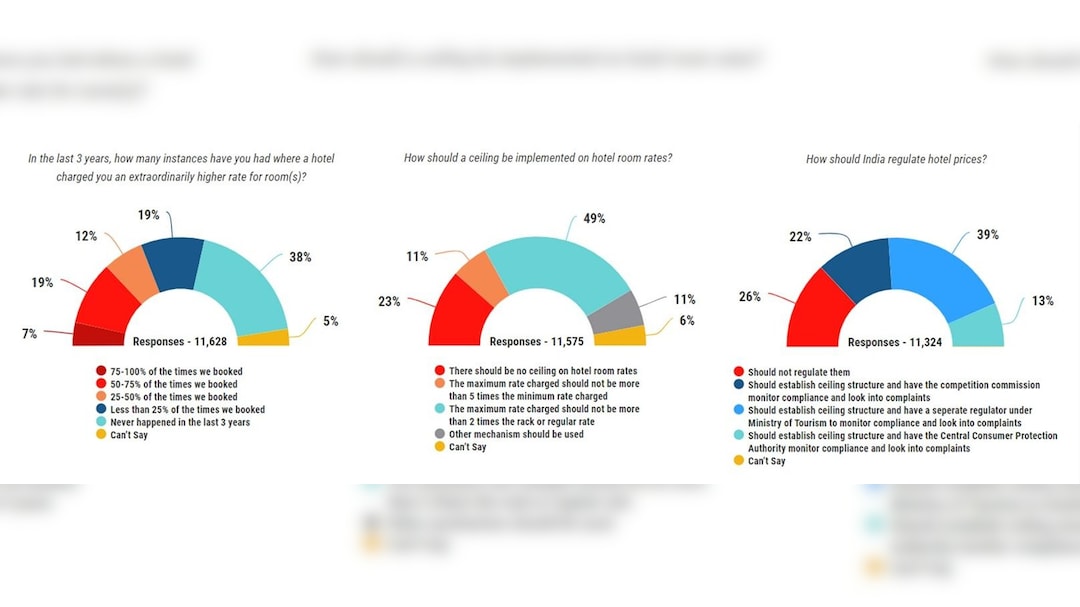
A nationwide survey with over 34,000 responses from 307 districts, suggests frustration is widespread. In the poll, 57% of respondents said they had faced “excessive charging” at least once in the last three years.
How Should A Cap Work?
On how a cap should work, the strongest preference was for a ceiling linked to a hotel's usual tariff. Nearly 49% of respondents said the maximum rate should be no more than two times the rack or regular rate. Overall, 71% supported implementing a ceiling for hotel room rates.
When asked about enforcement, respondents leaned towards a formal regulator or complaint-resolution body. About 74% backed the appointment of a Government body to address profiteering complaints, with suggestions ranging from oversight under the Ministry of Tourism to monitoring by consumer-protection authorities or competition watchdogs.
Hoteliers typically argue that room rates are best set by market forces and that high tariffs during events reflect limited supply. However, consumer advocates counter that unchecked surges erode trust, discourage tourism and penalise business visitors who have little flexibility on travel dates.
LocalCircles said it plans to share the findings with policymakers and called for a balanced framework that protects travellers while allowing hotels to remain profitable.
Essential Business Intelligence, Sharp Market Insights, Practical Personal Finance Advice, Daily Fuel, Gold and Silver Prices and Latest Stories — On NDTV Profit.