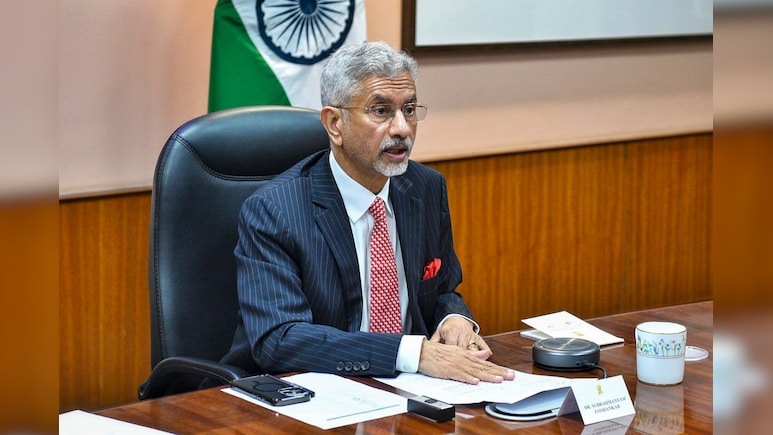
Against the backdrop of closure of the Strait of Hormuz, India on Wednesday made a strong pitch for unimpeded transit of merchant vessels, with External Affairs Minister S Jaishankar asserting that attacks on shipping are "completely unacceptable."
In his remarks at a Japan-hosted meeting that focused on disruptions in energy supplies in the wake of the West Asia crisis, Jaishankar said global growth demands that energy markets are "not constricted".
The external affairs minister represented India at the "Asia Zero-Emission Community (AZEC) plus" meeting while joining it through virtual mode. The meeting was chaired by Japanese Prime Minister Sanae Takaichi.
ALSO READ | Iran Threatens To Block Gulf, Red Sea Trade Routes If US Naval Blockade Persists
"Underlined India's strong commitment to safe and unimpeded transit passage of maritime shipping. Attacks on merchant shipping are completely unacceptable. Global growth demands that energy markets are not constricted," Jaishankar said on social media.
"As a major energy consumer, India will work with like-minded partners to develop supply chain resilience," he said.
The meeting was joined by 11 members of AZEC such as Australia and Singapore and the grouping's partner nations India, Bangladesh and South Korea.
At the meeting, Japan released a new initiative called Partnership On Wide Energy and Resources Resilience (POWERR) Asia to provide financial cooperation to Asian countries impacted by fuel supply shortages and supply chain disruptions.
The financial support totalling about USD 10 billion will be used to provide fiscal support to Asian governments, strengthening energy supply systems and diversifying energy sources, the Japanese foreign ministry said.
"This framework aims to cooperate in emergency responses through financing procurement of crude oil, petroleum products and maintaining supply chains in Asia and addressing structural responses such as establishing stockpiling and release systems as well as the construction and utilization of storage tanks," it said.
The foreign ministry said the initiative is also aimed at securing critical minerals and diversifying energy sources.
"The support involves financial cooperation of approximately 10 billion dollars," it said.
Takaichi said the countries most affected by disruptions in the supply of energy and other resources through the Strait of Hormuz are located in Asia, and it is necessary for them to work together to respond to this shared challenge.
She said POWERR Asia is a new cooperation framework of emergency and structural responses with medium to long-term perspectives.
Meanwhile, External Affairs Ministry spokesperson Randhir Jaiswal said at a media briefing that Prime Minister Narendra Modi underlined the importance of keeping the Strait of Hormuz "open, safe and secure" during a phone call with US President Donald Trump on Tuesday.
"We are talking with several countries about the Strait of Hormuz to ensure that the rest of our vessels can transit in a safe manner and come to India," he said.
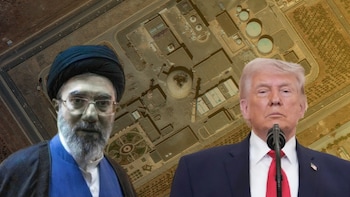
Japan's initiative to address the energy supply chain disruptions came amid increasing global concerns over the US naval blockade of Iran's ports. The US action is in response to Iran partially blocking the flow of shipping traffic through the Strait of Hormuz.
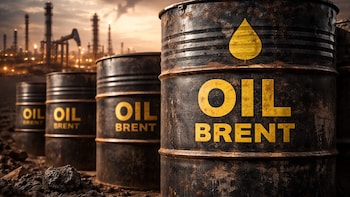
Global oil and gas prices surged after Iran restricted the transit of ships through the Strait of Hormuz, a narrow lane between the Persian Gulf and the Gulf of Oman, that handles roughly 20 per cent of global oil and LNG (Liquefied Natural Gas).
West Asia has been a major source of India's energy procurement.
(This story has not been edited by NDTV staff and is auto-generated from a syndicated feed.)
Essential Business Intelligence, Continuous LIVE TV, Sharp Market Insights, Practical Personal Finance Advice and Latest Stories — On NDTV Profit.