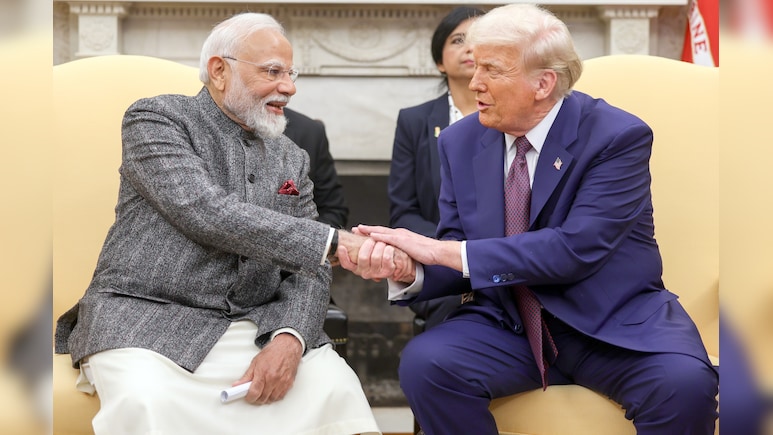
- The White House revised its India-US trade fact sheet, removing pulses from the list of products
- Language changed from India "committed" to "intends" to buy $500 billion in US goods
- References to agricultural products and digital service tax removal have been softened or omitted
The White House has revised its fact sheet on the India–US trade deal released on February 9, removing references to pulses and softening the language around India's proposed $500 billion purchases from the US. In the earlier version, the White House said India would eliminate or reduce tariffs on a wide range of American agricultural and food products. The list explicitly included dried distillers' grains, red sorghum, tree nuts, fresh and processed fruits, selected pulses, soybean oil, wine and spirits, among other items.
The earlier version reads as follows, as per the page pulled from the Wayback Machine archive.
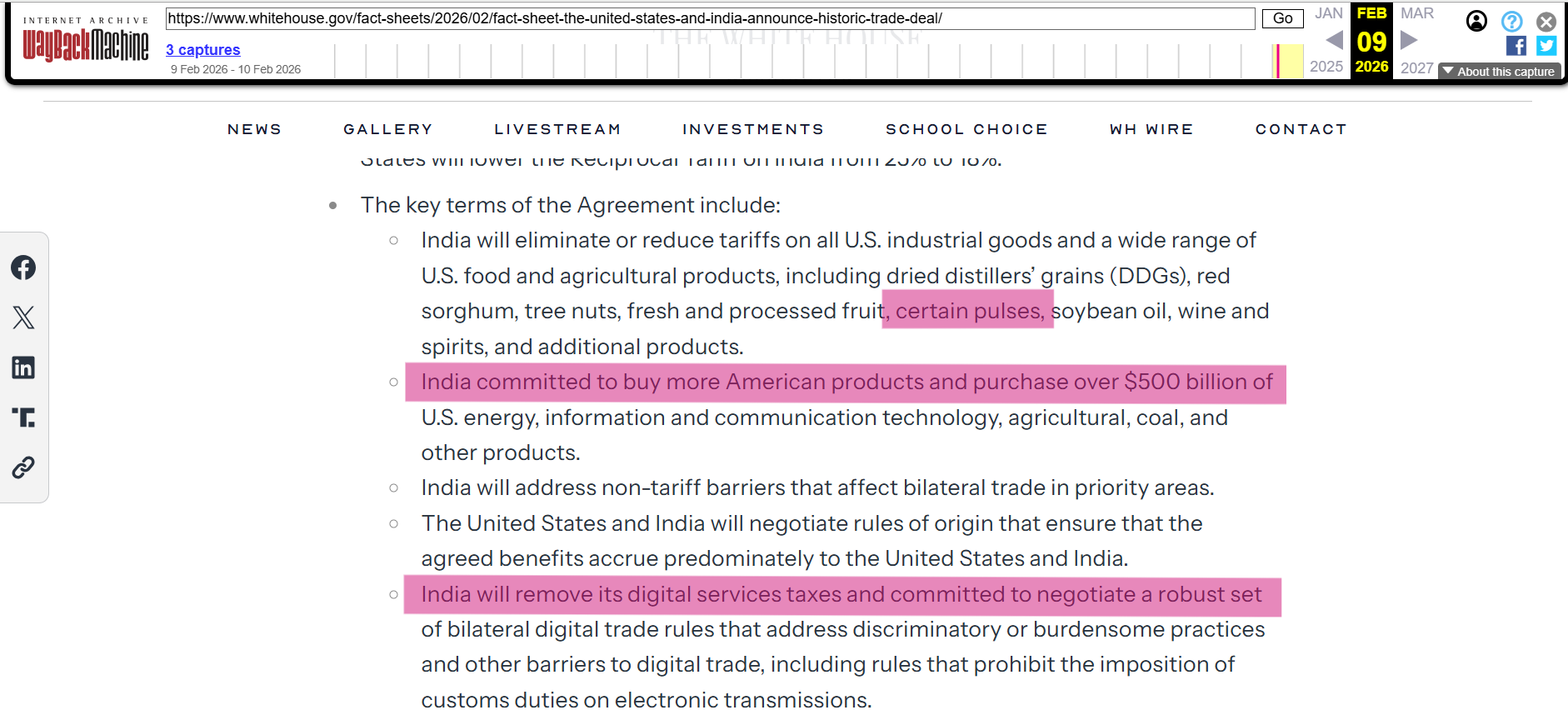
Feb 9th Fact Sheet Screenshot from Wayback Machine.
Also Read | Layoffs Are Rising In Tech, But These Skills Are Helping People Unlock Better Pay
However, the updated fact sheet makes no mention of pulses, a politically sensitive category given India's domestic farm sector and food security concerns. The removal suggests a recalibration of how agricultural concessions are being publicly framed as discussions continue.
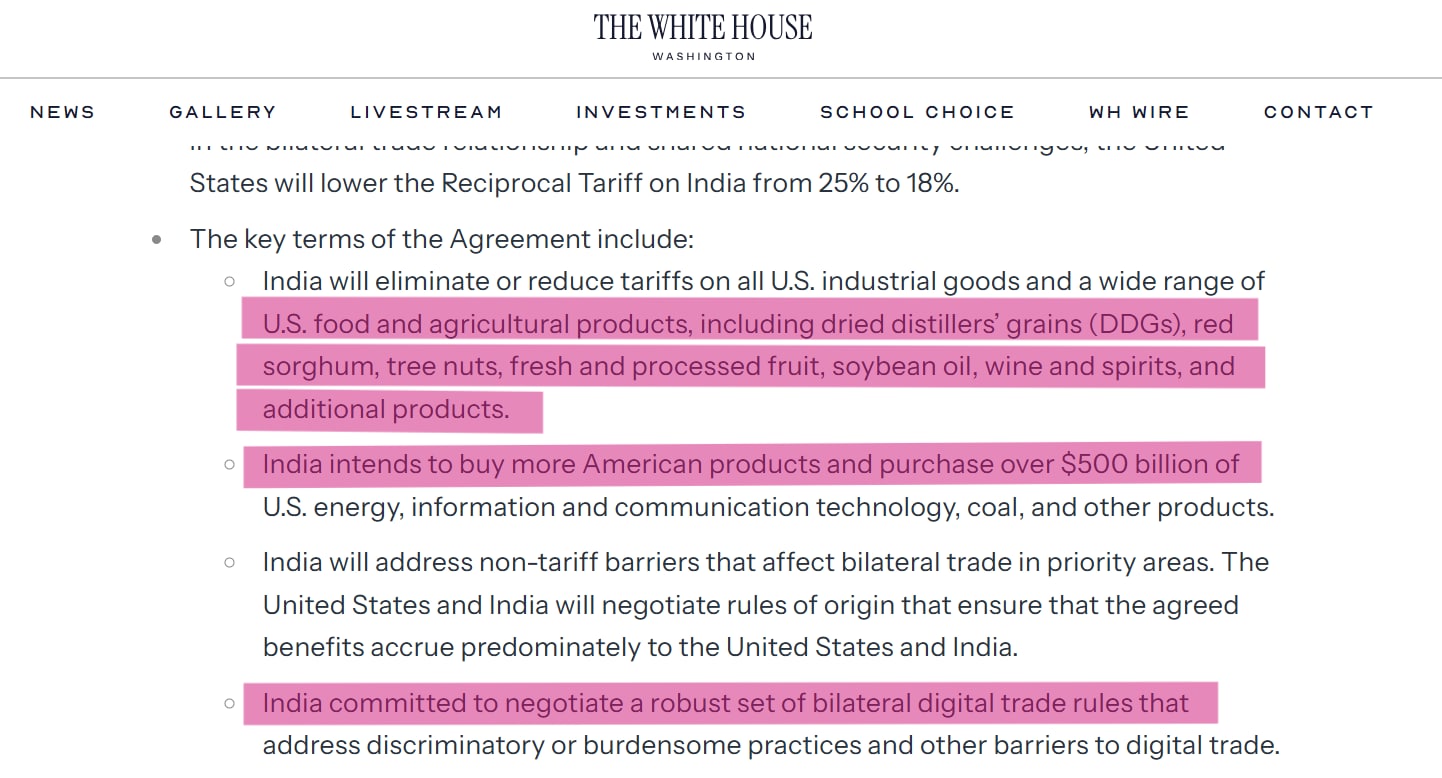
Revised Fact Sheet On White House Website
‘Committed' Softened To ‘Intends'
The second and more closely watched change relates to India's proposed imports from the US. The earlier fact sheet stated that India was “committed” to purchasing over $500 billion worth of US goods, including energy, information and communication technology, agricultural products and coal.
In the revised version, the language has been softened. The White House now says India “intends” to buy more American products and purchase over $500 billion of US energy, ICT, coal and other goods. Agricultural products have also been dropped from this specific sentence.
The shift from “committed” to “intends” significantly weakens the binding nature of the statement and aligns more closely with India's official position.
Digital Tax Claim Also Scaled Back
The White House has also walked back its assertion that India “will remove its digital services taxes.” The revised fact sheet now merely states that India has committed to negotiate digital trade rules.
Notably, India had already abolished its 6% equalisation levy on digital advertising services, effective April 1, 2025, through the Finance Bill, 2025—nearly ten months before the trade framework was announced. The edit aligns the fact sheet more closely with actions already taken, rather than implying fresh concessions.
India Pushes Back On Binding Obligations
The changes follow public remarks by Commerce and Industry Minister Piyush Goyal, who rejected the idea that India was under any obligation to import a fixed quantum of US goods.
Speaking to ANI, Goyal said the numbers reflected commercial intent rather than compulsion. “We don't have to buy. We intend to,” he said, adding that there was no annual or five-year mandate. According to Goyal, the figures merely capture India's growing demand in sectors where US suppliers are competitive.
The $500 billion figure had also triggered criticism from Opposition leaders, who accused the government of conceding to US pressure and agreeing to sharply ramp up imports. In response, the government clarified that the number was spread over five years, translating to roughly $100 billion annually, and was indicative rather than contractual.
ALSO READ: Why US-Bangladesh Trade Deal May Not Hurt Indian Textile Exports — Expert Explains
Essential Business Intelligence, Sharp Market Insights, Practical Personal Finance Advice, Daily Fuel, Gold and Silver Prices and Latest Stories — On NDTV Profit.