- The bill allows 100% tariffs on major buyers of Russian oil, targeting India and China
- India imports 51% of its oil from Russia, risking severe impact on its export sectors
- A 100% tariff could harm Indian textiles, pharmaceuticals, gems, and widen trade deficits
In a major escalation of global trade tensions, the US House of Representatives passed the Lindsey O'Graham Sanctioning Russia and Iran Act of 2026. Having already cleared the Senate, this sweeping legislation now awaits the signature of President Donald Trump.
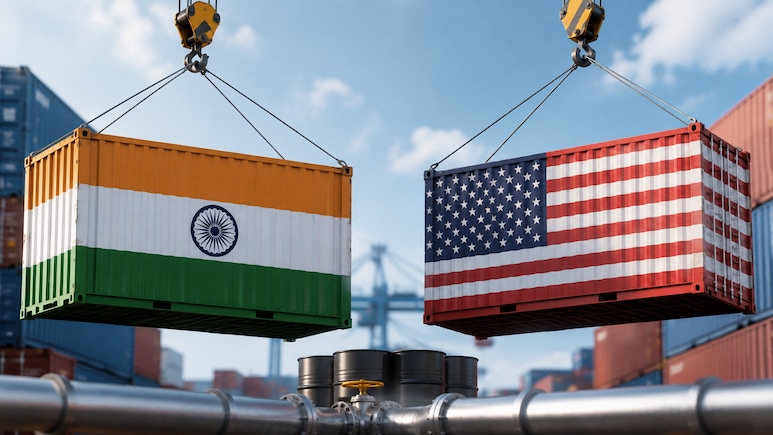
A critical provision of the bill grants the US president the executive authority to impose punitive tariffs of up to 100% on major purchasers of Russian oil and gas, explicitly positioning India-alongside China-in the crosshairs of severe economic penalties.
India's purchase of discounted Russian crude has surged to account for roughly 51% of its total oil imports, making it highly vulnerable to this legislation. The threat of 100% tariffs carries profound implications for India's export-driven sectors, bilateral relations, global supply chains, and the strategic paradigm of energy security versus international diplomacy.
Also Read | Layoffs Are Rising In Tech, But These Skills Are Helping People Unlock Better Pay
The Context: A Collision of Strategic Autonomy and Secondary Sanctions
The genesis of this tariff threat lies at the intersection of international conflict and domestic economic policy. Following the onset of the Russia-Ukraine war, India strategically scaled up its procurement of discounted Russian crude to insulate its developing economy from skyrocketing global energy prices. By mid-2026, Russia had emerged as India's primary energy supplier.
From Washington's perspective, these continuous purchases undermine Western economic blockades and fuel Moscow's wartime revenues. The Lindsey O'Graham Act leverages the dominance of the American consumer market as a tool of secondary sanctions.
For New Delhi, however, energy acquisition is a matter of absolute national interest and economic survival, setting up a direct conflict between India's long-standing doctrine of strategic autonomy and the United States' aggressive economic statecraft.
ALSO READ: 'Long-Arm Jurisdiction': China Slams New US Bill Threatening 100% Tariffs For Buying Russian Oil
Immediate Economic and Sectoral Ramifications
Should the Trump administration fully exercise its authority under this act, the economic shockwaves across the Indian subcontinent would be unprecedented. The US is India's largest trading partner and premier export destination. Imposing a 100% tariff-layered on top of existing forced-labour-related duties and historical trade penalties-would double the cost of Indian products overnight, pricing them entirely out of the competitive US market.
Several key Indian industrial clusters are particularly vulnerable:
- Textiles and Apparel: As labour-intensive segments deeply reliant on American retail buyers, Indian textile exporters would face immediate order cancellations, leading to severe job losses within India's micro, small, and medium enterprises.
- Pharmaceuticals and Generic Drugs: India operates as the "pharmacy of the world", supplying massive quantities of low-cost generic medications to the US healthcare network. A 100% tariff would disrupt medical supply chains and increase costs for American consumers.
- Gems, Jewellery and Engineered Goods: High-value segments, such as cut diamonds, jewellery, machinery, and organic chemicals would see their profit margins obliterated, triggering an acute widening of India's trade deficit.
Geopolitical Strain on the Indo-Pacific Partnership
Beyond the balance sheets, the tariff threat severely tests the strategic convergence between Washington and New Delhi. Over the past decade, bilateral ties have strengthened through defence groupings like the QUAD (comprising the US, India, Japan, and Australia), designed as a geopolitical counterweight to China's expansionism in the Indo-Pacific region.
Imposing blanket economic punishments risks alienating the Indian public and political establishment. If Washington forces India into a corner where it must choose between affordable energy security and trade relations with the West, it risks fraying the diplomatic goodwill necessary for defence and intelligence cooperation. Forcing India and China under the same umbrella of punitive US economic measures could inadvertently push these Asian giants into alternative, non-Western financial networks and trade blocs.
Tariff Threat as a Tool of Leverage
Crucially, the legislation does not trigger automatic tariffs; it grants the US Executive branch discretionary authority. Analysts note that the threat of a 100% tariff may be functioning primarily as coercive leverage. The Trump administration has historically utilized the threat of extreme economic penalties to force trading partners to the negotiating table.
Washington may be using this legislative sword of Damocles to extract concessions from New Delhi in ongoing trade talks. These concessions could include demanding that India ease market-access restrictions on US agricultural products, medical devices, and dairy imports, or establishing a firm, binding timeline to gradually scale back its reliance on Russian energy.
India's Reaction
India's Ministry of External Affairs has responded firmly to the US Congress passing the Lindsey O. Graham Sanctioning Russia and Iran Act of 2026, which grants President Donald Trump the power to impose up to 100% tariffs on countries importing Russian crude.
Criticising previous rounds of punitive duties as "unfair, unjustified, and unreasonable", New Delhi reiterated its unwavering stance that its sourcing decisions are purely market-driven. The MEA declared that India remains firmly committed to ensuring energy security for its 1.4 billion people and will take all necessary measures to safeguard its national and economic interests.
India's pushback is entirely justified based on the following structural realities:
- Sovereign Strategic Autonomy: India maintains a policy of multi-alignment and strategic autonomy. A third country's domestic legislation cannot dictate the bilateral trade agreements or energy policies of an independent, sovereign nation.
- Crucial Humanitarian Necessity: For a developing nation with a massive population, securing affordable, discounted crude oil is essential to curb inflation, protect domestic livelihoods, and sustain manufacturing. Shifting to longer, expensive shipping alternatives at scale would heavily strain the domestic trade balance.
- Discriminatory Double Standards: The US framework disproportionately targets large Asian importers while offering specific legal loopholes and exemptions for several European nations that continue to rely heavily on Russian natural gas, effectively penalising India for identical energy diversification strategies.
India's Strategic Options and Path Forward
To mitigate this existential trade risk, India must deploy a multi-faceted strategy:
Accelerating Energy Diversification: While cheap Russian oil has provided short-term fiscal relief, India must aggressively accelerate its investments in domestic renewable energy, green hydrogen and alternative oil suppliers in the Middle East and Africa to reduce exposure to secondary US sanctions.
Aggressive Trade Diplomacy: Indian negotiators must highlight the mutual damage of a total trade freeze. They must emphasise how a breakdown in trade hurts American consumers reliant on affordable Indian pharmaceuticals and IT services, while presenting an alternative roadmap for reducing Russian imports.
Exploring Alternate Market Development: The threat underscores the danger of over-reliance on a single Western consumer market. India must swiftly conclude comprehensive free trade agreements with the European Union, the UK, and nations across the Global South to safeguard its export economy.
Conclusion
The passage of the Lindsey O'Graham Act marks a volatile chapter in US-India relations. While intended to paralyse Russia's energy economy, the threat of a 100% tariff on Indian goods looms large over the Indian economy, threatening key export sectors and MSME employment.
Ultimately, the situation demands delicate diplomacy from both sides. For the partnership to endure, Washington must recognise India's developmental energy imperatives, while New Delhi must proactively manage its trade vulnerabilities to ensure that its economic growth is not crippled by the crossfires of distant geopolitical conflicts.
Disclaimer: The views expressed in this article are solely those of the author and do not necessarily reflect the opinion of NDTV Profit or its affiliates. Readers are advised to conduct their own research or consult a qualified professional before making any investment or business decisions. NDTV Profit does not guarantee the accuracy, completeness, or reliability of the information presented in this article.
ALSO READ: 100% Tariff Threat Looms On India As US House Passes Russia Sanctions Bill
Essential Business Intelligence, Sharp Market Insights, Practical Personal Finance Advice, Daily Fuel, Gold and Silver Prices and Latest Stories — On NDTV Profit.