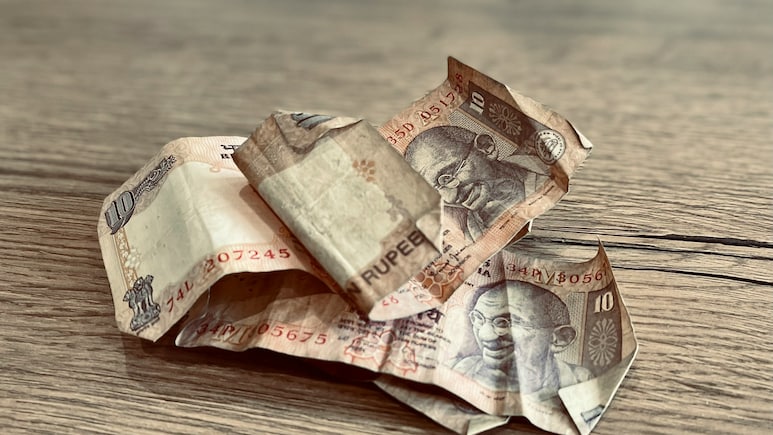
Recognised as Asia's worst performing currency in 2025, the Indian rupee seems to be navigating the same treacherous trail in 2026 as well.
Plagued by US tariff jitters last year and with the on-going Iran conflict this year, the currency has been absorbing one shock after another making its bones brittle.
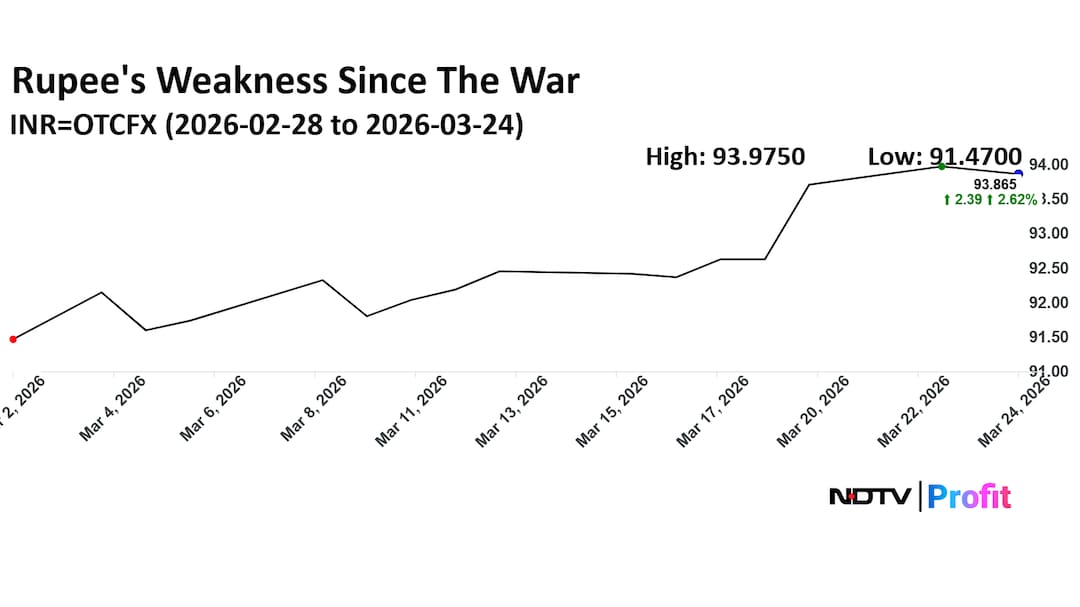
Even as easing oil prices lifted rupee on Tuesday, with an 11 paise higher close at 93.87 against the US dollar, the currency has fallen nearly 3% ever since the war began.
Also Read | Layoffs Are Rising In Tech, But These Skills Are Helping People Unlock Better Pay
Alas, the worst is not over for rupee yet, according to analysts at Emkay Global Financial Services Ltd. The expect the currency to further weaken to 96 against the greenback. Further, the reserch highlighted that the Reserve Bank of India may let rupee depreciate in a calibrated manner.
"The RBI is likely to allow calibrated INR depreciation while keeping a check on rates through market interventions. The trade-offs are not easy, nonetheless. USD/INR is set to reach 96, while the 10Y yield could drift higher and touch 6.95%," the research firm said in its report.
To prevent rupee from depreciating rapidly, RBI usually intervenes in the foreign exchange market by selling US dollars from its foreign exchange reserves.
However, Emkay holds that RBI stablisation in the currency market via forex (FX) intervention may become a bit of a hurdle going ahead, if the Iran war persists.
"With the current situation persisting longer than anticipated, India's challenge could quickly evolve from a current account problem into a capital account one. In such an environment, global idiosyncrasies may constrain the RBI's ability to stabilize INR through FX intervention, complicating the policy trade-offs ahead," the firm stated in its note.
The report underlines that sustained and sizeable unsterilised spot FX intervention by the regulator would directly drain domestic liquidity and push up money market rates going ahead.
ALSO READ: Rupee Tailwind Limited As Iran War Disrupts 20% of Engineering Goods Exports
Inflation Fears & BoP Crisis
Crude oil prices, which surged again after a brief pause, are a major headwind for India's economy. Emkay points out that if crude prices continue to soar, it will lead to widening of the Balance of Payment deficit, along with the current account deficit.
"On a static basis, every $10/bbl increase in crude prices is likely to widen the CAD/GDP by 0.45%," the report underscored.
Accordingly, the research firm revised its baseline financial year 2027 estimates for GDP to 6.6%, raised headline inflation estimates to 4.3% and also increased current account deficit estimates to over 1.7%.
"With the revised oil forecast, we lower baseline FY27E real GDP growth by 0.4pp to 6.6%, and raise headline inflation and CAD/GDP by 0.3pp to 4.3% and by 0.4pp to 1.7%, respectively," the report said.
In the case of brent touching $100 per barrel, Emkay expects BoP deficit to worsen to $85 billion, while CAD/GDP gap would widen to over 2.4%.
Essential Business Intelligence, Sharp Market Insights, Practical Personal Finance Advice, Daily Fuel, Gold and Silver Prices and Latest Stories — On NDTV Profit.