- India and the EU signed a Free Trade Agreement covering nearly all bilateral trade volumes
- JPMorgan and Jefferies foresee limited near-term impact on Indian auto imports and manufacturers
- Kotak expects the FTA to boost trade by 2027-28, benefiting labor-intensive exporters and consumers
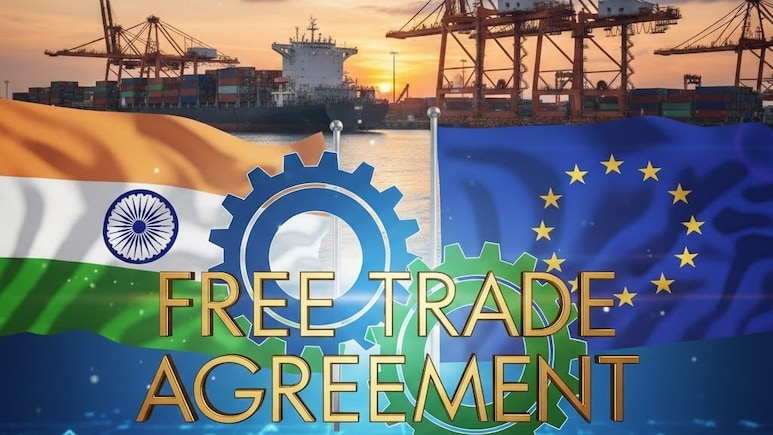
India and the European Union on Tuesday sealed the long-awaited Free Trade Agreement, a landmark pact that significantly deepens economic engagement between the two blocs. The deal described as the “mother of all trade deals,” covers nearly 99% of India's exports to the EU and 97% of EU exports to India, making it one of India's most comprehensive trade arrangements to date.
While the deal has been welcomed for its strategic and long-term implications, brokerages remain largely measured on its immediate impact on Indian markets, flagging sector-specific opportunities and risks.
Limited Near-Term Impact on Autos: JPMorgan and Jefferies
JPMorgan believes the agreement's impact on vehicle imports into India is likely to be limited. While tariffs on imported vehicles will be reduced, the brokerage estimates that incremental imports may rise by around 1 lakh units, primarily in the luxury segment. This translates to roughly 2.4% of total vehicle demand in India, implying only about a 2% pressure from imported vehicles overall. As a result, JPMorgan sees the near-term impact on the domestic auto industry as modest.
Jefferies echoes this cautious stance, stating that the India-EU deal is likely to have a minimal impact on listed Indian original equipment manufacturers. According to the brokerage, most European OEM vehicles are already either manufactured in India or assembled locally using CKD kits, which attract a relatively low import duty of 16.5%. Many EU brands are therefore already operating under favourable duty structures. Jefferies sees the recent developments as a buying opportunity in Mahindra & Mahindra, citing limited competitive disruption.
Structural Positives, Back-Ended Gains
Kotak Institutional Equities describes the agreement as a promising deal but highlights that it is likely to become effective only by calendar year 2027 or fiscal 2028, given the extended ratification timeline. Kotak expects the FTA to stimulate both economies through lower tariffs, removal of non-tariff barriers, and increased trade volumes. Indian exporters, especially in labour-intensive sectors, stand to benefit from zero-tariff access to the EU market. At the same time, EU access to India's large consumer base could intensify competition in select domestic sectors. Kotak also views the deal as a medium- to long-term hedge against uncertainties arising from US tariff policies and global geopolitical risks.
ALSO READ: 110% To 10%: India-EU FTA Results In Big Cut In Tariffs On European Car Imports
Citi notes that the FTA will liberalise 96–99% of trade between India and the EU, while sensitive areas such as dairy, certain agricultural products, and issues like the Carbon Border Adjustment Mechanism have been kept outside the agreement. The brokerage believes the deal will ease pressure on India's labour-intensive exports and support the China+1 diversification theme. However, due to the lengthy ratification process, trade and investment benefits are expected to be back-ended, with a modest impact on index earnings in the near term.
Citi identifies potential beneficiaries in hospitals, chemicals, defence, and engineering goods, while flagging possible competitive pressures for autos and select consumer categories. In autos, increased competition is expected mainly in the higher-end segment, which remains a relatively small part of the overall market. Auto components and tyres could see heightened competition, while select consumer categories such as chocolates and pet food may also face increased imports.
Sectoral Winners and Losers
Avendus Spark provides a detailed sector-wise assessment, highlighting textiles and apparel as key beneficiaries. Tariff cuts could improve India's competitiveness against peers like Bangladesh and Vietnam, potentially driving volume growth over the medium term. In autos and auto components, Avendus expects positives for ancillaries and the EV supply chain, with export growth of 5–7%, though phased liberalisation may weigh on the luxury passenger vehicle segment.
Pharmaceuticals could see incremental growth in generics and CDMO exports due to improved regulatory clarity and market access. Engineering and capital goods may benefit from incremental EU demand for precision machinery, electrical equipment, and industrial products. In chemicals and specialty chemicals, gains are likely to be selective and partly offset by higher ESG and safety compliance costs.
Avendus also sees limited direct impact on IT and services exports, but flags potential upside from improved mobility, data adequacy, and market access over time. In agri and food processing, processed foods may gain, while sensitive commodities such as dairy and cereals remain protected.
Essential Business Intelligence, Sharp Market Insights, Practical Personal Finance Advice, Daily Fuel, Gold and Silver Prices and Latest Stories — On NDTV Profit.