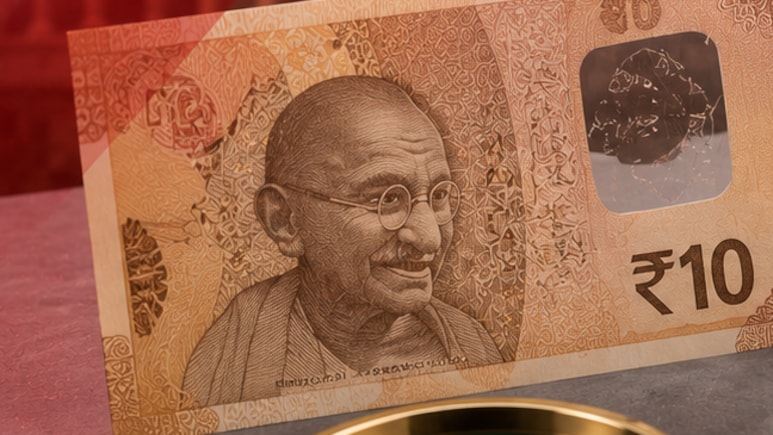
- The government approved RBI's trial of 1 billion polymer Rs 10 and Rs 20 notes each
- Existing paper Rs 10 and Rs 20 notes will remain legal tender and not be withdrawn
- Polymer notes offer durability and better security against counterfeiting than paper notes
The proposed polymer notes will initially be tested alongside the paper-based currency already in circulation. The RBI will begin the procurement process for the trial, after which the notes can be introduced for real-world testing.
The government confirmed the decision in a written reply to the Rajya Sabha. The proposal was submitted by the RBI under Section 25 of the Reserve Bank of India Act, 1934, which requires the central bank to obtain the government's prior approval for changes to the form or design of banknotes.
Will Existing Rs 10 And Rs 20 Paper Notes Become Invalid?
Also Read | Layoffs Are Rising In Tech, But These Skills Are Helping People Unlock Better Pay
No. Existing paper Rs 10 and Rs 20 notes will continue to remain legal tender.
The RBI's proposal is to introduce polymer notes alongside existing paper-substrate banknotes. It means people will be able to use both versions once the polymer notes enter circulation.
The government has not announced any plan to withdraw the existing paper currency in these denominations.
The field trial is instead intended to help the RBI understand how polymer notes perform under India's demanding cash-use conditions before deciding whether to expand their use.
ALSO READ: Newsbreak Confirmed! RBI Governor Says Polymer Currency Notes Likely To Be Launched By FY28
Why Is India Testing Polymer Currency?
Polymer banknotes are produced using a thin plastic-based material instead of the cotton-based paper used for conventional Indian currency.
One of their biggest advantages is durability. Polymer notes generally withstand moisture, dirt and repeated handling better than traditional paper notes. Their physical properties can also help incorporate security features designed to make counterfeiting more difficult.
Several countries, including Australia, the United Kingdom and Singapore, already use polymer banknotes for some denominations.
For India, where lower-value notes can experience heavy circulation, longer-lasting currency could potentially reduce the frequency with which damaged notes need to be replaced.
One Billion Notes Each To Be Tested
The government has approved field trials involving 1 billion polymer Rs 10 notes and another 1 billion polymer Rs 20 notes.
The scale of the proposed trial will allow the RBI to assess how the notes perform across actual circulation rather than relying only on laboratory testing.
The central bank will need to procure the notes before the field exercise begins. The process is currently at an early stage.
When Will Polymer Rs 10 And Rs 20 Notes Be Available?
There is no confirmed launch date yet.
The Finance Ministry has indicated that the procurement process is still in its initial phase. Consequently, the government has not provided a firm timeline for when the polymer notes will enter circulation.
The eventual rollout will depend on procurement, printing arrangements and the design of the field trial.
The government has also not provided an estimate of the total cost of the exercise.
Essential Business Intelligence, Sharp Market Insights, Practical Personal Finance Advice, Daily Fuel, Gold and Silver Prices and Latest Stories — On NDTV Profit.