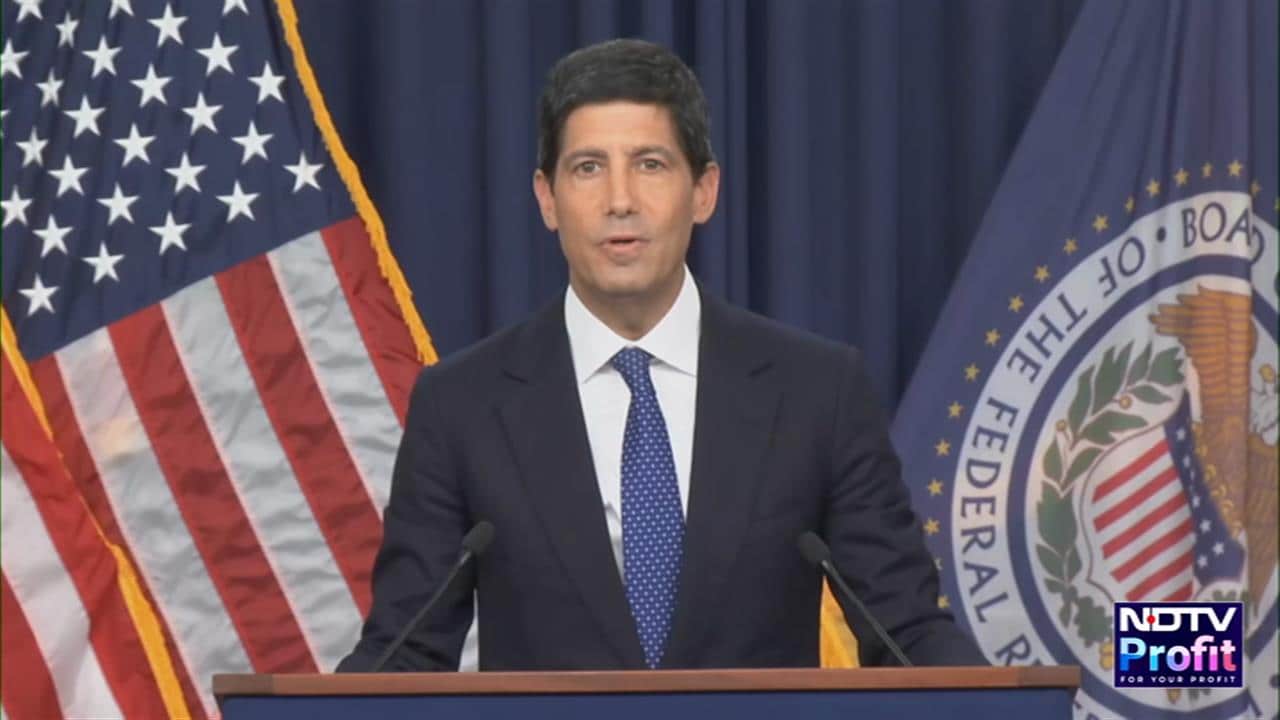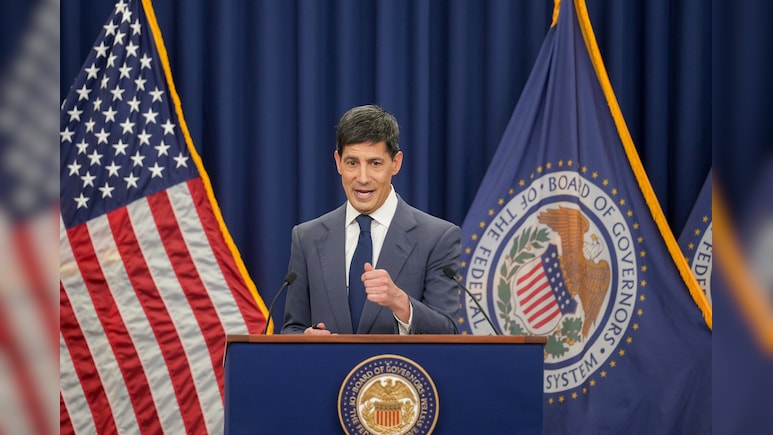
Everyone knew Kevin Warsh planned to stop holding the market's hand when he took over as Federal Reserve chairman. They were less prepared to be jolted awake at his very first press conference by the sound of a committed hawk who views taming inflation as his biggest job.
Any speculation that Warsh, freshly appointed by rate-cut-obsessed President Donald Trump, would mince words in his inaugural turn at the podium was put to rest when he stated repeatedly that "price stability" would be his priority. Investors reacted in kind, upping bets on an imminent tightening, dumping Fed-sensitive short-dated Treasuries and paring back on equities, at least initially, in the hours after he spoke.
The issue isn't just Warsh's campaign to cure the Fed of verbosity in its communication with markets - though sparser guidance raises the potential for volatility-inducing shocks. It's the possibility that Warsh's credibility will be put to the test at once should economic data between now and July signal that a new tightening cycle is needed to make good on the promise of price stability he hammered home.
Also Read | Layoffs Are Rising In Tech, But These Skills Are Helping People Unlock Better Pay
"If the next few inflation prints do not show improvement sufficient to cool market hike bets, he may have to hike by September - possibly even in July - or risk credibility in his own definition," wrote Evercore ISI strategists led by Krishna Guha after the meeting. "We stick with our no hike call for now but put it under review."
ALSO READ: Fed Chair Kevin Warsh Drops 'Forward Guidance' In Debut Meeting, Launches Five Task Force
The swaps market shows the conundrum. Even as Warsh declined to deliver any guidance on the central bank's rate outlook, commit to any action or reveal his own personal views, his professed fixation on inflation - along with "dot-plot" projections showing growing hawkishness among Fed voters - was taken by investors as a signal to ramp up bets on hikes sooner rather than later.
Traders who before Wednesday were pricing in near-zero chance of a quarter-point rise in six weeks' time now see the odds as approaching a coin flip, something no Wall Street economist is forecasting as their base case, with close to two hikes priced by early next year.
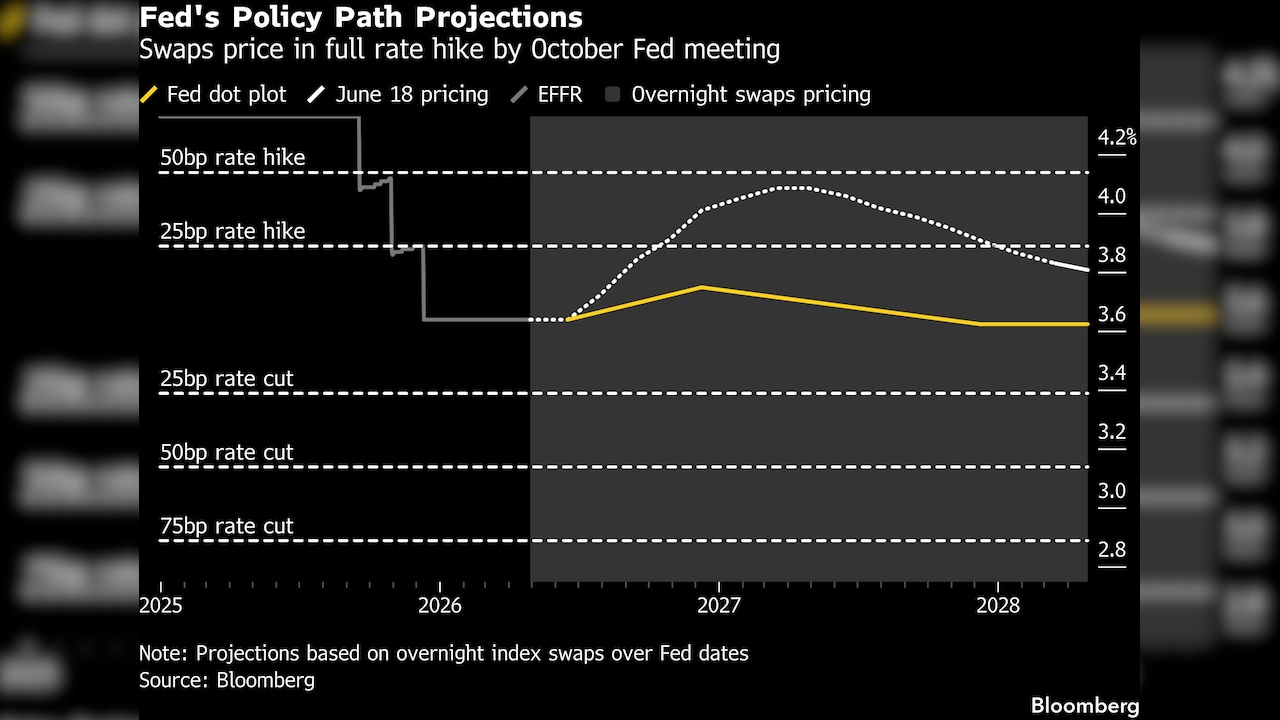
| Warsh refrained from adding his own "dot" to the Fed's projections. Letting them speak for themselves was a statement in itself, said Tony Rodriguez, head of fixed-income strategy at Nuveen Asset Management. Now, both markets and policymakers will parse a raft of data between now and July. "The biggest takeaway is that the dots were a little more hawkish than expected and that he really did not push back at all on that reading," Rodriguez said. "It was all about buying time." While Warsh's comments sparked a selloff in short-term debt by re-setting rate expectations, they gave a boost to inflation-sensitive long-term Treasuries. Beyond the bond market, the dollar surged while gold and Bitcoin - both seen as inflation hedges - slumped. Stocks, which retreated Wednesday afternoon, regained their footing Thursday. The S&P 500 Index roared ahead to notch a second straight weekly gain ahead of the Juneteenth holiday in the US Friday, with the drop in oil serving as a catalyst following the interim US-Iran peace agreement. ALSO READ: Warsh Era Begins: Fed Keeps Rates On Hold, Hints At Hawkish Tilt With Possible 2026 Hike "Markets had a bit of a deer-in-the-headlights moment during Warsh's first Fed meeting yesterday and perhaps panicked as he kept hammering on price stability, which investors read as, 'We hate inflation,'" said Michael Bailey, director of research at wealth management firm FBB Capital Partners. For equities, "it appears that a signed, sealed and delivered Iran deal is carrying more weight than smoke signals of higher interest rates." 'New Chapter'Warsh used his maiden press conference to hail a "new chapter" for the central bank's relationship with financial markets - one based less on guidance and speeches and more on the data as it comes. This, he argues, allows the central bank more flexibility. This also paves the way for financial market prices to be more of an input for officials as they provide in his words, "probably the most important source of information to guide central bankers." While he's long indicated he felt the Fed talked too much, the confirmation he would turn his academic theory into policymaking practice leaves Wall Street bracing for future gatherings of the rate-setting Federal Open Market Committee after years of almost knowing the result beforehand. The strategy shift carries risks. For bond traders, the upshot of less transparency and data dependence may well be greater volatility and higher risk premiums. Witness this week: Warsh gave no policy prescriptions and refused to be tied to any course of action - and yet traders aggressively priced in rate hikes. "He said absolutely nothing about the future of Fed policy, which leaves the markets in the dark," said Johnathan Owen, a portfolio manager at TwentyFour Asset Management. "If it is a Fed that's going to rely on a lot more real-time data, that's how markets will trade." 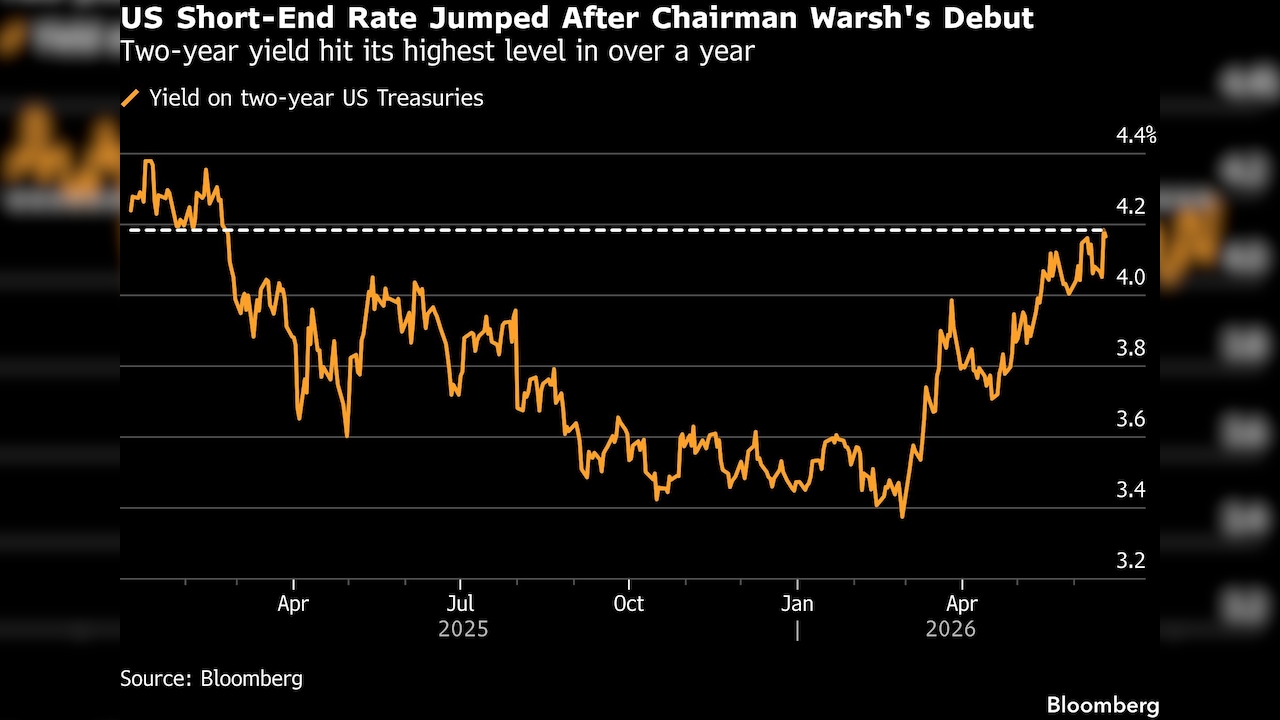 Further hot readings may justify the market's move this week. Alternatively, investors may be getting ahead of themselves. Inflation may cool in coming months as oil prices decline and growth moderates, keeping the Fed on hold this year. ALSO READ: Who Is Kevin Warsh? Inside Early Life, Career, Trump Connection & Policy Vision Of Next Fed Chair "Warsh had to strike a balance between the White House, the market and the FOMC, it's very important in a new job to get on the same page and to make sure you have that credibility to make the changes you want make later," said George Catrambone, head of fixed income at DWS Americas. "That's what yesterday was about and the market's making a mistake over interpreting and the market needs to be careful about being too aggressive in pricing hikes." |
(This story has not been edited by NDTV staff and is auto-generated from a syndicated feed.)
Essential Business Intelligence, Sharp Market Insights, Practical Personal Finance Advice, Daily Fuel, Gold and Silver Prices and Latest Stories — On NDTV Profit.