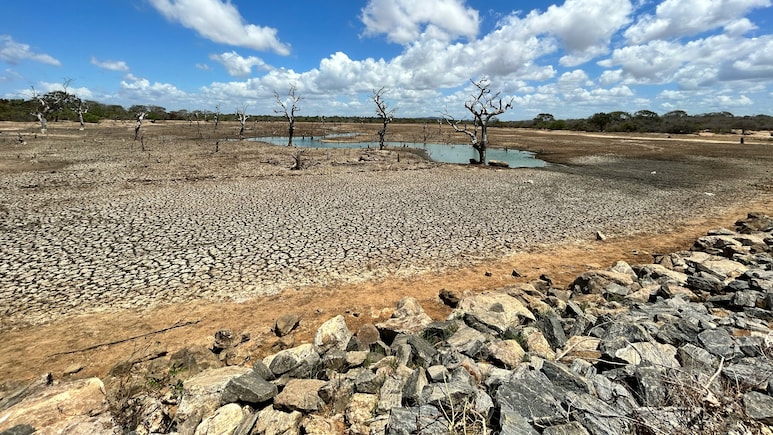
- El Niño could peak at 3.8°C above average in Nov 2026-Jan 2027, says WMO
- This intensity far exceeds the 0.5°C threshold for El Niño events
- Severe droughts may hit India, Central America, and northern South America
The World Meteorological Organisation (WMO) warned on Wednesday that the ongoing El Niño conditions in the tropical Pacific could intensify to exceptional levels in the coming months, pushing ocean temperatures to record highs and fuelling severe climate disruptions across the globe.
According to the World Meteorological Organization's (WMO) latest seasonal climate outlook, sea surface temperatures across the central and eastern equatorial Pacific, where El Niño develops, could climb to as much as 3.8°C above average between November 2026 and January 2027. This would significantly exceed the standard threshold for declaring an El Niño event, which the WMO sets at sea surface temperature anomalies of more than 0.5°C.
ALSO READ: El Nino Threatens Over 450,000 Lives In Next Six Months, Nearly 16,000 In India At Risk: Study
Also Read | Layoffs Are Rising In Tech, But These Skills Are Helping People Unlock Better Pay
“This is literally off the monitoring charts that we have used for the past four decades,” said WMO Secretary-General Celeste Saulo. “El Niño will peak towards the end of 2026, but its impacts will reverberate across the globe long after that.”
WMO SG Celeste Saulo & @UNOCHA @UNReliefChief call for urgent humanitarian action as El Niño is set to hit fragile communities hard. New WMO update indicates that the current El Niño event could be unprecedented in strength. Read SG Saulo's statement: https://t.co/DnIjYQg9Kl https://t.co/ouwdKyg86T
— World Meteorological Organization (@WMO) October 21, 2026
El Niño, the warm phase of the El Niño-Southern Oscillation (ENSO) cycle, develops when weaker trade winds push warm Pacific Ocean waters eastward, disrupting global atmospheric circulation patterns. Against the backdrop of rising global temperatures and record ocean heat levels recorded in 2026, meteorologists caution that the developing event could become one of the strongest on record since systematic monitoring began in 1950.
The projected rise in Pacific Ocean temperatures could significantly disrupt rainfall patterns worldwide. Climate models indicate an increased risk of severe dryness and prolonged droughts across parts of the Indian subcontinent, Central America and northern South America, threatening food supplies and water resources. In contrast, increased atmospheric moisture could trigger heavy rainfall and localised flooding in southeastern South America, the Horn of Africa and parts of North America.
According to WMO's statement, Higher temperatures and below-average rainfall heighten the risk of heat exposure and put further strain on agricultural activity and water resources, while also increasing the likelihood of wildfires and smoke haze, trends that are already becoming evident for the Southeast Asian region.
ALSO READ: Boiling Oceans, Dire Diseases, Climate Injustice: El Nino's Terrifying Trifecta
The WMO warned that rising sea surface temperatures are placing significant stress on marine ecosystems, intensifying large-scale coral bleaching and disrupting fisheries. International meteorological agencies and humanitarian organisations have been urged to activate early-warning systems, as the phenomenon's cascading effects on agriculture and socioeconomic conditions are expected to continue into early 2027.
Essential Business Intelligence, Sharp Market Insights, Practical Personal Finance Advice, Daily Fuel, Gold and Silver Prices and Latest Stories — On NDTV Profit.