


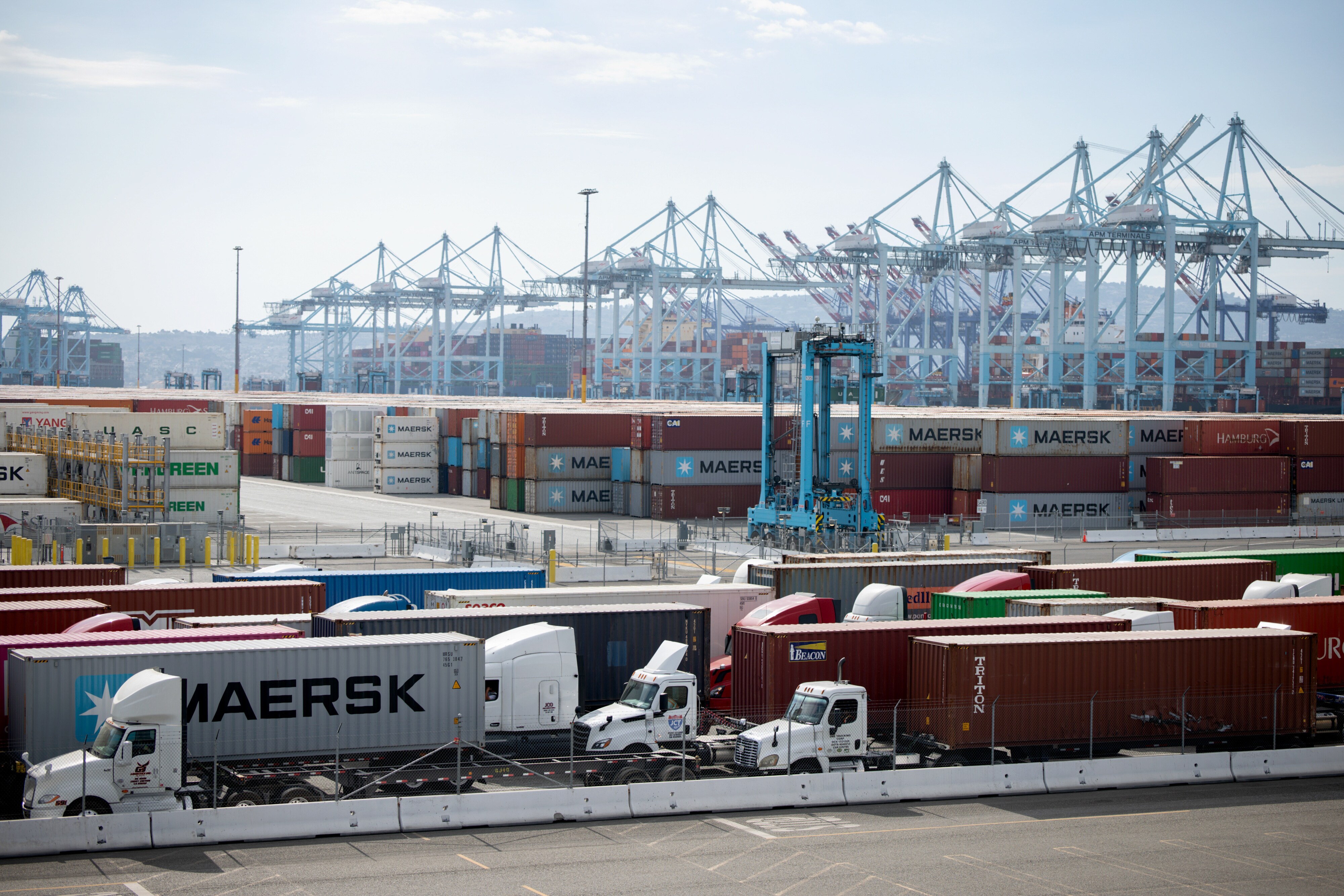
- The global economy is resilient despite Trump's trade tariffs and uncertainties
- OECD raised growth forecasts for US and euro-area for this year and next
- AI investment and data center construction boost global trade and tech growth
The global economy is weathering Donald Trump's trade tariffs better than expected as activity gets a boost from strong investment in artificial intelligence and supportive fiscal and monetary policies, the OECD said.
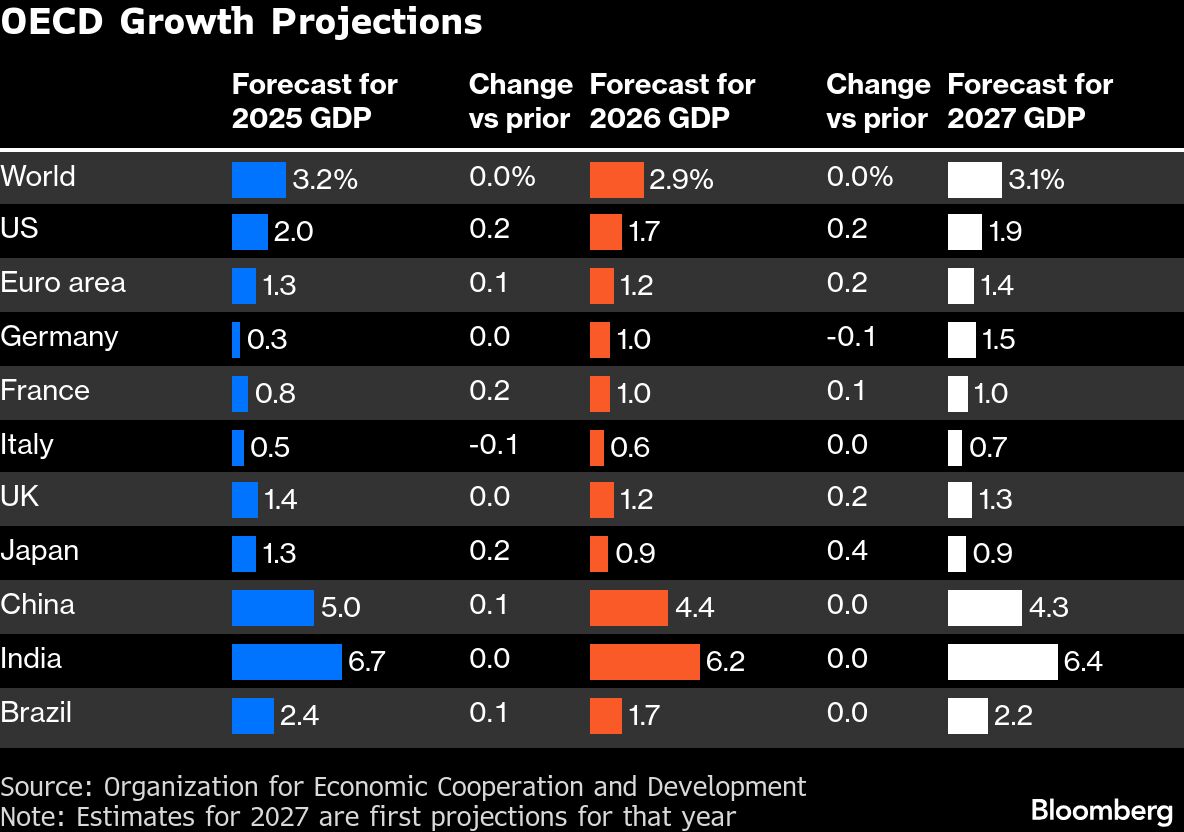
The Paris-based organization raised its US and euro-area growth forecasts for this year and next, and made small upward adjustments for other major economies in its latest outlook.
Still, it continues to predict global growth will slow to 2.9% in 2026 from 3.2% in 2025 as the full effects of levies on trade have yet to be felt.
“The global economy has been resilient this year, despite concerns about a sharper slowdown in the wake of higher trade barriers and significant uncertainty,” Secretary General Mathias Cormann said. “Yet, global trade growth moderated in the second quarter of this year, and we expect higher tariffs to gradually feed through to higher prices, reducing growth in household consumption and business investment.”
Disruption from Trump's efforts to rewrite the rules of world commerce has been hard to predict for international organizations and economists. In June, the OECD warned US growth would slow to 1.6% this year, only to raise that to 1.8% in September and to now forecast 2%.
Surging AI investment and the construction of data centers, particularly in the US, are also having an increasing impact on economic estimates. According to the OECD, the buoyancy of the tech sector has underpinned global trade flows and production growth in technology is out-pacing the rest of industry.
It estimates that without booming AI investments the US economy contracted by 0.1% in the first half as household consumption growth moderated and government purchases fell.
“Everything that has to do with firms purchasing equipment that will allow them to thrive in this new technological age, all that has lifted economic activity in ways that have somehow offset some of the negative impacts related to policy uncertainty and related to the effect of tariffs on economic activity,” said Luiz de Mello, the OECD's director of country studies.
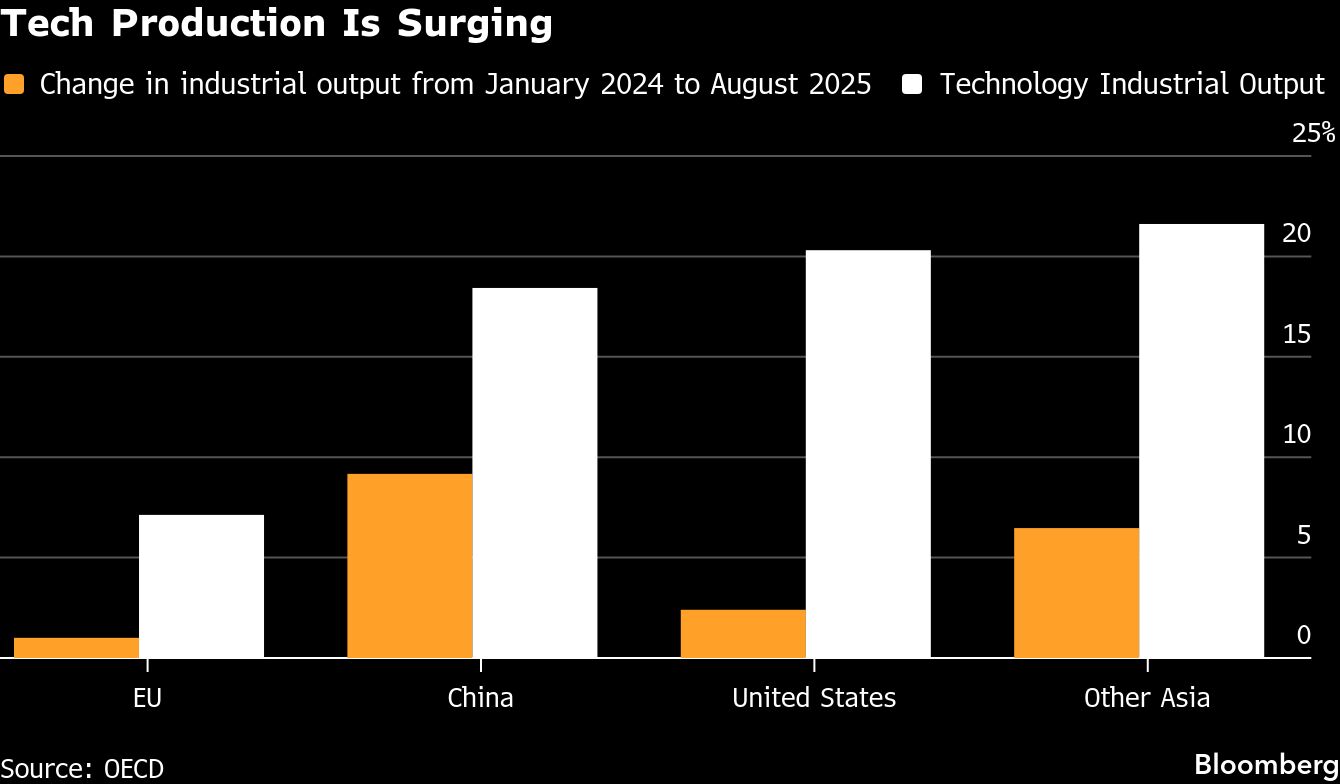
Still, the organization cautioned that the rapid expansion in tech and optimism about AI poses a risk of abrupt price corrections and even forced asset sales given stretched valuations.
Combined with concerns about swift changes in trade measures, the OECD said the outlook is “fragile” and its projections are “subject to substantial risks.”
Essential Business Intelligence, Continuous LIVE TV, Sharp Market Insights, Practical Personal Finance Advice and Latest Stories — On NDTV Profit.













_portrait_on_23_March_1950.jpg?im=FitAndFill,algorithm=dnn,width=240,height=180)