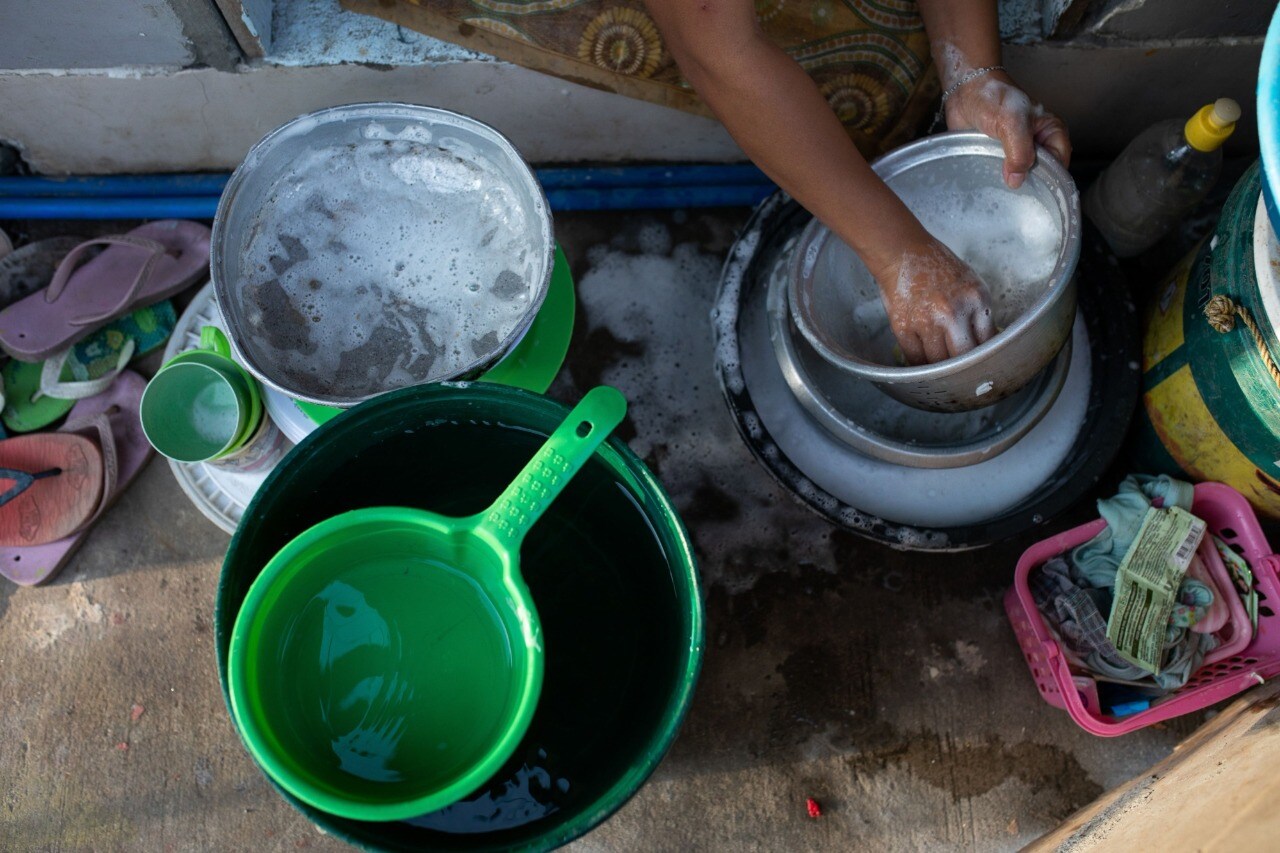
The more people cooked during the Covid-19 lockdown, the bigger was the pile of dishes. For Jyothy Laboratories Ltd., that has driven growth in a year when consumption tumbled.
The maker of Pril Dishwash expects its overall revenue to grow 8.5-9% in the ongoing financial year, aided by a recovery in rural spending, according to K Ullas Kamath, joint managing director at Jyothy Labs. He sees double-digit volume growth for the full year, after recording an increase of 6.5% in the first quarter and 8.5% in the second.
The dishwashing segment—the biggest revenue contributor at 38% as of September—is “the star and hero”, growing at 25%, Kamath told BloombergQuint's Niraj Shah in an interview. "This is because the pandemic has led to more cooking and cleaning at home."
For the maker of Ujala fabric whitener, the business has recovered from one of the harshest lockdowns that has pushed India into a technical recession. That came as restrictions were gradually eased. “All 27 factories are working with 100% capacity and that indicates demand is there,” Kamath said.
Rural India is the engine of this growth as government subsidies and schemes during the pandemic have allowed farmers to spend on non-food items, according to him. Money availability in is "unprecedented, he said, partly attributing it to the government's minimum support price for key crops.
Jyothy Labs earns around 40% of its revenue from rural India. This might go up to 45% in two-three years, he said, as rural consumers continue to be the company's growth engine.
Key highlights of the conversation:
- The urban economy also doing well but rural is doing better in a 1.4:1 ratio.
- Dishwashing segment is “the star and hero”, growing at 25%. This is because pandemic has led to more cooking and cleaning at home.
- Personal care segment is second in line because people are bathing more than once in a day.
- Household insecticide segment comes third. Liquid insecticide doing better than coils but both are growing because people are taking higher precautions against fever.
- Fabric wash is fourth in line. Post-wash products struggling a bit. Rest are back to pre-Covid levels.
- Rising raw material costs may lead to 0.5-1% contraction in gross margin. Will maintain Ebitda margin at same levels.
- Don't wish to increase product prices at such a time.
Watch the full conversation here:
Essential Business Intelligence, Continuous LIVE TV, Sharp Market Insights, Practical Personal Finance Advice and Latest Stories — On NDTV Profit.