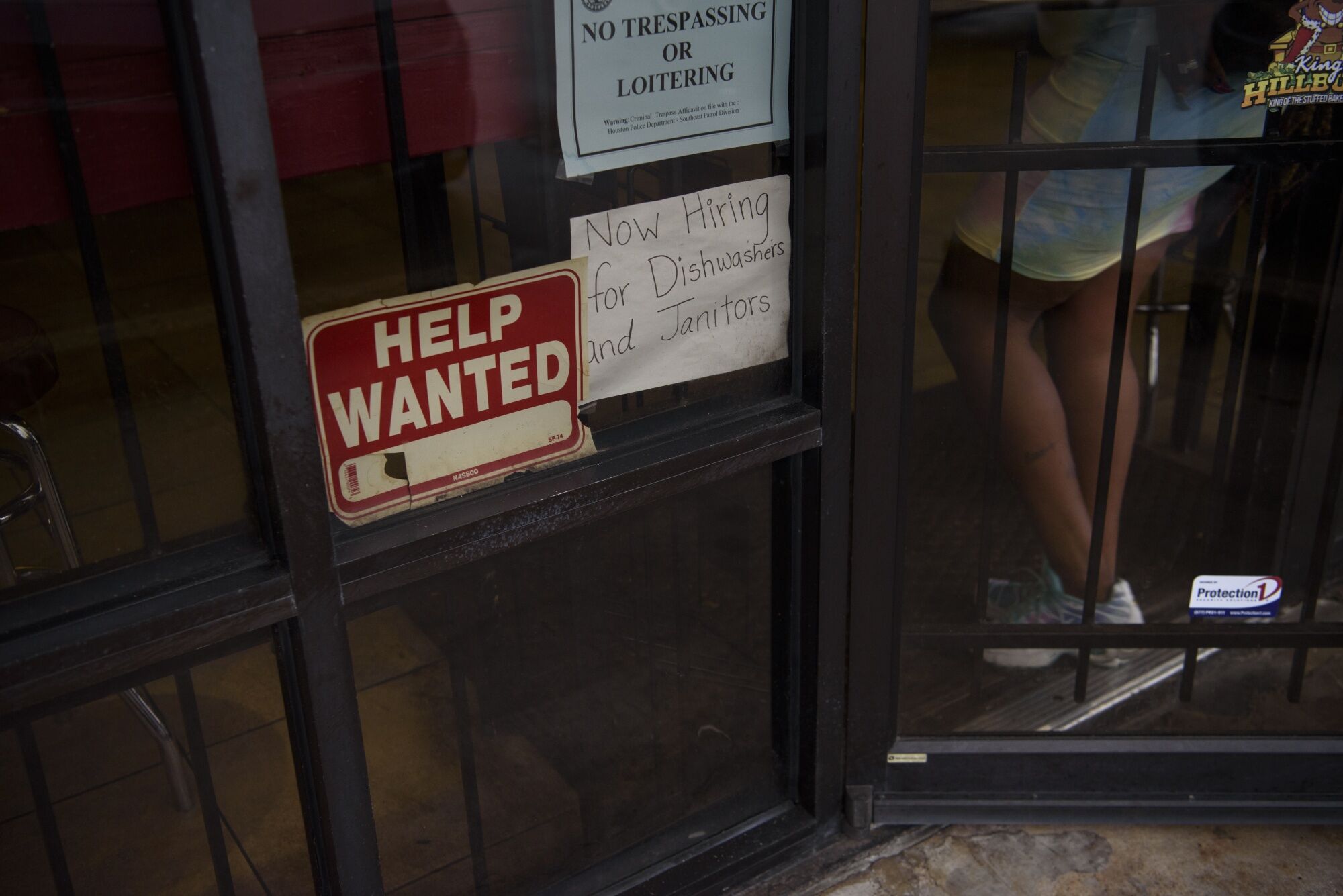
(Bloomberg) -- Recurring applications for unemployment benefits rose for a sixth straight week, indicating those losing their jobs are starting to have more trouble finding new ones.
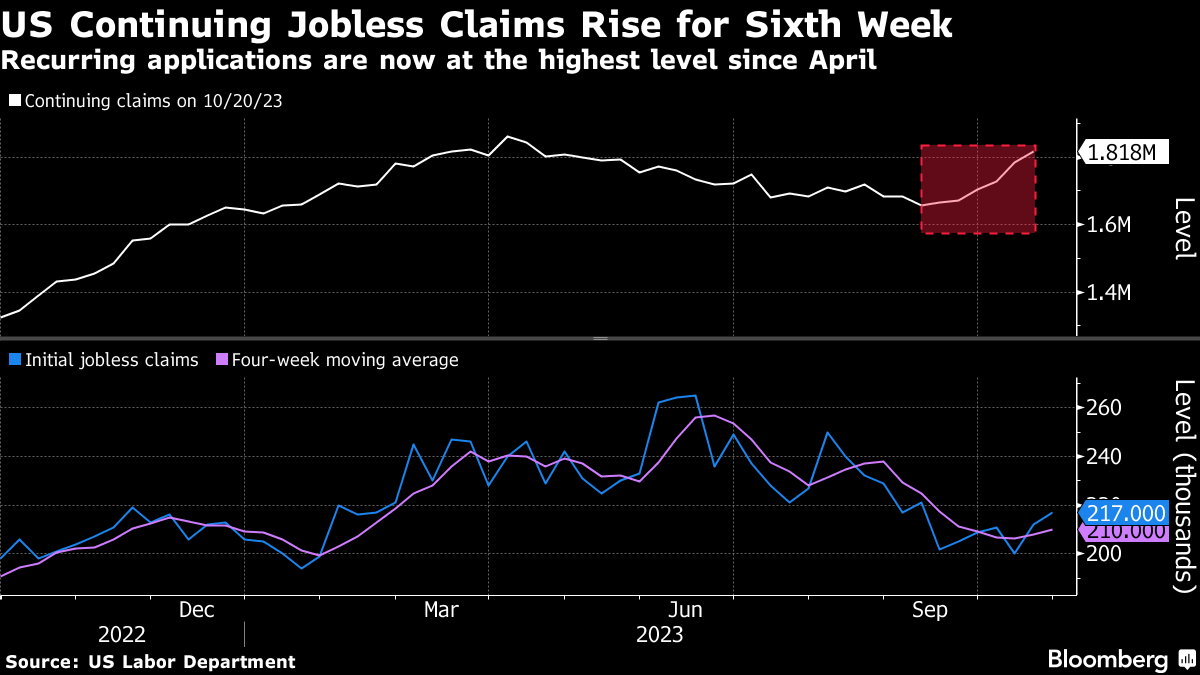
Continuing jobless claims, a proxy for the number of people receiving unemployment benefits, increased to 1.82 million in the week ended Oct. 21, the highest level since April, according to Labor Department data out Thursday.
Initial claims also rose, to 217,000 in the week ending Oct. 28. The four-week moving average, which smooths out some of the volatility in the weekly data, ticked up.
The figures underscore the impact even a mild pullback in hiring can have on workers. Though companies are still adding jobs at a healthy pace and the unemployment rates remains low, the pace of hiring is losing steam, leaving some job-seekers to look for work for longer.
“Overall, levels remain low, and businesses have yet to start shedding workers at a rapid pace given economic activity and demand remain strong,” said Rubeela Farooqi, chief US economist at High Frequency Economics. “However, the continuing claims numbers bear watching for signs of a softening in labor demand.”
A monthly government jobs report due Friday will offer a more complete picture of the direction the labor market is headed. Economists project the US to have added some 180,000 positions in October, which would still be above the pre-pandemic trend in job growth.
What Bloomberg Economics Says...
“The modest rise in initial jobless claims, together with the persistent increase in continuing claims, suggests the labor market is softer than it seems on the surface. In past prints, household survey data showed the number of people becoming unemployed is growing faster than the number transitioning out of unemployment — usually a leading indicator of a jump in the unemployment rate.”
— Eliza Winger, economist
To read the full note, click here
Federal Reserve officials have raised interest rates to a 22-year high in order to tame inflation, and the soaring borrowing costs — which are already depressing sectors across the economy — are expected to eventually have a broader impact on hiring plans.
After the central bank decided to leave rates unchanged on Wednesday, Chair Jerome Powell noted some cooling is taking place in the job market, but reaffirmed that if evidence suggests that's no longer the case, that “could put further progress on inflation at risk and could warrant further tightening of monetary policy.”
On an unadjusted basis, initial claims edged up to 196,767. Claims rose the most in Michigan, California and North Carolina, and fell in New York.
The United Auto Workers union strike against the three largest automakers in the US may have contributed to the uptick. While striking workers don't qualify for unemployment benefits in most states, companies furloughed workers in plants across the country. The union has since reached agreements with each company.
“Ironically, now that the UAW strike has been settled, the claims figures are finally beginning to show a significant impact,” said Stephen Stanley, chief economist at Santander US Capital Markets. “It doesn't add up to a whole lot, but it is enough to believe that the bulk of the rise in initial claims in recent weeks is strike-related.”
A separate report Thursday showed US labor productivity advanced by the most in three years, helping to alleviate the inflationary impact of recent wage growth.
(Updates with analyst comment in eleventh paragraph. A previous version corrected the chart to include latest data.)
More stories like this are available on bloomberg.com
©2023 Bloomberg L.P.
Essential Business Intelligence, Sharp Market Insights, Practical Personal Finance Advice, Daily Fuel, Gold and Silver Prices and Latest Stories — On NDTV Profit.