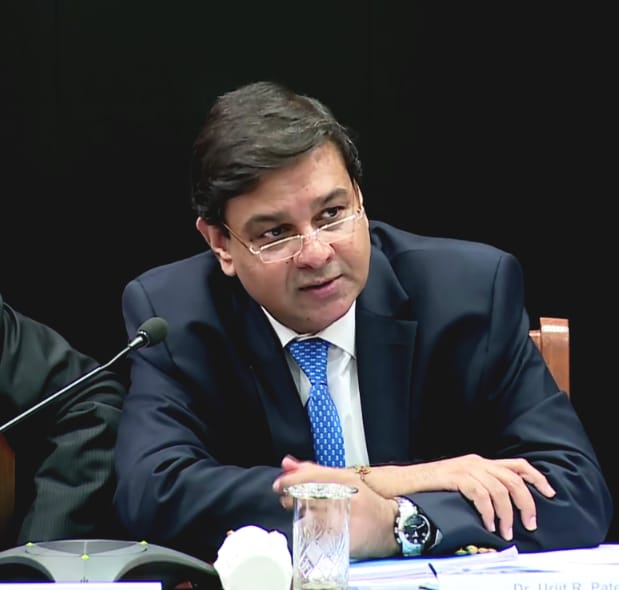
Urjit Patel, who took over as the 24th governor of the Reserve Bank of India in September, appears to be “significantly more dovish” than his predecessor Raghuram Rajan, wrote Chris Wood, chief equity strategist at CLSA in his weekly newsletter Greed & Fear.
Wood, while analyzing the RBI's decision to cut rates by 25 basis points last week, said that while the rate cut was “somewhat surprising”, what was more interesting was the explanation behind the decision.
The interesting point here is less the rate cut itself than the subsequent explanation of why the rate cut was made. This is because the details highlight that the new RBI Governor Urjit Patel is significantly more dovish than his predecessor despite his role in setting up the inflation targeting regime.Chris Wood, Chief Equity Strategist, CLSA
The RBI brought down its benchmark repo rate to 6.25 percent on October 4, taking the total quantum of rate cuts since 2015 to 175 basis points. Wood expects another 25 basis point cut this year and sees interest rate reductions continue into next year as well.
Wood echoes the change in interest rate expectations in the domestic markets. While most analysts were expecting rates to plateau at about 6 to 6.25 percent ahead of the October policy review, many are now seeing the possibility of another 50 basis points in cuts, which could take the policy rate down to 5.75 percent.
This is because Patel appears more flexible on achieving the mid-point of the 4 percent (+/- 2 percent) inflation target and is also comfortable with a lower real rate than his predecessor.
Patel has given himself more flexibility in meeting the inflation target of 4 percent, while the target for real interest rates has been lowered. This suggests significantly easier monetary policy is coming, which in Greed & Fear's view is not irresponsible since credit growth has been running almost in line with nominal GDP growth for five years.Chris Wood, Chief Equity Strategist, CLSA
Wood adds that easier monetary policy in India may be accompanied by easier fiscal policy. He expects the Fiscal Responsibility and Budget Management committee to recommend a fiscal deficit band rather than a fixed number. This could amount to implicit easing.
Together these developments would be positive for Indian equities, said Wood, while adding that housing finance companies and wholesale-funded lenders along with real estate stocks could benefit from this scenario.
Rajan's Bank Clean-Up Legacy
While noting that Patel's monetary policy stance appears to differ from Rajan's, Wood hoped the attempt to clean-up bank balance sheets would continue.
If Patel is in reality diluting aspects of Raghuram Rajan's inflation targeting scheme, it is to be hoped that he does not simultaneously back off from what Greed & Fear continues to view as Rajan's most positive legacy. That is the pressure he applied on the state-owned banks to clean up their portfolios.Chris Wood, Chief Equity Strategist, CLSA
An asset quality review initiated by Rajan pushed up gross non-performing assets to nearly Rs 6.3 lakh. While the recognition of bad loans has improved, there is little progress so far in the resolution of these stressed assets.
At his first press conference, Patel acknowledged that it is critical to deal with the issue of bad loans and added that the current scenario needs to be dealt with ‘creatively'. Since then, government officials have suggested that various options including a bad bank are being considered.
Wood noted that the move to push large borrowers to the corporate bond market and asking banks to provision more against large exposures is positive.
The above would be good news since it means there is clear movement on the asset quality issue in India's banking system though it also means that the related corporate restructuring will delay the beginning of a new capex cycle.Chris Wood, Chief Equity Strategist, CLSA
Essential Business Intelligence, Continuous LIVE TV, Sharp Market Insights, Practical Personal Finance Advice and Latest Stories — On NDTV Profit.