.jpg?downsize=773:435 "Slowdown In Government Spending, High Imports Hurting Growth: RBI")
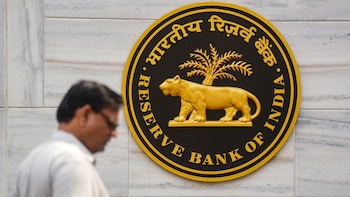
A slowdown in government spending and burgeoning imports are key reasons behind the recent slowdown in GDP growth, said the Reserve Bank of India in an analysis of recent government data. With GDP growth expected to fall to 7 percent compared to initial estimates of 7.4 percent, the data confirms a slowing of economic momentum, said the analysis included in the central bank's monthly bulletin.
Government expenditure and imports decelerated during the current financial year, despite green shoots of revival in fixed investment and continued robustness in private consumption, the central bank noted.
The likelihood of slackening of pace extending into the fourth quarter of FY19 appears to be growing, despite earlier signs of economic recovery in FY18 post the introduction of the goods and services tax (GST) and demonetisation, it added.
Pointing to a structural change in the Indian economy, the paper noted that the share of services in the economy is seen rising further in FY19, while the share of agriculture is falling.
Services will contribute 62.4 percent of gross value added in 2018-19, while agriculture will contribute 14.3 percent.
An analysis of demand side trends showed that the share of real fixed capital formation in GDP rose to a five-year high at 32.3 percent in 2018-19, said the RBI.
Slow Capex Recovery Underway
In a separate analysis, the RBI said that capital expenditure marginally improved in FY19.
The projects sanctioned in the first half of the current financial year, along with the pipeline projects already undertaken, indicated some recovery in the capex cycle.
On the basis of the pipeline projects sanctioned in preceding years, the planned capex could amount to Rs 79,200 crore in 2018-19, marking an improvement over the previous year (Rs 68,500 crore). “Going forward, the level of corporate investment in 2018-19 from the new cohort of projects getting sanctioned in 2018-19 will also influence the aggregate capex for this year, the analysis said.
In the first half of 2018-19, 190 projects with a total cost of Rs 91,400 crore were sanctioned by banks and financial institutions. A total of 451 investment proposals aggregating Rs 1.16 lakh crore were sanctioned through the three channels of finance (viz. Banks/FIs, ECBs/FCCBs/RDBs and IPOs), the RBI paper said.
Going forward, the trend is expected today gather pace in the medium term, buoyed by the pipeline projects lined up by private corporates and efforts to strengthen balance sheets of both corporates and the banking sector. Improved capacity utilisation and business expectations in the first quarter of FY19 also indicate reinvigoration of investment activity, the RBI believes.
Essential Business Intelligence, Continuous LIVE TV, Sharp Market Insights, Practical Personal Finance Advice and Latest Stories — On NDTV Profit.