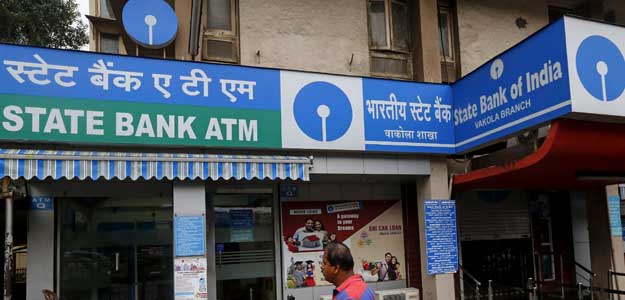
State Bank of India, the country's biggest lender, on Thursday announced its marginal cost of funds-based lending rates (MCLR), a new rate-setting structure which banks have to follow from April.
Under the new rate-setting method, MCLR - the minimum lending rate below which a bank can't lend to customers - is calculated by using the cost incurred on incremental deposits, not average cost of deposits.
At SBI, MCLR for a loan with a reset period of one year will be at 9.20 per cent. A reset period means that the interest will remain fixed for that period for the borrower and will be revised after that period. The bank will add a margin (risk premium) to MCLR to decide the actual rate of borrowing for a consumer.
"Home loan with one-year reset will be available be at 9.45 per cent while earlier it was 9.55 per cent," Rajnish Kumar, MD for national banking at State Bank of India, told NDTV Profit.
"This new rate will be applicable for all new loan disbursed from April 1. Existing customers can opt for MCLR on mutually agreed terms and conditions," added Mr Kumar.
SBI's base rate (rate below which a bank can't lend) is currently at 9.30 per cent. Under the base rate mechanism, it offers home loan at base rate plus a risk premium of 25 basis points (100 basis points is equal to one per cent) which comes to 9.55 per cent.
Banks will continue to review and publish base rate.
SBI has set MCLR for 2-year reset period at 9.30 per cent while for three years at 9.35 per cent. MLCRs for shorter reset periods are lower. For loans with a reset period of six months, SBI has set the new rate at 9.15 per cent while for three months at 9.10 per cent.
Banks will have to review and publish their MCLR of different maturities every month.
In December last year, the Reserve Bank of India laid out guidelines for banks to use marginal cost of lending methodology to calculate their lending rates. Under the earlier base rate regime, changes in lending rates happened slowly, making it difficult for lenders to transmit RBI's rate cuts.
The Reserve Bank of India reduced the repo rate by 125 basis points last year but banks lowered rates by around 60-70 basis points.
Essential Business Intelligence, Continuous LIVE TV, Sharp Market Insights, Practical Personal Finance Advice and Latest Stories — On NDTV Profit.