5. RBI On Adani Group Exposure
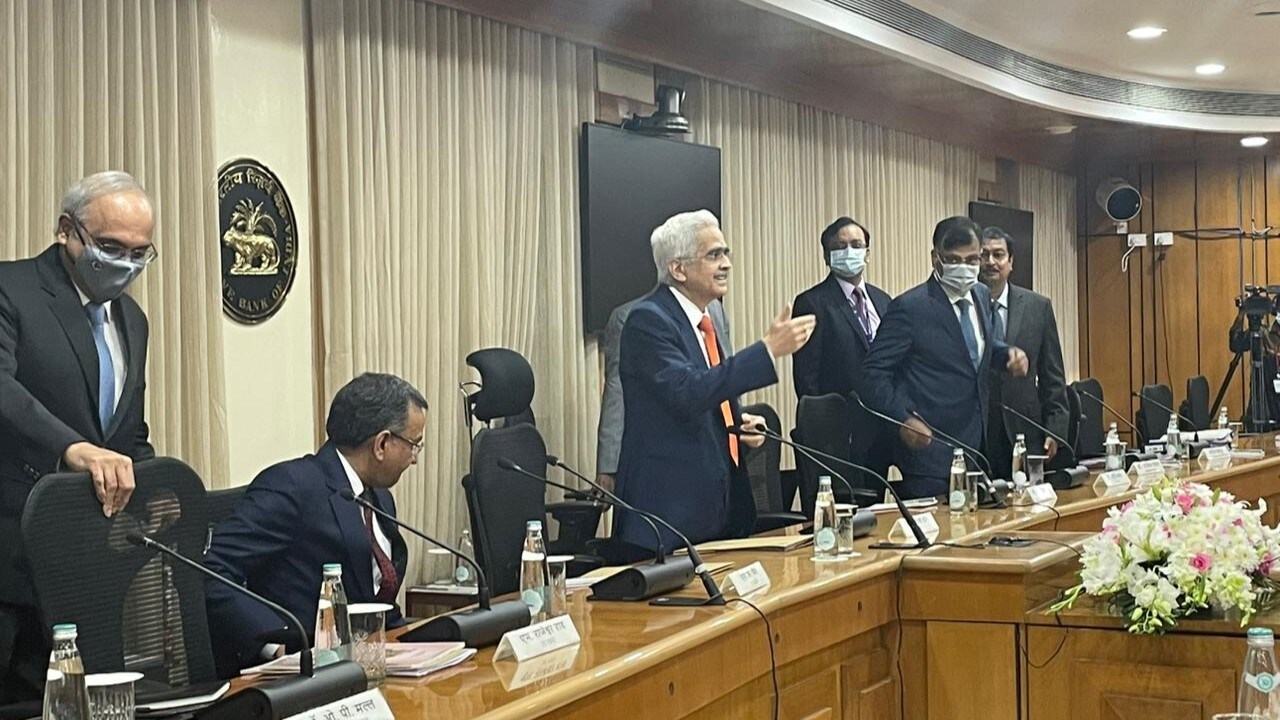
RBI Governor, while responding to a question regarding the exposure of banks to Adani Group, said that banks don't lend on the basis of market capitalisation.
Banks lend on the basis of the strength, fundamentals of the company, he added.
The appraisal methods of Indian banks have significantly improved over the years, Das said.
Indian banking sector and NBFCs continue to be resilient and strong, he added.
More than 50,000 users, 5,000 merchants have taken part in retail CBDC pilot, says Das.
As much as 7.7 lakh small value transactions have taken place till recently.
Regarding the full launch, Das says, “We want the process to happen, but we want it to happen gradually and smoothly. We don't want to do something without actually understanding the actual impact of such a launch.”
We will be responsive to the productive sectors of economy on requirement for liquidity, says Das.
Beginning of this financial year, the liquidity was Rs 7-8 lakh crore.
Now the daily LAF is around Rs 1.6 lakh crore.
The Liquidity Coverage Ratio of the banks is quite a bit more than the norms require.
The Certificate of Deposit ratios are also at very reasonable levels.
There is capacity with banks to continue lending operations.
Difficult for me to pinpoint and give a number on ideal system liquidity.
When banks lend money to a company or group, they don’t lend basis the market capitalisation, says Das.
Banks lend on the basis of the strength, fundamentals of the company.
Appraisal methods of Indian banks have significantly improved over the years.
Individual cases and their numbers are not discussed in public domain.
In the last 3-4 years, RBI has taken a number of steps to strengthen resilience of Indian Banks.
Have come out with clear guidelines to regulate governance in Indian Banks.
Have issued guidelines on functioning of audit committees, risk management committees.
Have made it mandatory for appointment of chief risk officer, chief compliance officer in banks.
We have rationalised, in last two years, the large exposure norms.
The difference between credit and deposit growth has narrowed, but it exists.
It’s up to banks to mobilise deposits on their own to meet the gap.
There is an increase in the deposit growth.
We have analysed sources of funding and these are coming from deposits and borrowings.
The CD ratio has increased a little, but it is still reasonable.
Liquidity coverage ratio still remains comfortable for the banking sector.
Each component of headline inflation and beyond that, each component of food, core and fuel inflation – the momentum is very closely examined by the RBI MPC.
Moderation in vegetable prices in last two months have more than offset the price momentum in cereals.
Future trajectory of each component is built into RBI’s projections on inflation.
MPC decision is a majority decision.
Not possible to indicate future course of rates.
Have refrained from giving forward guidance on rates.
We will be extremely watchful on incoming data.
Indian economy remains resilient, withstanding successive global shocks. Each shock came with unprecedented suddenness, spill-overs.
Inflation has shown signs of moderation and the worst is behind us. But, there are concerns around core inflation. We can’t take eyes off inflation.
Now witnessing conducive conditions of macro stability as reflected in moderation in inflation, fiscal consolidation and the expectation that the CAD is likely to narrow.
Indian rupee has remained one of the least volatile among Asian peers in 2022 and continues to be so this year too.
The real policy rate has moved into positive territory and the banking system has exited from the chakravyuh of excess liquidity without causing excess disruption. Monetary policy transmission is picking up.
On liquidity, RBI will remain flexible and responsive to productive sections of economy.
RBI stand resolute to deal with all future challenges.
RBI Governor Shaktikanta Das ended his policy statement with a quote from Subhash Chandra Bose.
“Never lose your faith in the destiny of India.”
RBI to launch QR code-based coin vending machines, says Das.
These machines will issue coins against debits to customer's UPI-linked accounts.
Based on learnings from pilot, guidelines will be issued to banks.
RBI proposes to allow some foreign travellers in India to use UPI for merchant payments, says Das.
Propose to allow all in-bound travellers to India to use UPI for merchant payments.
To begin with it will be allowed for travellers from G20 countries at select airports.
RBI To Issue Climate Risk Guidelines, Will Allow Foreign Travellers To Use UPI
Current Account Deficit expected to moderate in H2FY23 and remain eminently manageable and within parameters of viability.
Indian rupee has remained one of the least volatile currencies in Asia.
CAD for H1FY23 stood at 2.2% of GDP.
Net balance under services and remittance is expected to remain in surplus.
Banking system moved out of the "chakravyuh of excess liquidity".
System liquidity remains in surplus, though of a lower order than before.
RBI will remain flexible and responsive to meet productive needs of the economy.
RBI will conduct operations on either side of liquidity adjustment framework as required.
Will restore market hours of G-sec market to 9 am to 5 pm.
Propose to permit lending and borrowing of G-sec.
RBI Governor provides outlook on monetary policy formulation.
Reduction of size of rate hike provides opportunity to study impact of measures taken so far.
Monetary policy will continue to be agile, alert to moving parts of inflation trajectory.
FY24 CPI seen at 5.3%.
Inflation seen at 5% in Q1, 5.4% in Q2 and Q3, and 5.6% in Q4.
Stickiness of core inflation is a matter of concern.
Need to see decisive moderation in inflation.
Have to remain unwavering in commitment to bring down CPI inflation.
Monetary policy must be tailored to ensure durable disinflation process.
CPI inflation pegged at 6.5% for FY23 with Q4 seen at 5.7%, says Das.
Considerable uncertainty remains on likely trajectory of global commodity prices.
Commodity prices may remain firm with easing Covid-19 restrictions.
Pass-through of commodity prices could keep core inflation elevated.
Low volatility of Indian rupee related to peer currencies limit impact of imported price pressures.
Average crude oil basket projected at $95 per barrel.
Q1 growth seen at 7.8%, Q2 at 6.2%, Q3 at 6% and Q4 at 5.8%.
Risks of GDP projection are evenly balanced.
There are signs that additional capacity is being created in private sector, says RBI governor.
Investment activity continues to gain traction.
Non-food bank credit grew by 16.7% as on Jan. 27, 2023.
Indicators of fixed investment registered robust growth in November, December.
Seasonally adjusted capacity utilisation increased to 74.5% in Q2FY23.
Drag from net external demand continued as merchandise exports contracted.
RBI’s MPC to continue to maintain strong vigil on inflation outlook.
Inflation is expect to stay at 5.6% in Q4FY23.
Policy rate still trails pre-pandemic levels.
Adjusted for inflation, policy rate still trails pre-pandemic level.
Overall monetary conditions remain accommodative.
RBI Governor says while inflation is expected to moderate in FY24, it is likely to roll above the 4% target.
IMF has revised upward global growth estimates for 2022 and 2023.
Amid volatile global developments, Indian economy remains resilient.
CPI moved below upper tolerance band in November and December.
Core inflation however remains sticky.
RBI Monetary Policy Highlights: MPC Hikes Repo Rate By 25 Basis Points, Maintains Caution On Inflation
Stock Market Live: Sensex, Nifty Open With Slim Gains As Metals, I.T. Advance Ahead Of RBI Policy
The local currency opened at 82.72 against the greenback on Wednesday. It closed 82.70 on Tuesday.
The yield on the 10-year bond opened largely flat at 7.32% on Wednesday.
Source: Bloomberg
Lower-Than-Expected CPI Inflation Of 5.7% In December May Prompt MPC To Pause In Feb 2023 Policy Review: ICRA
Essential Business Intelligence, Continuous LIVE TV, Sharp Market Insights, Practical Personal Finance Advice and Latest Stories — On NDTV Profit.