(Bloomberg Gadfly) -- It's really saying something when a weekend involving a Saudi Arabian royal round-up, a foiled missile strike on Riyadh's main airport, and a sudden political crisis in Lebanon result in an oil-price gain of less than 1 percent on Monday morning.
There was a time when that much excitement in the center of Oilsville would have added several dollars to oil prices, not a few dimes.
Not that this would necessarily have made sense from a fundamental point of view. The crackdown in Saudi Arabia, for example, continues Prince Mohammed bin Salman's process of consolidating power. In that sense, it doesn't necessarily presage any change in policy regarding, for example, supply cuts by the so-called Vienna Group. Likewise, the missile attack from Yemen is a jarring reminder of a war that's been going on for several years already; plus it was foiled. As for Lebanon, Prime Minister Saad al-Hariri's sudden resignation certainly seems connected to Iran's proxy war with Saudi Arabia. Still, you knew about that already, and Lebanon barely produces any oil anyway.
Also Read | Layoffs Are Rising In Tech, But These Skills Are Helping People Unlock Better Pay
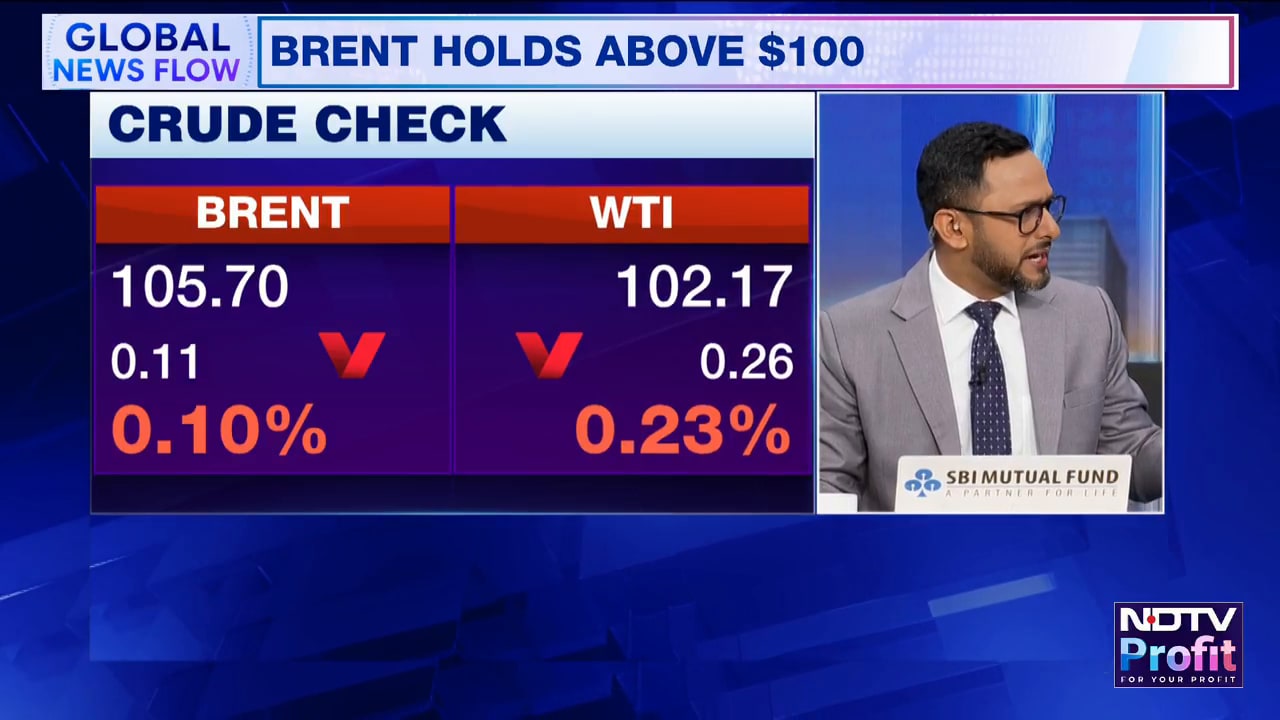
Brent crude oil's recent rally has had more to do with those supply cuts, strong demand for distillates, and, yes, a little geopolitical spice courtesy of Iraq and its Kurdish population.
While this weekend's events aren't cause for a spike in oil prices, though, they can be read quite reasonably as harbingers of disruption to come. Rising Saudi-Iranian tension links at least two of the weekend's events; besides Lebanon's crisis, Riyadh blames Iran for arming Yemen's Houthi fighters with missiles and says the attempted strike could be taken as an "act of war." This coldish war represents a major risk of escalation, especially as the nuclear deal between the U.S. and Iran may be on the verge of unraveling. As for Prince Mohammed's crackdown, optimists will read it as a step further toward reform; skeptics as merely the latest chapter in a potentially destabilizing game of thrones.
As I wrote here and here, the geopolitical ground beneath the Middle East and the oil market as a whole is shifting toward less, rather than greater, stability. All else equal, that should get priced into medium-term prices at least.
Yet events like this weekend's don't appear to impact those, either. The consensus forecast for oil prices in 2019 and 2020 has been flat or falling for about a year; Brent in 2020 is put at $56 a barrel versus today's level of about $62, according to data compiled by Bloomberg.
The main reason is something more prosaic than geopolitics: costs.
Even as near-dated oil prices bob up and down, longer-term ones remain remarkably range-bound. Here's the front-month Nymex crude-oil futures price versus the average for 2020, over the past three years:
Futures prices, it should be pointed out, are not predictions of the future. And oil prices dated further out trade much more thinly than those for the next 12 months or so.
Yet the stubbornness of that $50-ish price level a few years out suggests costs are in the driving seat, not fears of disruption. That price has emerged as the threshold above which producers in U.S. tight-oil basins add more hedges and thereby underpin more supply. In addition, the U.S. is now viewed as the supplier of extra oil at the margin, accounting for more than 50 percent of extra barrels coming from non-OPEC countries between now and 2020, according to the International Energy Agency's medium-term forecasts.
All else equal, the expected cost of the marginal barrel will tend to anchor expected prices. Of course, as this weekend's events hint, all else isn't necessarily equal. For now, though, it appears expectations continue to be shaped more by what's happening in Texas than the clouds gathering in the Persian Gulf.
This column does not necessarily reflect the opinion of Bloomberg LP and its owners.
Liam Denning is a Bloomberg Gadfly columnist covering energy, mining and commodities. He previously was the editor of the Wall Street Journal's "Heard on the Street" column. Before that, he wrote for the Financial Times' Lex column. He has also worked as an investment banker and consultant.
To contact the editor responsible for this story: Mark Gongloff at mgongloff1@bloomberg.net.
©2017 Bloomberg L.P.
Essential Business Intelligence, Sharp Market Insights, Practical Personal Finance Advice, Daily Fuel, Gold and Silver Prices and Latest Stories — On NDTV Profit.