No Private Labels, Exclusive Deals, Deep Discounts On E-Commerce Sites
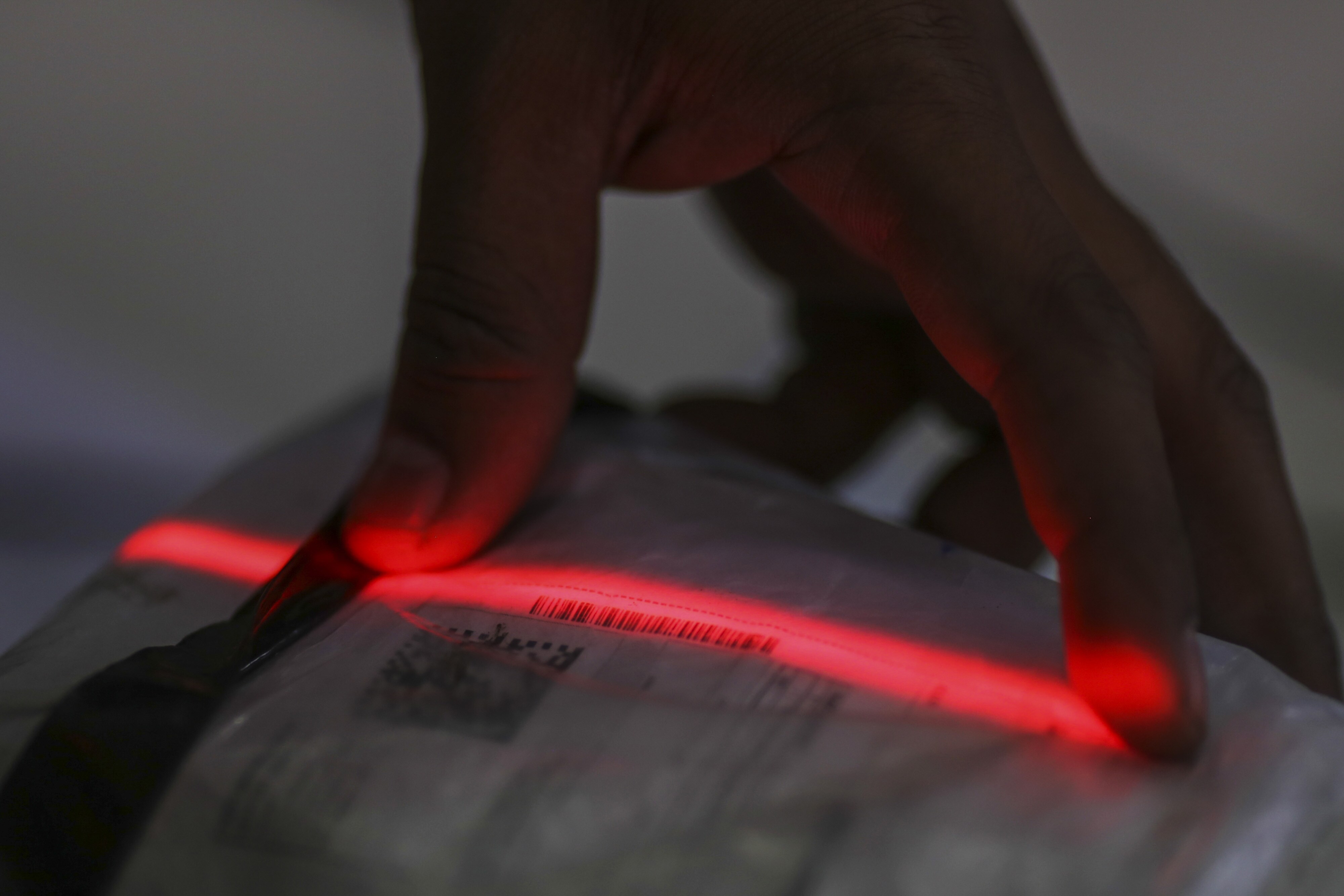
In November, the OnePlus 6T phone went on sale exclusively on Amazon.in, besides being available on the phone company's own website. That same month Samsung launched its new A9 phone exclusively on Flipkart.com. Such “exclusive sale” deals are common and popular across e-commerce platforms in India. Well, not anymore.
The government has made it clear that no e-commerce marketplace platform can mandate a seller to sell exclusively on the platform. It has also clamped down on deep discounts offered by many e-commerce platforms.
The third blow the government struck, a day after Christmas, is on the online sale of private labels. This may directly impact, if not shut down, Amazon Basics by Amazon, Perfect Homes, MarQ and others by Flipkart as well as several other self-owned brands hawked by e-commerce platforms. Private labels offer e-commerce companies the opportunity to fill product, price gaps and earn higher margins than compared to brands owned by other companies.
As yet small, the private label market in India is estimated to be just 6 percent of e-commerce sales, which in itself is estimated to be just 3 percent of total retail sales in the country. In more developed markets, private brands contribute between 20 to 40 percent of online sales, according to a January 2018 report by the India Brand Equity Foundation.
India may need another playbook for Amazon, Flipkart-Walmart, Alibaba and many other foreign funded e-commerce platforms in the country.
While Amazon said it was still examining the implications of the new rules, competitor Snapdeal has welcomed them.
.@Snapdeal welcomes updates to FDI policy on e-commerce. Marketplaces are meant for genuine, independent sellers, many of whom are MSMEs. These changes will enable a level playing field for all sellers, helping them leverage the reach of e-commerce. @rabhishek1982 @DIPPGOI https://t.co/tWojv3gXA7
December 26, 2018The Fine Print
In a clarificatory press note issued on Dec. 26, the Commerce Ministry imposed three new restrictions on e-commerce companies in India effective Feb. 1. These restrictions apply to marketplace e-commerce companies as only they are permitted foreign direct investment, up to 100 percent. No FDI is permitted in inventory-based e-commerce entities, that is, those platforms that own inventory as against a marketplace that only connects the buyer and seller online.
1. PRIVATE LABELS
The first restriction explicitly disallows e-commerce marketplace companies from selling private labels, that is brands they directly or indirectly own, on their platforms.To be clear, a partial restriction existed earlier as well, evident in the 2017 Consolidated FDI policy. That said an e-commerce entity using the marketplace format could not exercise ownership or control over the inventory. It added that not more than 25 percent of the sales of any vendor or their group companies would be allowed on a marketplace e-commerce entity.
The December press note expands that restriction to clearly add that “an entity having equity participation by e-commerce marketplace entity or its group companies….will not be permitted to sell its products,” via such marketplace.
This pours water on any private labels owned by e-commerce marketplace platforms that were otherwise structured to stay outside the ownership, control or 25 percent thresholds.
"This is coming at a time when the market is set to recover from demonetisation and GST and is a regressive move from the government,” said Satish Meena, senior forecast analyst at Forrester, a market research company.
Meena added that Amazon and Flipkart may have to sell their stakes in entities that directly or indirectly own their private label products.
But some believe the press note language, because it doesn't explicitly bar indirect ownership, may still permit it. “It remains to be seen whether indirect ownership over inventory will also be prohibited,” Vaibhav Kakkar, partner-M&A, general corporate and regulatory practices at Luthra & Luthra Law Offices told BloombergQuint.
The language of the clarification seems to grant leeway (to a certain extent) to entities which are step down subsidiaries of the entity in which the e-commerce entity or its group companies hold equity.Atul Pandey, Partner, Khaitan & Co.Pandey told BloombergQuint, the press note clarifications could have major repercussions on the business model of such e-commerce players.
2. EXCLUSIVE DEALS
The second new restriction is on “exclusive deals” that many e-commerce marketplace platforms often run, say for a new brand launch.The 2017 Consolidated FDI Policy made no mention of any restriction on such deals.
The December press note explicitly restricts such deals.
“E-commerce marketplace entity will not mandate any seller to sell any product exclusively on its platform only.”3. CASH BACK SERVICES
The press note also makes clear that any services provided by an e-commerce marketplace entity should be “at arm's length and in a fair and non-discriminatory manner”. This applies not just to services such as logistics, warehousing etc…but also to cash-back schemes.“Cash back provided by group companies of marketplace entity to buyers shall be fair and non-discriminatory.”This could impact the deep discounts offered by many e-commerce entities.
The government is extremely confused about e-commerce. Rather than coming out with policies that are thought through, they keep coming up with clarifications and new regulations which create more confusion than clarity.Arvind Singhal, Chairman and Managing Director, TechnopakTogether these restrictions underscore the government's emphasis on allowing foreign direct investment only in genuine marketplace models. Any blurring of the lines between marketplace and inventory-based models has often been struck down.
The ruling Bharatiya Janata Party has for long been opposed to FDI in retail, counting among its voter base lakhs of traders and retailers. Small kirana or corner stores and large retailers like Reliance Retail and others continue to lobby against e-commerce players, the biggest of which, such as Amazon, Flipkart, Alibaba, are foreign owned.
Praveen Khandelwal, secretary general of the Confederation of All India Traders welcomed the new rules saying if “implemented in proper spirit, malpractices and predatory pricing policy and deep discounting of e commerce players will be a matter of past”.
In the wake of foul play of global players in adopting all kind of tactics to control and dominate retail trade of India through e-commerce, today's clarifications by the government will prove to be an embargo on such practices.Praveen Khandelwal, Secretary General, CAIT



-
Signature Play: The Classic Cocktail Is Dead. Or Is It?

Classic cocktails are disappearing from India's cocktail menus. But they're still being ordered, taught to bartenders and borrowed from. So, who's really having the last drink?
-
A New Samvat Wishlist: Inclusive Prosperity And Human Development
India has strengthened its economic foundations through infrastructure, digital access and enterprise. Its next growth chapter must deepen productivity, create better livelihoods and widen participation in prosperity.
-
Love, Sex Aur Dhokha: The Audacious Plot To Spy On Jensen Huang
A Taipei dinner, a Singapore chip buyer and a suspected Chinese asset: inside the alleged spy operation that got close to NVIDIA's Jensen Huang.
-
Ten Things I Learnt This Samvat
Patience can be a trap. Cheap stocks can stay cheap. Leverage can wipe you out. What did Samvat 2082 teach us? Niraj Shah writes on 10 lessons from the year gone by.
-
Talking Points This Week: Tech Nerves, FII Buying, And A Faraway Banking Shock
The global markets are not shining this Diwali. The exception in the large markets is, India.
-
Midterm Rally Lasted A Day. The Hard Reality Of A Divided US May Last Two Years | Opinion
Between a contested AI boom, a debt ceiling that arrives in 2027 and a president with every incentive to act alone, the next two years may prove more volatile than the first day's rally suggests.
-
Blue Wave Will Derail the AI Trade but Won't Dismantle the AI Era | Unhedged Position
The Democrats' sweep of the US Congress will see politics collide with economic forces both over the long and short term.
-
It's Time To Take The GST Council's Bet On Trust Global
Payment records can prove India's services exports, and clear, proportionate rules can bring foreign digital sellers into the tax net.
-
Opinion | India at 38: From Innovation Overperformer to Innovation Powerhouse
India now has 453 VC-backed deep science startups, 18 of them late-stage, after 117 percent growth since 2020. Laurus Labs, at USD 9.3 billion, is the most valuable deep science company in any middle-income economy outside China.









