Scan to Download
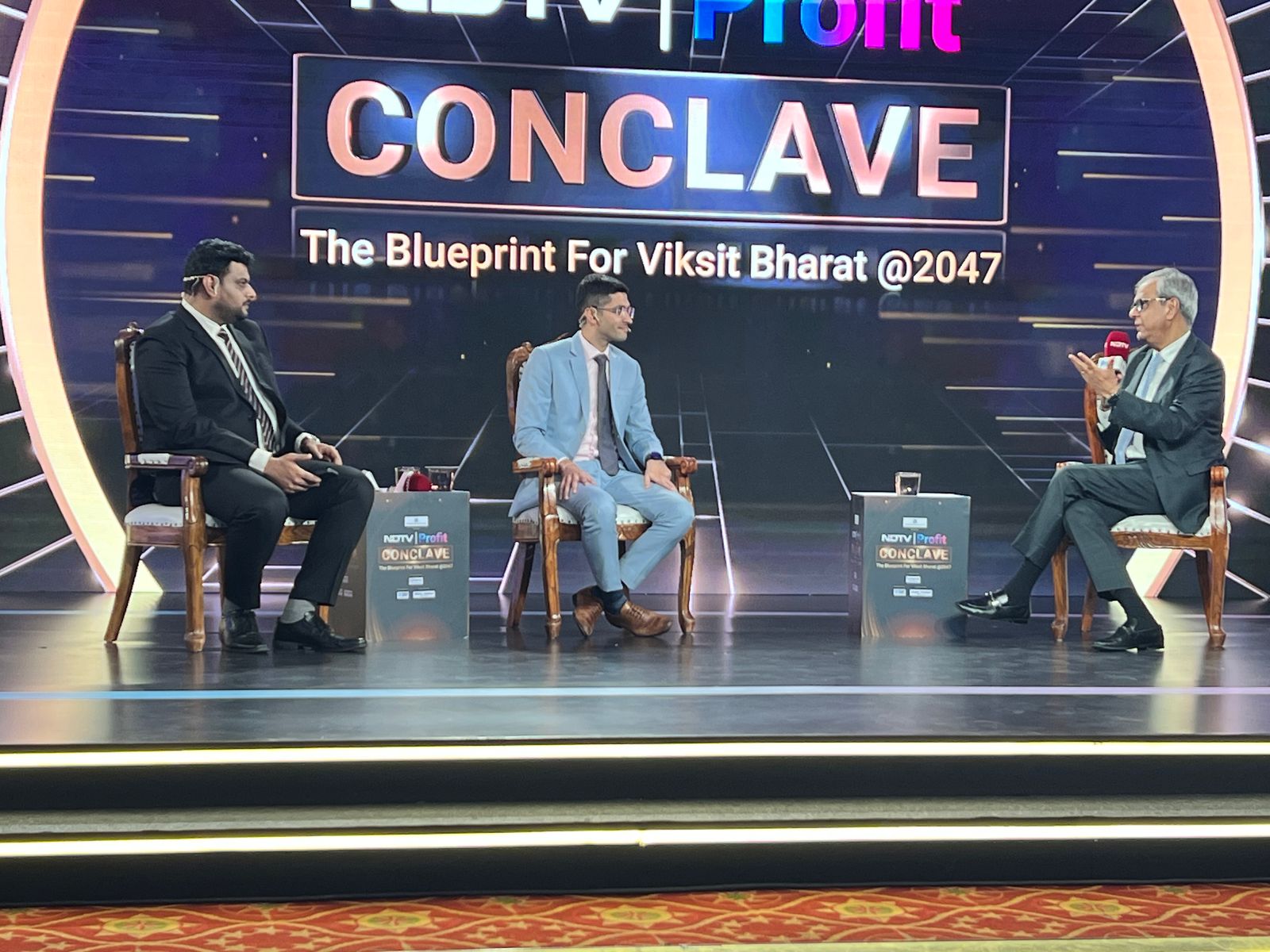
Fintechs are able to grow as they focus on technology, niche, said Ashok Vaswani, MD and CEO, Kotak Mahindra Bank. "Banks versus fintechs is not a right comparison as both need each other," he said.
Vaswani noted that the best outcome is when banks and fintechs partner. "Banks will step up their game with more investments in technology," he said.
Banks will have to come up with innovative products to attract customers, according to Kotak Mahindra Bank MD and CEO Ashok Vaswani. "Banks need to be sharp in identifying who, what is your target market," he said.
Vaswani highlighted that, consumer spending driving Indian economy plays a larger role. "At a macro level, consumer spending has been driving developed economies," he said.
"Credit extension to salaried class was done aggressively. Overextension of credit led to over leveraging, " he shared.
Vaswani noted that we are seeing a lot of pain in microfinance space, but banks picked up on this quickly. "Steam in personal loans will come back," he said.
Private sector capex has not been restricted by the availability of bank financing, according to Kotak Mahindra Bank MD and CEO Ashok Vaswani.
"IPO fever in the markets has been scary," he said. The Kotak Mahindra Bank MD further said that, "I am excited to see the startup space in India."
"Technology is changing the world and not restricted to banking. It is too important to be left just to technologists," he said. "Banks have to adopt a mindset of change in terms of technology," Vaswani noted.
Banking industry normally grows around 7-7.5x the GDP, said Ashok Vaswani, MD and CEO, Kotak Mahindra Bank. "Interest rates come lower in a developed market," he said.
Vaswani highlighted that different countries have evolved differently as far as mortgages are concerned. "Balance sheets of the banks have to change as economy develops," he said.
"Internationalisation is an important element," Vaswani shared. "Regulator has done a commendable job in terms of internationalisation of markets," he said.
Banking has to develop with the economy, said Ashok Vaswani, MD and CEO, Kotak Mahindra Bank.
India healthcare opportunity is large at $100 billion, according to Shashank ND, Co-Founder & CEO of Practo.
Practo aimed to take doctor’s “practice online”, has 5 lakh doctors on its platform today, said Shashank.
The company has a gross merchandise value of $400 million. "Quality always tops the requirement for majority users of Practo," he said.
Rapido has upgraded its business model to SaaS and the company does not take daily commissions, according to Aravind Sanka, Co-founder, Rapido. "Our core focus is to give value to our customers, riders," he said.
Sanka highlighted that drivers just pay a subscription fee upfront and keep the fare. Two million drivers work on Rapido platforms every month, as per the CEO.
Need to link farmers for their efficiency and sustainability, according to Nadir Godrej, Chairperson of Godrej Industries Group. "Regenerative agriculture is more sustainable," he said.
"Sustainability for companies doesn’t cost as much as we think it will. We use a lot of green energy and bio mass, that is sustainability in a sensibly way actually reduces costs," he said.
"We are trying to work a solution for using soybean stubble," he gave an example.
Tariffs won't impact us a lot, said according to Nadir Godrej, Chairperson of Godrej Industries Group. "But, it will certainly impact other Indian businesses," he said..
"We need to standup with current tactics and form strategies accordingly," Godrej said on US President Donald Trump's tariff talks.
Need to modernise without affecting core values, according to Nadir Godrej, Chairperson of Godrej Industries Group. "Sustainability and inclusion are our core values. We all have to work together to solve the climate change issue," he said.
Godrej further noted that if you put customers ahead, you need to put employees even ahead of customers.
"We had a few failures in the past but most of our businesses has been successful. Two parts of our group were managed differently," he said on business.
Need to look at the markets with a perspective, according to Raamdeo Agrawal, Chairman & Co-founder, Motilal Oswal Financial Services Ltd.
"Investing is very simple in today's era, one just has to pick the right fund manager. For picking stocks, everyone needs to have their own formula," he said.
Agrawal highlighted that we must look at top quality businesses, top quality management and reasonable prices.
India and US are the two nations where money is being made at a steady pace, said Raamdeo Agrawal, Chairman & Co-founder, Motilal Oswal Financial Services Ltd.
Agrawal highlighted that nobody likes to see the markets go down, but healthy correction is an integral part of market.
In last calendar year, when index went up by 15%, one couldn't make 40%.
"Investors should break SIPs in the phase of correction. Shouldn't look at the market while investing in SIPs, it is all about averages," he said.
Stock market is 'Maha-Maha Kumbh' of investors, said Raamdeo Agrawal, Chairman & Co-founder, Motilal Oswal Financial Services Ltd. "185-190 million customers participate in the markets everyday, it will be over 300 million by end of decade," he said.
Have seen both best and worst of the times of capital markets and economy. This is the relentless expansion of capital markets, he said.
"In the last 45 years I have seen good and bad times of the market. I judge the future, looking at the past," he said. Agarwal highlighted that there is no reason to believe, the next 10-15 are going to be different.
Mutual Funds have invested over Rs 9 lakh crore in the market since April last year, according to Navneet Munot, MD & CEO, HDFC AMC and Chairman AMFI.
There is a long-long way to go for the Mutual Fund industry in terms of beneficiaries, said Munot.
Mutual Funds participation and job creation has a much bigger role to play in Viksit Bharat, he said.
"Financialisation of assets is now beginning, according to Swarup Anand Mohanty, Vice Chairman & CEO Mirae Asset Investment Managers (India).
"We are seeing three generations investing together," he said.
Mutual Fund industry has a long long way to go, according to Nilesh Shah, MD Kotak Mahindra AMC.
In FY21 to FY23 most people have invested in currency than Mutual Fund, Shah said. Between FY21-23, people have put more money in currency notes rather than SIPs.
"Mutual Fund sahi hai campaign has a long way to go," he said.
Shah highlighted that we have to work hard to see minority interest are protected. "We have to work hard to make sure interests of minority holders is protected and gains are shared equitably," he said.
Happy that Mutual Funds have a significant role in the road to Viksit Bharat, according to Radhika Gupta, MD & CEO, Edelweiss Mutual Fund.
"When we talk about Viksit Bharat, we should talk about 70-75% of Indian benefiting from Mutual Fund," said Gupta.
"We should move from Mutual Fund Sahi hai to Mutual Fund subke liye hai," she said.
Need to look at AI with conviction over just the caution point of view, according to Ronnie Screwvala, Co-founder and Chairperson, upGrad.
"AI will not change the sense of choice and judgments of humans," he further said.
AI will take care of the basic needs like access to healthcare and information among others, according to Manu Chopra, Co-Founder & CEO, Karya AI.
With Artificial Intelligence, surprises won't stop in the next five years, according to Pratyush Kumar, Co-Founder, Sarvam AI. "AI technology will become a common denominator for everyone," Kumar said.
I see India being a leader in per capita consumption of the generative AI, ' he said.
AI will dramatically accelerate productivity, said Manu Chopra, Co-Founder & CEO, Karya AI. "It's not right to make a five-year prediction for AI," he said,
Artificial Intelligence will be a coach and companion for all of us, according to Puneet Chandok, President Microsoft India and South Asia.
AI will make us much more efficient in next
We are trying to make people digitally savvy and have introduced small SIP, said Challa Sreenivasulu Setty, Chairman, State Bank Of India.
SBI Chairman shared that we would like to work towards a daily SIP concept. "Small amounts can be invested through the SIP route on a daily basis," he said.
Government is committed to capex, according to Challa Sreenivasulu Setty, Chairman, State Bank Of India. "We can see visible commitment of centre, states and PSUs to capex," he said.
The SBI Chairman said, that the concerns on unsecured personal loans are now behind us. Asset quality issues in unsecured personal loans have bottomed out, he said.
Setty noted that the India cannot truly become a developed country unless we take each segment of the society with us.
There will be a shift in customer behaviour due to convenience, according to Challa Sreenivasulu Setty, Chairman, State Bank Of India.
Setty highlighted that the ease of doing transactions has contributed to term deposits. "Need foreign capital to come in as well," he said.
The SBI Chairman noted that external environment holding back some capex spend in some of the sectors.
One of the critical elements of Viksit Bharat is capital, according to Challa Sreenivasulu Setty, Chairman, State Bank Of India.
Household savings will continue to go to the banking sector, he further said.
Trust element has always been there for public sector banks among the depositors, said Challa Sreenivasulu Setty, Chairman, State Bank Of India.
He further highlighted that the nature of savings have undergone a change in recent times.
"Young individuals who are connected to the internet, are today aspiring a better quality of life, which the rest of the world enjoys. As the economy grows to $35 trillion by 2047, we will have a per capita income of more than $20,000. The opportunities in the next 20-25 years are massive," said Piyush Goyal.
"Indian industry is better advised to be bold and confident. This is a golden opportunity for businesses. Those who are panicking today will regret tomorrow," Piyush Goyal said.
Piyush Goyal said India and the US are concerned about practices of "non-market" economies that do not trade with transparency.
"The biggest concern is the economies which do not have transparency. We are working to make it easier to import and export goods between both the countries. Dont think there is any cause for concern with respect to tariffs," he said.
Union Minister of Commerce & Industry Piyush Goyal said India has a good opportunity to double trade with the US and complement each other economically rather than compete.
"US and India collaborate for world good and human good. This is an opportunity for India to expand trade with the US. We look at this opportunity as a way to make India more competitive," he said.
Union Minister of Commerce & Industry Piyush Goyal is set to speak at the NDTV Profit Conclave 2025.
Tesla Set To Enter India In 2025 With Full Model Line-Up, Restarts Hiring
Bearish Stock Market: All You Did Was Hope!
"We have products that speak for themselves," Anish Shah-Group CEO and MD, Mahindra Group said on global players coming to India.
'We're Still Around': Anand Mahindra Confident After Tesla Signals India Entry
A link between rural and urban economy will help reach the goal of Viksit Bharat, said Prasanna Mohile, National Head - corporate affairs and executive board member, Pernod Ricard India.
Pernod Ricard has always been conscious of the role it plays in sustainability. "We train farmers to undertake sustainable farming and get right value for produce," he said.
Alcobev is a heavily regulated industry, government should also help increase ease of doing business, Mohile further highlighted.
Pernod Ricard has been pivotal in bringing French investments in India, according to Prasanna Mohile, National Head - Corporate Affairs and Executive Board Member, Pernod Ricard India.
There is a lot of scope for growth in the premiumisation segment. The scope for premium alcohol segment has been increasing in India, he further said.
Alcohol industry plays a very important role in the economy, he said. "We generate 50 lakhs jobs annually and our company contributes 9 lakh jobs and out of which 6 lakh jobs are in agriculture sector," he said.
Pernod Ricard contributes Rs 39,000-40,000 crore to India's GDP.
"We need government's focus to give the alcohol sector- an 'industry' status," he said.
"Apparel exports in last three months has grown by 41%. Traditionally they were growing by 6-7%. This is largely the Bangladesh effect. We are targeting $350 billion from $180 billion exports in the next five years. We have to double our capacity from incentives from government and PLI schemes," said Ajay Agarwal, Group CEO of Reid & Taylor.
"Distribution platforms will be hybrid in nature. The access to knowledge and research is still not there. AI will help increase this access to markets. There is a lot of room for all to grow. Well-distributed access to markets is a big opportunity," said Ujjwal Jain of Share.Market.
F&O Norms Great Effort By Regulator, Well Distributed Market Access Big Opportunity: Ujjwal Jain
Kshema General Insurance's Rajeshnani Dasari explained the company uses past weather data to develop digital models that can price insurance products.
"A cyclone coverage in Andhra Pradesh would cost more than Rajasthan because the risk of causing is higher in the former. We want to distribute risk across climatic zones," he said.
Rajeshnani Dasari, executive director of Kshema General Insurance said farmers want to mitigate weather risks and hence provide a market in a large agrarian economy like India.
"Only 30% of agricultural land is insured. There is lack of customised programme for farmers. We are making a play using technology. There are 127 different climatic zones in India and each has its own characteristics," he said.
Kaynes Tech CEO Rajesh Sharma ended his address laying out three noteworthy statements.
"It's not 'why India' its 'why not India'. Its not 'if' but how fast India can become a manufacturing power. And third, India is not an alternative to China," he said.
"Indian drugs are known for their affordability worldwide, and exports constitute a significant 50% of the Indian drug industry's output. However, the industry is currently not utilizing AI in research to a great extent," said Habil Khorakhiwala.
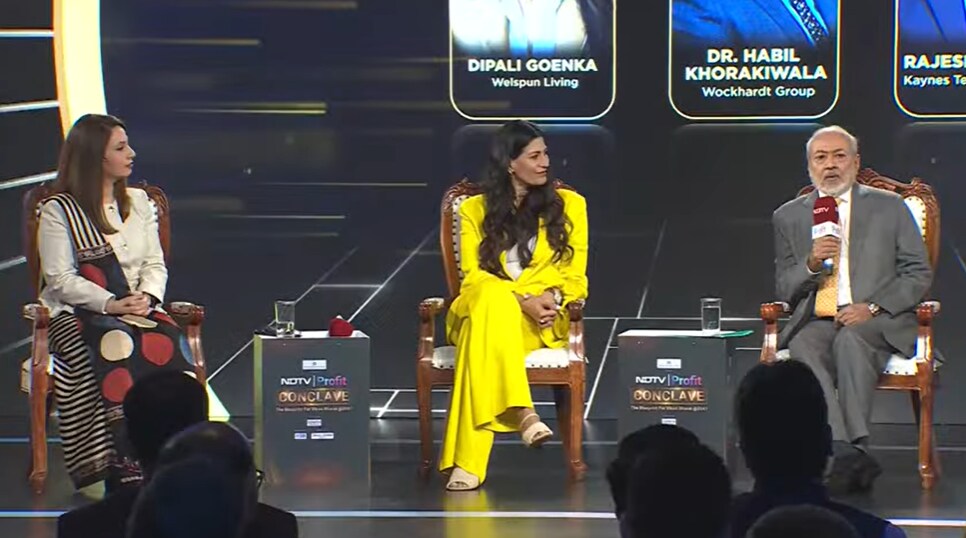
"Investing in manpower is an important aspect": Dipali Goenka.
"Speed of delivery is very important; global supply has to co-ordinate": Rajesh Sharma.
"Affordability is important and the challenge is new technology absorption": Habil Khorakhiwala.
"We have to invest in indigenising supply chains. Key ingredients for manufacturing still come from China. Capex should be done for indigensing," said Dipali Goenka, CEO and MD, Welspun Living.
"The pharmaceutical industry is highly regulated in India and abroad. However, Indian regulatory bodies are often unaware of new drug innovations, and the regulatory mechanisms in India haven't changed in 30 years. Therefore, India's pharmaceutical regulatory mechanism needs to be corrected," said Habil Khorakiwala, Founder-Chairman of Wockhardt Group.
"Investing in capex, skilling people and technology is the role of the private sector. The key thing is how we will contribute to Viksit Bharat. We have to lead in key industries and not just follow others," said Dipali Goenka, CEO and MD, Welspun Living.
Tariff On Indian Pharma Will Raise Costs For US Buyers, Says Wockhardt's Khorakiwala
Rajesh Sharma, CEO of Kaynes Technology, said the production-linked incentives scheme has given great push to manufacturing in India and given local companies competitive edge.
He also said the importance of semiconductor was very much realised during the pandemic. "It's not just India but countries around the world focused on semiconductors," he said.
India is a big player in medicine, says Wockhardt Group's Habil Khorakiwala (@dr_khorakiwala).
— NDTV Profit (@NDTVProfitIndia) February 18, 2025
"India is third largest exporter of medicines in the world, we supply 40% Of medicines that American citizens use, 60% of vaccines worldwide."
Watch live #NDTVProfitConclave | India… pic.twitter.com/qJklDDjOeU
Dinesh Thakkar said retail investors are going to come back in a big way even after the recent market correction. Ashishkumar Chauhan said technology brings change, and change brings wealth.
"Indian households have put more cash into gold than equities over last 10 years. Foreign investors are more underweight on Indian stocks now than they have been in decades. If domestic investors continue to invest into markets, someone has to sell — which has been FIIs. Those who were weighting for India's valuation to become comfortable have an opportunity to buy now," said Ridham Desai.
"Not really worried about President Trump anymore. He has puit his cards on the table and they look benign. This is nothing closed to what we though could be a worst case scenario," said Morgan Stanley's Ridham Desai.
Business sentiment in America is solid and it will turn to India as well, he said.
"Markets do not go up in a straight line and they're bound to slow. In my view, we're already out of a slowdown. The market has ignored what has been one of the biggest pivots in banking history in modern India," said Ridham Desai.
"Awareness about asset classes is missing, and it will take some time to develop awareness. AI is the best tool that can help personalise the journey for an investor. We see a big future for blockchain technology in the next five to seven years. A great future in finternet, and for all asset classes in the Indian market," said Dinesh Thakkar of Angel One.
NDTV Profit's Niraj Shah highlights a news report by this publication on a zero-revenue company having a Rs 5,000 crore market cap and the SEBI's action that followed.
Technology Change Brings Wealth And India In A Great Position To Capilatise, Says NSE CEO
"The Harshad Mehta scam gave us a sense of seriousness that we need proper regulation. When capital adequacy rules came, there was resistance from brokers," Dinesh Thakkar said.
Ridham Desai of Morgan Stanley said the government allowing pension funds to invest in equity markets in 2015 was a "401k moment for India".
He said in the US, Ronald Reagan had allowed the same thing in the 1980s, that led to a solid two-decade bull run in US markets. "It only ended with a Nasdaq bubble. This (Indian markets) will also only end in bubble. The bull run will last longer than 20 years because we are a younger country."
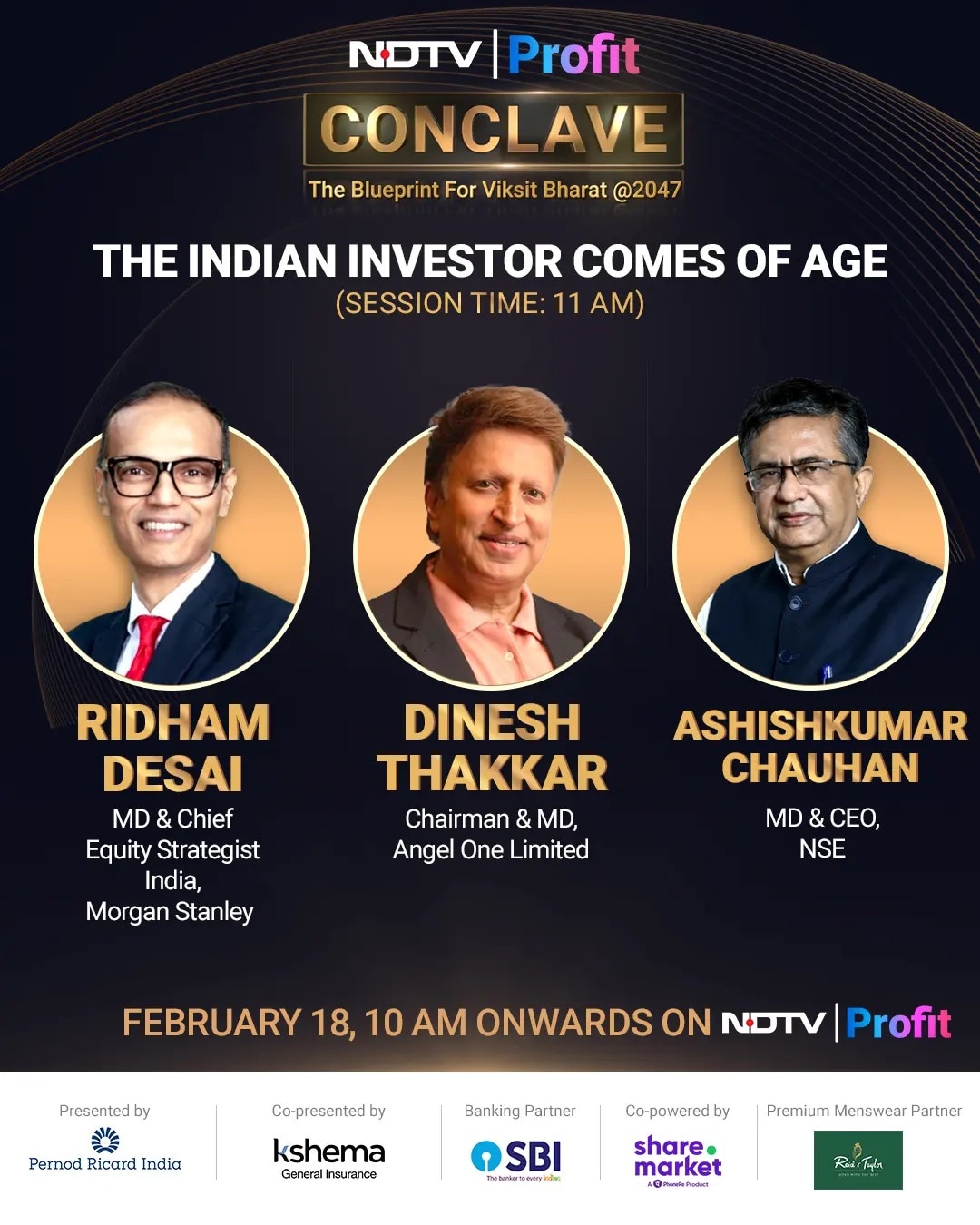
At the NDTV Profit Conclave 2025, Ridham Desai of Morgan Stanley, Dinesh Thakkar of Angel One and Ashishkumar Chauhan of NSE will discuss how the Indian equity market has matured over time.
NDTV Group editor-in-chief Sanjay Pugalia said Indian stock market is no longer hinged to the volatile nature of foreign portfolio investments as fresh domestic capital has entered to create a strong foundation.
"What used to happen earlier when FPIs determined the trajectory of Indian markets is now over."
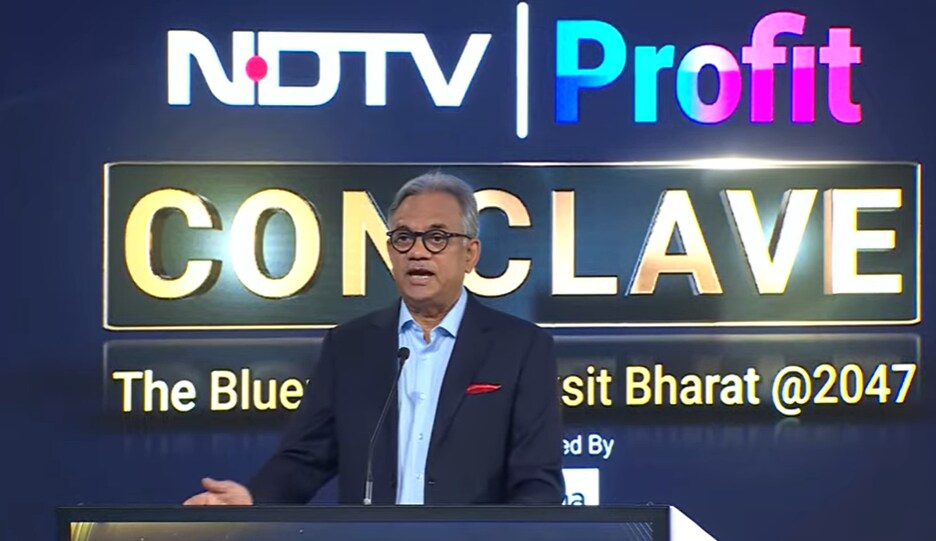
NDTV Group editor-in-chief Sanjay Pugalia has arrived for the inaugural edition of the NDTV Profit Conclave 2025 in Mumbai. The event will begin shortly.
Through the 'Make In India' and 'Atmanirbhar Bharat' initiatives, India has been trying to attract investments in manufacturing. At the NDTV Profit Conclave, industry leaders like Dipali Goenka, CEO and MD of Welspun Living, Habil Khorakiwala, founder-chairman of Wockhardt Group and Rajesh Sharma, CEO of Kaynes Technology, will discuss how the country will progress further in this journey.
Stock Market Live: Nifty, Sensex Fall After Muted Open As RIL, SBI Shares Drag
The event will begin with a welcome address by NDTV's Editor-in-Chief Sanjay Pugalia at 10:50 a.m. This will be followed by a panel discussion on the subject 'The Indian Investor Comes of Age', which will witness participation from Ridham Desai, chief India equity strategist of Morgan Stanley; Dinesh Thakkar, chairman of Angel One Ltd., and Ashishkumar Chauhan, managing director of NSE.
For full schedule and details of the panel discussions at the NDTV Profit Conclave, check here.
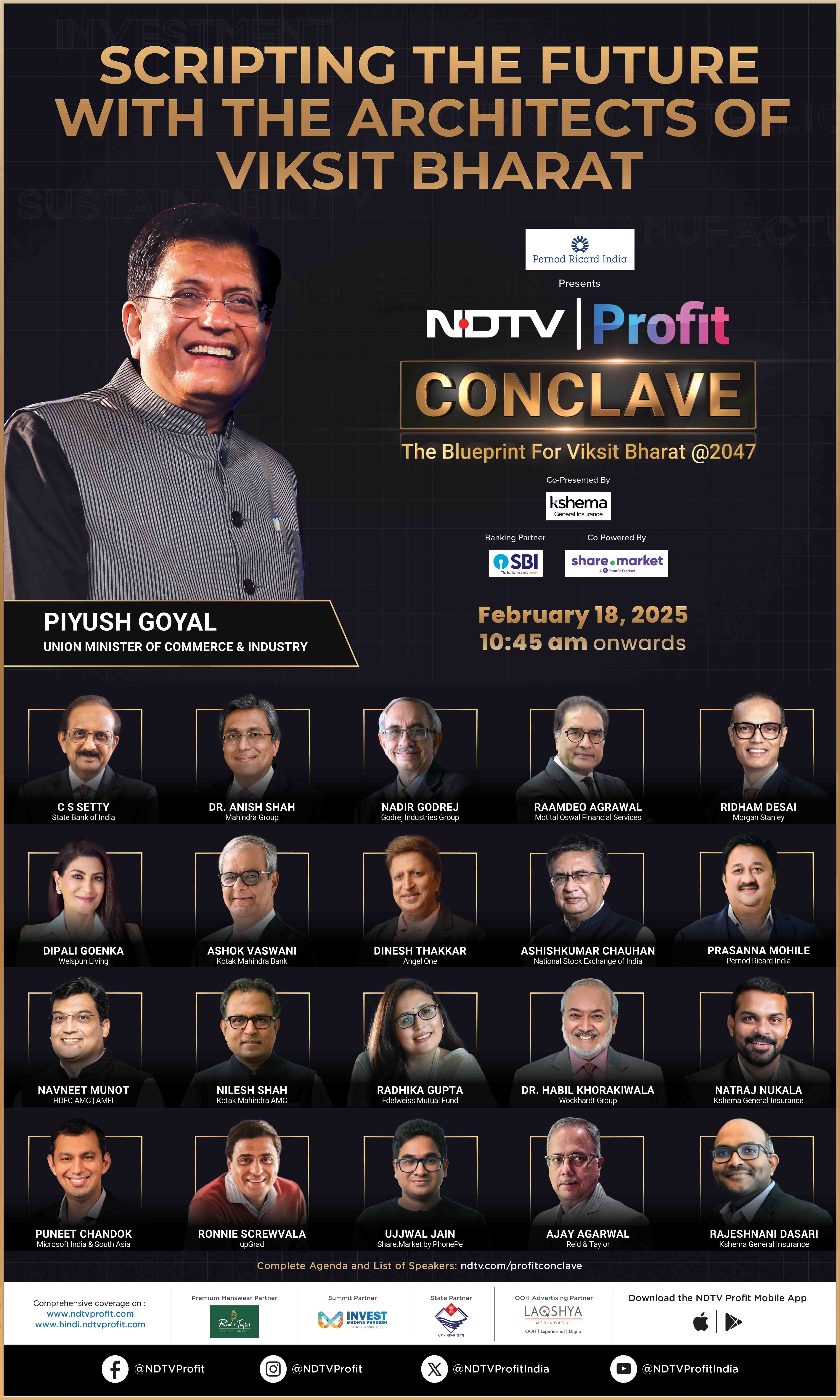
Key speakers for the 'NDTV Profit Conclave: Blueprint For Viksit Bharat At 2047' include Union Minister for Commerce and Industry Piyush Goyal, State Bank of India Chairman CS Setty, Mahindra Group Chief Executive Officer Anish Shah, and Godrej Industries Group Chairperson Nadir Godrej.
India is on a transformative development journey towards becoming "Viksit Bharat" by 2047, and India Inc. is at the forefront of this exciting progress. From dominating markets to revolutionising manufacturing, and from groundbreaking AI advancements to disruptive innovation, our nation is paving the way towards a prosperous and self-reliant future.
At the NDTV Profit Conclave 2025, "The Blueprint for India's Road to a Viksit Bharat," business leaders, policymakers, and ministers will converge to discuss and define the strategies that will shape India's destiny.
Essential Business Intelligence, Continuous LIVE TV, Sharp Market Insights, Practical Personal Finance Advice and Latest Stories — On NDTV Profit.