Gold loans have emerged as one of the fastest-growing segments in India's retail lending market, with their share in new retail loan sourcing rising sharply to 41 per cent in FY26 from 30 per cent in FY25 and 20 per cent in FY24, according to data from Experian India.
The surge in demand helped lenders' outstanding gold loan portfolio expand 49 per cent year-on-year to Rs 19.4 lakh crore in FY26, significantly outpacing the overall retail lending market, which grew 17 per cent to Rs 170.2 lakh crore during the year.
The momentum accelerated in the final quarter of FY26, with gold loan sourcing reaching Rs 11.9 lakh crore, more than double the Rs 5.7 lakh crore recorded in the corresponding period a year earlier.
Also Read | Layoffs Are Rising In Tech, But These Skills Are Helping People Unlock Better Pay
Industry participants expect the growth trend to continue, with the gold loan portfolio projected to rise to around Rs 25 lakh crore by FY28. Financial institutions are already expanding their presence to capture the opportunity.
L&T Finance plans to deploy 400 gold loan branches in FY27, while Bajaj Finance aims to increase the share of gold loans in its assets under management to more than 5 per cent from 3.5 per cent currently. Piramal Finance is also set to expand its network with 180 additional gold loan branches during FY27.
Market trends indicate that non-banking financial companies are steadily gaining market share in the gold loan segment at the expense of public sector banks. Demand is also becoming more geographically diversified, with a growing proportion of gold loans being sourced from states outside southern India, traditionally the largest market for the product.
Ticket sizes have increased substantially alongside portfolio growth. The average gold loan ticket size rose to Rs 1.96 lakh in FY26 from Rs 98,000 in FY23, reflecting both higher gold prices and greater borrowing against household gold holdings.
"Existing gold loan customers remain at the heart of this growth, contributing nearly 98% of disbursement value. The data also highlights the strength of cross-product relationships, with almost 80% of new gold loan disbursements coming from borrowers who already hold other credit products such as personal loans or business loans," says Abhinav Thakur, senior VP and head of data and analytic, Equifax India.
"This underscores the increasing role of gold loans as a trusted liquidity tool within broader credit portfolios. Additionally, the shift towards higher-ticket gold loans reflects rising gold prices and growing borrower confidence in leveraging gold assets as a source of formal credit," he said.
Despite the rapid expansion, asset quality in the segment has remained stable. Industry observers, however, point to borrower leverage as an area requiring continued monitoring as lenders scale up operations.
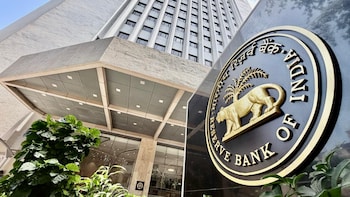
The Reserve Bank of India has also moved to tighten oversight of the sector. In June 2025, the central bank introduced stricter guidelines governing gold-backed lending.
Under the revised framework, lenders can offer a loan-to-value (LTV) ratio of up to 85 per cent for loans of up to Rs 2.5 lakh, while loans above Rs 5 lakh are subject to an LTV cap of 75 per cent. The guidelines also prescribe stricter computation norms for bullet repayment loans.
The RBI has further allowed top-up or renewal of gold loans only when the existing loan remains standard and prescribed LTV requirements are met, underscoring the regulator's focus on maintaining prudential standards amid the sector's rapid growth.
"Supported by strong collateral coverage, rising gold prices, and responsible borrower behaviour, the gold loan segment demonstrated remarkable resilience and growth in FY26. Increasingly, borrowers are treating gold as an active financial asset to unlock liquidity, rather than relying on it solely during periods of financial stress," Sunil Agithakaliya, whole-time director of CRIF High Mark.
"The underlying strength of the segment is reflected in the steady improvement in PAR (31–180), which declined from 2.1% in April 2025 to 1.3% in April 2026. NBFCs continue to expand their reach, with a growing momentum in higher-ticket loans. Further reinforcing portfolio stability, recent RBI regulations, including revised LTV norms and stricter guidelines on valuation and repayments, have encouraged more responsible growth and strengthened risk management practices across the segment," Agithakaliya added.
ALSO READ: RBI Finalises NBFC Framework: Rs 1-Lakh-Crore Loan Book Stays 'Upper-Layer' Benchmark
Essential Business Intelligence, Sharp Market Insights, Practical Personal Finance Advice, Daily Fuel, Gold and Silver Prices and Latest Stories — On NDTV Profit.