By the middle of the next year, IOSCO expects to release a final version of its first climate-related financial disclosure standard.
This will mark the first in a coordinated effort by several securities regulators across the world to bring some uniformity and standardisation to disclosures pertaining to ESG.
It is well known that measuring the impact of and on environment, social, governance is no easy task. Adding to the challenge are a multiplicity of approaches that rely on disparate corporate disclosure, dissimilar data provision and rating methods and asset managers using unregulated ESG pitches to attract investors.
Over the past year, the International Organisation of Securities Commissions, made up of 34 securities regulators, has been working to help bring some order to this frenzy, beginning with E or environment or climate.
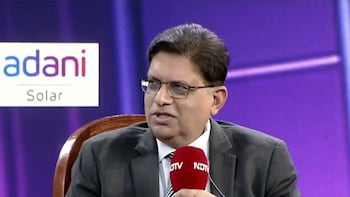
What IOSCO is really concerned with is enterprise value creation, says Acting Secretary General Tajinder Singh in an interview to BloombergQuint.
Simply put, the focus is on how sustainability matters create or erode enterprise value. This is different from sustainability reporting — or a company's significant impacts on the environment, people and economy.
The approach is well explained in a conceptual framework report authored by several independent agencies — CDP, CDSB, GRI, IIRC and SASB, and released in December 2020. It is this report that forms the prototype standard for further development by IOSCO.
Singh refers to it as the running start principle, one among many that IOSCO is basing its approach on. Some of which is borrowed from the creating of common accounting standards, IFRS, that are now followed in 140 countries.
The IOSCO Approach
1. Follow the IFRS model. Establish the International Sustainability Standards Board like the IASB set up under the IFRS Foundation. This will be the first in a three-tier structure that includes trustees to watch over the ISSB and right on top a monitoring board that includes regulators.
2. Start with a climate-first approach because that is an area where there has been quite a lot of discussion already and a prototype is ready.
3. Use the prototype developed by five framework and standard-setting institutions to get a running start. Note: It will have a set of industry specific metrics.
4. When ready, endorse the standard for its take-up globally.
5. Coordinate with the reporting requirements that different countries/regulators might have.
6. Create a framework for auditors.
7. Provide capital market authorities technical assistance in terms of enforcement.
The prototype (from) last year, becomes a refined prototype this year and then can become the basis for the standard as early as the middle of next year.Tajinder Singh, Acting Secretary General, IOSCO
Issuers, Investors, Raters, Auditors...Get Ready!
Issuers
Companies would do well to follow the global consultation process to prepare themselves, Singh says. Study the prototype, the presentation standard and the harmonisation discussions among many international agencies. Those issuers that have voluntarily adopted the recommendations by the Task Force on Climate-Related Disclosures should find comfort that IOSCO is seeking to align its approach.
Data Providers And Raters
On July 26, IOSCO issued a consultation report on recommendations regarding a framework for ESG ratings and data providers. In a study the Commission found
a lack of transparency about the methodologies
uneven coverage of products offered across industries and geographical areas
The impact of this on investment strategies and concerns around conflicts of interest, fee structures all require due regulatory attention. Then there's the problem of greenwashing.
It is important for regulators because many of these (data providers and raters) are probably beyond the regulatory perimeter, Singh says. IOSCO is urging regulators to start working to change that soon.
Auditors
While IOSCO will also work on an assurance framework, the audit profession is already engaging with this, says Singh.
Meanwhile, some jurisdictions have already mandated this. The European Commission recently imposed a 'limited' assurance obligation on sustainability reporting across the EU.
Asset Managers
In June, IOSCO published a consultation paper on recommendations about sustainability-related regulatory and supervisory expectations in asset management.
The recommendations cover five areas
asset manager practices, policies, procedures and disclosure
product disclosure
supervision and enforcement
terminology
financial and investor education
Should various stakeholders prepare for a wave of new securities market regulation?
Yes, says Singh, this is investor-led.
Investors, their preferences, they are changing. And I would say all power to them because they are seeking to use their money to influence what should be the right thing to do.
To watch the full interview with Tajinder Singh or read the interview transcript click here.
⇨ Reading References
The IOSCO Report on Sustainability-Related Issuer Disclosures
Recommendations of the Task Force on Climate-related Financial Disclosures
The IOSCO Consultation Report on Environmental, Social and Governance Ratings and Data Providers
Sustainable Finance and the Role of Securities Regulators and IOSCO
CDSB Framework for Reporting Environmental & Climate Change Information
Looking For The Best ESG Rating Method? Good Luck With That.
Essential Business Intelligence, Continuous LIVE TV, Sharp Market Insights, Practical Personal Finance Advice and Latest Stories — On NDTV Profit.